

Taiwan Peace and Stability Act This bill requires various reports to Congress related to Taiwan. The Department of State must report on (1) a strategy to advance Taiwan's meaningful participation in certain international organizations, and (2) a plan for strengthening Taiwan's community of civilian defense professionals. (China has taken actions to block Taiwan's participation in certain international organizations, such as opposing Taiwan's attendance at World Health Assembly meetings as an observer.) The U.S. Agency for International Development must report on cooperation with Taiwan on trilateral and multilateral development initiatives. The U.S. Trade Representative must report a legal template for establishing trade and investment agreements with Taiwan that is consistent with U.S.-Taiwan relations. The President must report a whole-of-government strategy to enhance deterrence over a military conflict between China and Taiwan. Among other matters, the strategy must include an examination of the present and future capabilities of the United States and Taiwan to respond to potential actions by China's military, such as a naval blockade. The Department of Defense must report on options for (1) supporting Taiwan's defense budgeting and procurement process in a way that is consistent with Taiwan's asymmetric defense strategy, and (2) strengthening Taiwan's implementation of its territorial defense force concept.
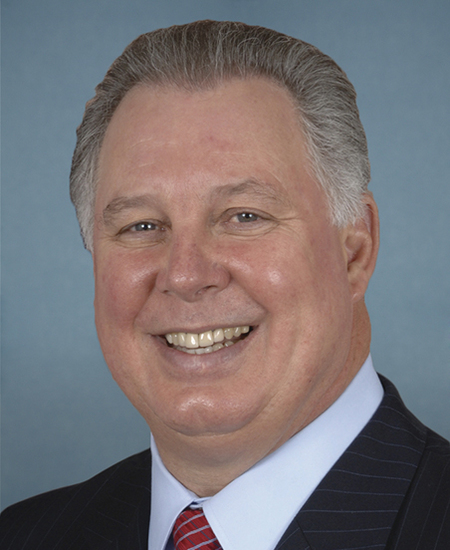
Rep. Albio Sires
Sponsored bills
American Renewable Energy Act of 2021 This bill establishes an annual renewable energy standard for retail electricity suppliers through 2030. Under the standard, the suppliers must (1) increase their renewable energy generation each year by specified amounts, and (2) generate at least 70% renewable electricity by 2030.
Support UNFPA Funding Act This bill authorizes annual contributions to support the core functions and programs of the United Nations Population Fund for the five fiscal years following the bill's enactment.
Pell Grant Preservation and Expansion Act of 2021 This bill makes various changes to the Federal Pell Grant program, including by expanding student eligibility for Pell Grants. The bill also revises student eligibility for federal student-aid programs. Specifically, the bill provides funding to increase the maximum Pell Grant award for each eligible student. Further, the bill requires the award amount to be adjusted for inflation. Next, the bill allows students who receive means-tested federal benefits (e.g., Medicaid) to automatically qualify for the maximum Pell Grant award plus an additional award amount. In addition, the bill moves the Iraq and Afghanistan Service Grant program into the Pell Grant program. Next, the bill raises from 12 to 18 the total number of semesters during which a student may receive a Pell Grant. The bill makes Dreamer students (i.e., students who have been granted Deferred Action for Childhood Arrivals status) who entered the United States before the age of 18 and who meet certain educational criteria eligible for federal financial aid. The bill also revises satisfactory academic progress requirements for federal student-aid programs, including by allowing a student who has not been enrolled in an institution of higher education for two years to regain eligibility for federal student aid.
Sustainable Skies Act This bill allows a business-related tax credit through 2031 for each gallon of sustainable aviation fuel used by a taxpayer in the production of a qualified mixture (i.e., a mixture of sustainable aviation fuel and kerosene that is sold for use in certain U.S. aircraft). The bill generally defines sustainable aviation fuel as liquid fuel that consists of synthesized hydrocarbons, meets certain recognized international standards, is derived from biomass, waste streams, renewable energy sources, or gaseous carbon oxides, is not derived from palm fatty acid distillates, and achieves at least a 50% life cycle greenhouse gas emissions reduction in comparison with petroleum-based jet fuel. To be eligible for such credit, a taxpayer must meet certification requirements showing that the sustainable aviation fuel conforms with one of the life cycle greenhouse gas emissions reduction tests set forth in this bill.
Shark Fin Sales Elimination Act of 20 21 This bill addresses the sale of shark fins and the inclusion of rays and skates in the Seafood Traceability Program. The Seafood Traceability Program has data reporting and recordkeeping requirements at the time of entry for imported fish or fish products entered into U.S. commerce. The bill makes it illegal to possess, buy, or sell shark fins or any product containing shark fins, except for certain dogfish fins. A person may possess a shark fin that was lawfully taken consistent with a license or permit under certain circumstances. Penalties are imposed for violations under the Magnuson-Stevens Fishery Conservation and Management Act. The Department of Commerce must revise its regulations to include rays and skates as species that are subject to the Seafood Traceability Program.
Federal Building Clean Jobs Act of 2021 This bill establishes additional energy-efficiency requirements and programs for federal buildings, with a particular focus on reducing energy and water consumption and greenhouse gas emissions by FY2030 through partnerships with the private sector. Specifically, the bill requires federal agencies to reduce the following for their facilities by FY2030: average building energy intensity (by at least 25%, relative to FY2018); average potable water consumption intensity (by 54%, relative to FY2007); industrial, landscaping, and agricultural water consumption (by 20%, relative to FY2018); and specified categories of greenhouse gas emissions (by at least 40%, relative to FY2018). Federal agencies must also implement retrofit projects that reduce the energy consumption of their facilities by at least 35%. Additionally, the General Services Administration, the Department of Defense, the Department of Homeland Security, and the Department of Veterans Affairs must develop plans that ensure that at least 50% of certain facilities offer zero-emission vehicle charging or fueling by December 31, 2030. The bill directs agencies to work with the private sector through partnerships and financing opportunities in order to implement the bill's requirements. The bill also makes several other changes relating to federal building standards and related authorities, including (1) requiring lessors (i.e., property owners) to disclose data on the utility consumption of leased spaces; (2) requiring federal agencies to assess and mitigate area flood risks, based on climate science; and (3) authorizing long-term contracts for federal purchases of renewable energy.
Puerto Rico Self-Determination Act of 2021 This bill establishes a process for the people of Puerto Rico to vote on the political status (e.g., statehood) of the territory. Congress may ratify the decision through a joint resolution. The bill declares that the legislature of Puerto Rico has the authority to call a status convention regarding the political status of the territory. The bill provides for public financing of delegate elections to the status convention and establishes a Congressional Bilateral Negotiating Commission to provide advice and consultation to delegates of the status convention. The status convention must provide self-determination options for a referendum of the people of Puerto Rico. Ranked-choice voting is a permitted format for the referendum. Delegates shall carry out an educational campaign through traditional paid media related to the referendum. The bill provides for congressional consideration of a joint resolution to ratify the self-determination option selected through the referendum.
Puerto Rico Statehood Admission Act This bill establishes a process for the admission of Puerto Rico into the union as a state, on an equal footing with all other states, based on a majority vote of the people of Puerto Rico.
Homeless Veterans Credit Repair, Enhancement, and Debt Improvement for Tomorrow Act or the Homeless Veterans CREDIT Act This bill requires the Department of Veterans Affairs to conduct a comprehensive study on access to, and use and effects of, financial and credit counseling for homeless veterans and veterans experiencing housing instability.