Countering Malign Russian Activities in Africa Act This bill requires the Department of State to report to Congress a strategy and implementation plan outlining U.S. efforts to counter Russia's malign influence and activities in Africa. The State Department must also report to Congress annual updates on the strategy and implementation plan.
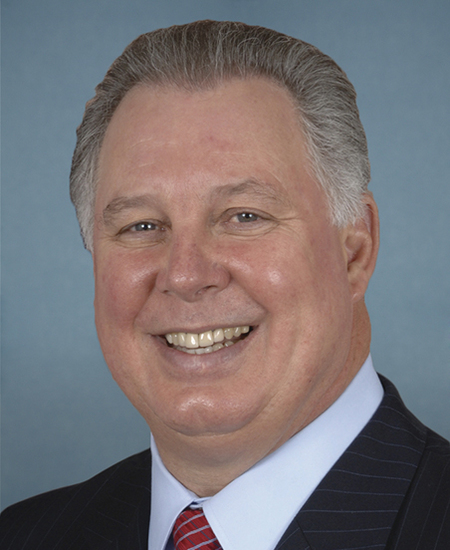
Rep. Albio Sires
Sponsored bills
Highlands Conservation Reauthorization Act of 2022 This bill extends through FY2029 the Highlands Conservation Act, which provides for land conservation in Highlands states (i.e., Connecticut, New Jersey, New York, and Pennsylvania). The bill authorizes the Fish and Wildlife Service to add a municipality to the Highlands region upon the request of a Highlands state, with the concurrence of the municipality. The bill revises the way in which land is identified for conservation to require using the best available science and geographic information systems. The bill allows political subdivisions of states to enter into agreements with the Department of the Interior for land conservation projects. A Highland state that receives funds for a land conservation partnership project may not use more than 5% of the funds to administer that project. The bill extends through FY2029 Forest Service and other Department of Agriculture programs to conserve land and natural resources in the Highlands region. With respect to an appraisal related to a land acquisition carried out under this bill, a Highlands state shall use an appraisal methodology approved by the Department of the Interior.
Western Hemisphere Nearshoring Act This bill provides assistance for corporations to move operations from China to countries in Latin America or the Caribbean and addresses related issues. For example, the bill requires the U.S. International Development Finance Corporation to provide financing and other assistance to eligible corporations for costs associated with such a move. Tariffs collected for goods manufactured in China shall be used to pay for such assistance. The President may provide preferential treatment, including duty-free treatment, for goods produced in a Latin American or Caribbean country by a corporation that received relocation assistance under this bill.
This resolution recognizes that Black women are experiencing high, disproportionate rates of maternal mortality and morbidity in the United States and that Black Maternal Health Week is an opportunity to deepen the national conversation about Black maternal health.
No Child Left Inside Act of 2022 This bill provides support for environmental literacy and environmental education programs in elementary and secondary schools, including by directing the Department of Education to award grants for (1) implementing state environmental literacy plans, and (2) establishing or expanding outdoor school education programs.
Maddy summaryHR 7477, the CERTS Tax Exemption Act, ensures that grants provided under the Coronavirus Economic Relief for Transportation Services Act are tax-free for eligible transportation service providers. The bill directly affects companies and organizations providing transportation services that receive these specific federal grants. Key provisions state that grant amounts cannot be counted as taxable income, deductions related to grant-funded costs cannot be denied, and tax attributes (like basis increases) must be treated as tax-free for partnerships and S corporations. This change simplifies tax treatment for recipients by preventing unintended tax liabilities on relief funds.
Hispanic Educational Resources and Empowerment Act of 2022 This bill directs the Department of Education to (1) award grants to Hispanic-serving institutions of higher education (IHEs) to improve and expand innovative collaboration agreements between local educational agencies and IHEs to better serve Hispanic and Latino students, (2) provide technical assistance to such IHEs, and (3) contract with a third party to conduct an independent evaluation of grant activities. Such grants must be used for specific activities, such as improving school-based and institutional practices to prepare students for postsecondary education and addressing nonacademic needs of students that are barriers to college enrollment.
Burma Unified through Rigorous Military Accountability Act of 2022 or the BURMA Act of 2022 This bill imposes sanctions pertaining to Burma (Myanmar) and addresses related issues. The President must impose property- and visa-blocking sanctions on certain foreign persons (i.e., an individual or entity), including those that (1) knowingly operate in Burma's defense sector, (2) are responsible for or complicit in undermining Burma's democratic processes, or (3) are senior leaders in Burma's military or government. The Department of the Treasury must prohibit or impose strict conditions on certain accounts used to facilitate transactions for such sanctioned persons. The President may impose sanctions on Myanma Oil and Gas Enterprise if such sanctions would support certain objectives, including reducing the Burmese military's ability to undermine democracy in Burma. Before removing certain foreign persons from a list of specially designated nationals and blocked persons (commonly known as the SDN list), the President must certify to Congress that the person in question has not knowingly engaged in certain activities, such as supporting terrorism. The bill authorizes Department of State and U.S. Agency for International Development activities in Burma and the surrounding region to support democracy activists, humanitarian assistance, and reconciliation efforts. The State Department may (1) continue to assist organizations supporting political prisoners in Burma, and (2) provide assistance to entities investigating crimes against humanity. The President must direct U.S. representatives to the United Nations to vote and advocate for certain actions related to Burma, such as cutting off assistance to Burma's government.

Postal Service Reform Act of 202 2 This bill addresses the finances and operations of the U.S. Postal Service (USPS). The bill requires the Office of Personnel Management (OPM) to establish the Postal Service Health Benefits Program within the Federal Employees Health Benefits Program under which OPM may contract with carriers to offer health benefits plans for USPS employees and retirees. The bill provides for coordinated enrollment of retirees under this program and Medicare. The bill repeals the requirement that the USPS annually prepay future retirement health benefits. Additionally, the USPS may establish a program to enter into agreements with an agency of any state government, local government, or tribal government, and with other government agencies, to provide certain nonpostal products and services that reasonably contribute to the costs of the USPS and meet other specified criteria. The USPS must develop and maintain a publicly available dashboard to track service performance and must report regularly on its operations and financial condition. The Postal Regulatory Commission must annually submit to the USPS a budget of its expenses. It must also conduct a study to identify the causes and effects of postal inefficiencies relating to flats (e.g., large envelopes). The USPS Office of Inspector General shall perform oversight of the Postal Regulatory Commission.
This bill prohibits using federal funds to support or facilitate (1) Russia's participation in a Group of Seven (G-7) proceeding, or (2) a reconstituted Group of Eight (G-8) that includes Russia. (The G-7 is an informal group consisting of seven of the world's largest advanced economies. In 2014, the G-8 became the G-7 when Russia 's membership was suspended following Russia's annexation of the Crimea region of Ukraine.)