Supreme Court Ethics Act This bill establishes a new statutory requirement for the Judicial Conference of the United States to issue a judicial code of conduct for judges and justices of U.S. courts, including Justices of the Supreme Court. Currently, the Judicial Conference issues a code of conduct for judges of U.S. courts (but not for Justices of the Supreme Court).
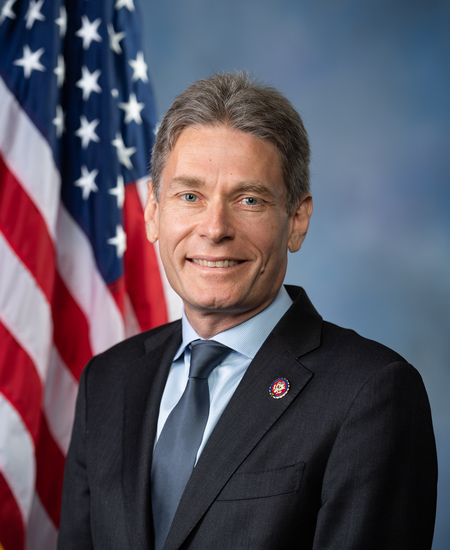
Rep. Tom Malinowski
Sponsored bills
Foreign Extortion Prevention Act This bill establishes a federal criminal offense involving bribery by foreign officials. Specifically, the bill makes it a crime for foreign officials to demand or accept anything of value personally or for another person or a nongovernmental entity to influence the performance of an official act or otherwise confer an improper advantage. The bill explicitly grants extraterritorial jurisdiction over the offense. A violation is subject to criminal penalties—a fine, a prison term of up to 15 years, or both. Finally, the bill establishes a Victims of Kleptocracy Fund in the Treasury and directs fines and penalties for violations to be deposited into the fund for anti-corruption initiatives.
Revealing and Explaining Visa Exclusions for Accountability and Legitimacy Act or the REVEAL Act This bill authorizes the Department of State to publicly disclose the identity of an alien who has been denied admission into the United States because that alien's entry would pose potentially serious adverse foreign policy consequences. The State Department may also reveal the grounds that it relied on to make such a determination. The President must annually report to Congress a list of individuals denied a visa on such foreign policy grounds and another list of the instances when the State Department chose to not publicly disclose the identity of such an individual.
Daniel Anderl Judicial Security and Privacy Act of 2021 This bill generally prohibits federal agencies and private businesses from publicly posting the personally identifiable information (e.g., home addresses) of federal judges and their immediate family members. It also (1) requires information to be removed upon written request from the federal judge concerned, (2) prohibits data brokers from purchasing or selling such information, and (3) establishes programs to protect such information at the state and local level and to enhance security for judges.
Combating Global Corruption Act of 2021 This bill requires the Department of State to address corruption, including related to the Nord Stream 2 pipeline (a national gas pipeline expected to increase Russia's natural gas export capacity). The State Department must annually publish a ranking of foreign countries based on their government's efforts to eliminate corruption. The bill outlines the minimum standards that the State Department must consider when creating the ranking. These considerations include, for example, whether a country has criminalized corruption, adopted measures to prevent corruption, and complied with the United Nations Convention Against Corruption and other relevant international agreements. Tier one countries meet the standards; tier two countries make some efforts to meet the standards; tier three countries make de minimis or no efforts to meet the standards. If a country is ranked in the second or third tier, the State Department must designate an anti-corruption contact at the U.S. diplomatic post in that country to promote good governance and combat corruption. The bill also requires the State Department, in coordination with the Department of the Treasury, to evaluate whether to impose asset- and visa-blocking sanctions against foreign persons engaged in significant corruption (1) in tier three countries, or (2) related to the Nord Stream 2 pipeline. The State Department must report to Congress about any sanctions imposed under this bill. The evaluation and reporting requirements concerning the Nord Stream 2 pipeline terminate after five years.

Hong Kong People's Freedom and Choice Act of 2021 This bill provides for temporary protected status (TPS) for qualifying Hong Kong residents and contains other immigration-related provisions. Hong Kong shall be treated as a TPS-designated territory for 18 months starting from this bill's enactment. (Qualifying nationals of a TPS-designated territory or country may not be removed from the United States and shall have employment authorization while the designation is in effect.) Furthermore, Hong Kong shall be treated as separate from China for the purposes of various numerical limitations on immigrant visas. (In the treaty that transferred sovereignty of Hong Kong to China, China pledged that Hong Kong "will enjoy a high degree of autonomy.") The bill also establishes Priority Hong Kong Resident status for qualified individuals. To obtain such status, an individual must meet certain requirements, such as having resided in Hong Kong for at least ten years as of the day of this bill's enactment and not having citizenship in any jurisdiction other than China, Hong Kong, or Macau. For seeking refugee status or asylum, a Priority Hong Kong Resident may establish a well-founded fear of persecution based on various factors, such as fear based on the individual's significant role in certain protests against China's encroachment into Hong Kong's autonomy. The Department of Homeland Security (DHS) or the Department of State may provide special immigrant status to an eligible Priority Hong Kong Resident with a bachelor's or graduate degree if DHS determines that doing so would provide a significant benefit to the United States.
Golden Visa Accountability Act This bill requires the Department of State to establish and maintain a database containing information about investor visa denials due to the applicant's involvement in corruption or serious human rights abuses. (Generally, the United States offers immigrant visas to qualified individuals who invest in the United States and create a certain number of full-time jobs.) Initially, the database must include records related to such denials of U.S. investor visas. The bill also requires the State Department to eventually expand the database to include records of such denials of investor visas in other countries. The State Department shall prioritize including records from European Union countries and from Australia, Canada, New Zealand, and the United Kingdom. The State Department may admit a foreign country to be part of the database if the State Department determines (1) that country will be honest and forthcoming with its records, and (2) that country's investor visa program is at risk of abuse by corrupt foreign officials.
Disarm Hate Act The bill expands the categories of persons who are prohibited from receiving or possessing a firearm. Specifically, it prohibits firearm sale or transfer to and receipt, possession, shipment, or transport by a person (1) who has been convicted of a misdemeanor hate crime, or (2) who has received an enhanced hate crime misdemeanor sentence.
H-2B Returning Worker Exception Act of 2021 This bill modifies the H-2B (temporary nonagricultural workers) nonimmigrant visa program, including by exempting certain workers from an annual numerical limit on such visas and requiring civil penalties for program violations. Under this bill, if a worker seeking a H-2B visa has been counted toward the 66,000 annual cap on such visas in one of the three preceding fiscal years, that worker shall not be counted against the cap again. Furthermore, the Department of Homeland Security (DHS) must impose a civil monetary penalty on an employer for (1) failing to meet requirements related to an H-2B visa petition, or (2) making a willful misrepresentation of material fact in such a petition. DHS must also ensure the establishment of an electronic platform (1) for employers to submit and request approval of an H-2B petition, and (2) to act as a single point of access for applicants and the relevant government agencies. The Department of Labor must maintain a publicly available online database of all job orders by H-2B employers. Furthermore, Labor may take certain actions to enforce program requirements, such as imposing penalties and seeking injunctions. The bill provides statutory authority for the current practice of limiting the program to workers who are nationals of countries approved by DHS. DHS may make exceptions to this limitation in individual cases if it is in the U.S. interest to do so. DHS shall select approved countries based on various factors, such as the rate of overstay by H-2B visa holders from each country.
Foreign Corruption Accountability Act This bill temporarily authorizes the President to impose visa-blocking sanctions against any foreign person that engages in public corruption activities (e.g., soliciting or accepting bribes or engaging in extortion) against the United States. The President may terminate the sanctions by making a determination that the person (1) is no longer engaged in (or has taken significant verifiable steps to cease) the sanctionable conduct, or (2) will not knowingly engage in sanctionable conduct in the future. In addition, the President may also terminate the sanctions if it is in U.S. national security interests. The President must notify Congress at least 15 days before terminating the sanctions. The President must annually report to Congress on the imposition and termination of sanctions on foreign persons for engaging in public corruption. The authority to impose the sanctions terminates six years after this bill's enactment.