

Cancer Drug Parity Act of 20 21 This bill requires group health plans that cover anticancer medications administered by a health care provider to provide no less favorable cost sharing for patient-administered anticancer medications. This requirement applies to medications that are (1) approved by the Food and Drug Administration; (2) medically necessary for the cancer treatment; and (3) clinically appropriate in terms of type, frequency, extent site, and duration. To comply with this requirement, plans may not, with respect to anticancer medications (1) change or replace benefits to increase out-of-pocket costs, (2) reclassify benefits to increase costs, or (3) apply more restrictive limitations to orally administered medications than to intravenously administered or injected medications.
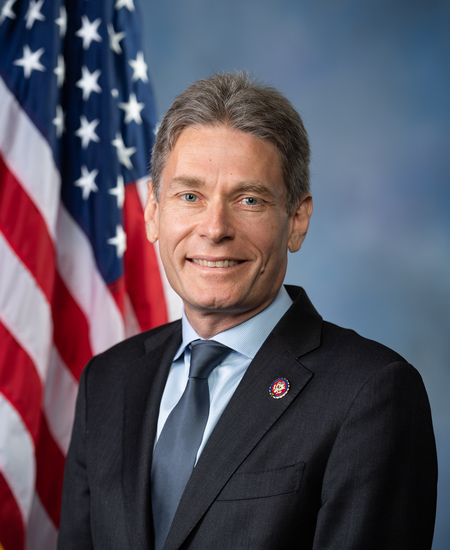
Rep. Tom Malinowski
Sponsored bills
Safe Schools Improvement Act of 2021 This bill requires states to direct their local educational agencies (LEAs) to establish policies that prevent and prohibit bullying and harassment of elementary and secondary school students. In particular, these policies must prohibit bullying and harassment based on race, color, national origin, sex, sexual orientation, gender identity, disability, or religion. Further, LEAs must provide (1) students, parents, and educational professionals with annual notice of the conduct prohibited in their disciplinary policies; (2) students and parents with grievance procedures that target such conduct; and (3) the public with annual data on the incidence and frequency of that conduct at the school and LEA level. The Department of Education must conduct and report on an independent biennial evaluation of programs and policies to combat bullying and harassment in elementary and secondary schools. The National Center for Education Statistics must collect state data to determine the incidence and frequency of the conduct prohibited by LEA disciplinary policies.
Department of Homeland Security Reform Act of 2021 or the DHS Reform Act of 2021 This bill makes extensive changes to the structure of the Department of Homeland Security (DHS) and to the responsibilities of DHS components. Specifically, the bill, among other things creates a new Associate Secretary responsible for overseeing DHS's law enforcement functions; modifies the responsibilities of the Office for Civil Rights and Civil Liberties, including to require engagement with individuals and communities whose civil rights and liberties may be affected by DHS programs and activities; establishes within DHS's Office of Intelligence and Analysis an analytic unit to serve as a focal point for intelligence and analysis of domestic terrorism threats; directs DHS to establish an employee engagement steering committee to identify factors that have a negative impact on employee engagement, morale, and communications within DHS; establishes within DHS a school security coordinating council; directs DHS to develop and disseminate a strategy with respect to biometric technology and identity management enterprise pilot programs and programs; requires DHS to develop, disseminate, and implement a DHS-wide directive to update or replace the strategic framework relating to countering terrorism and targeted violence; requires that DHS's use-of-force policy be updated to emphasize de-escalation; and requires DHS to issue a DHS-wide strategy to enhance partnerships with historically Black colleges and universities and minority-serving institutes that includes yearly goals.
Women and Minorities in STEM Booster Act of 2021 This bill requires the National Science Foundation to award competitive grants to enable eligible entities to carry out the activities specified below in order to increase the participation of women and underrepresented minorities in the fields of science, technology, engineering, and mathematics (STEM). An eligible entity that receives a grant shall use grant funds to carry out one or more of the following activities designed to increase the participation of women or minorities underrepresented in science and engineering, or both: online workshops, mentoring programs that partner STEM professionals with students, internships for undergraduate and graduate students in STEM fields, outreach programs providing elementary and secondary school students with opportunities to increase their exposure to STEM fields, and programs to increase the recruitment and retention of underrepresented faculty.
America's Red Rock Wilderness Act This bill designates specified lands in the following areas of Utah as components of the National Wilderness Preservation System: (1) Great Basin, (2) Grand Staircase-Escalante, (3) Moab-La Sal Canyons, (4) Henry Mountains, (5) Glen Canyon, (6) San Juan-Anasazi, (7) Canyonlands Basin, (8) San Rafael Swell, and (9) Book Cliffs and Uinta Basin. The bill sets forth administrative requirements for (1) the exchange of state-owned lands within such areas, (2) federal reservation of water rights, (3) measurement of setbacks for roads with adjacent wilderness, (4) authorized livestock grazing, and (5) withdrawal of such lands from disposition under certain public land laws.
Providing Resources and Occupational Training for Emotional Crisis and Trauma in 911 Act or the PROTECT 911 Act This bill requires reporting on, and authorizes a grant program to address, suicide and other behavioral health issues among 9-1-1 operators and other public safety personnel who receive and communicate requests for emergency assistance. Specifically, the Centers for Disease Control and Prevention must develop a reporting system to collect data on the suicide rate among and identify best practices to reduce suicides within that profession. In addition, the bill establishes within the Department of Homeland Security grants for emergency communications centers and relevant nonprofits to raise awareness of, prevent, and mitigate job-related mental health issues.
Foreign Service Families Act of 2021 This bill increases access to career and educational opportunities for eligible family members of foreign service employees. Specifically, the Department of State must use additional hiring preferences and apply appropriate hiring standards to eligible family members seeking employment in certain civil service positions overseas. Additionally, the State Department may take other steps to improve job portability and otherwise support employment of eligible family members who work in the federal civil service or private sector jobs. The State Department must also report on the implementation of the Foreign Service Family Reserve Corps, a program that expedites hiring and onboarding processes for family members who are eligible for appointment to positions overseas. Furthermore, each federal agency must include in its telework policy the circumstances under which an employee may temporarily work from an approved location overseas. The bill also makes foreign service employees (or their spouses and dependent children) who are domiciled or assigned to a duty station in a given state eligible for in-state tuition at public institutions of higher education in that state. Such individuals retain their eligibility for in-state tuition provided they maintain continuous enrollment even if their domicile or duty station changes.
Animal Welfare Enforcement Improvement Act This bill revises the licensing process of the Department of Agriculture (USDA) for animal dealers and exhibitors to expand USDA's oversight and enforcement of animal welfare requirements. The bill also authorizes citizen suits to enforce the Animal Welfare Act. Dealers and exhibitors must apply to USDA for licenses or renewal licenses each year. In order to obtain the licenses or renewals, dealers and exhibitors must meet certain standards for the humane treatment of animals and pass inspections as specified by this bill. USDA may not issue or renew such licenses if the dealers or exhibitors have violated laws relating to animals or if the issuance of the licenses would facilitate the circumvention of state or local laws that prohibit the private ownership of certain animals. Further, USDA must suspend the licenses of dealers or exhibitors whose violations present a risk to animal welfare. USDA must revoke the licenses if the violations persist or if the licensees commit multiple violations. Dealers and exhibitors with suspended or revoked licenses may not be (1) granted another license, (2) granted another license through another person or entity, or (3) employed by another licensee to work with animals during the period of the suspension or revocation.
Taskforce Recommending Improvements for Unaddressed Mental Perinatal & Postpartum Health for New Moms Act of 2021 or the TRIUMPH for New Moms Act of 2021 This bill temporarily establishes within the Department of Health and Human Services the Task Force on Maternal Mental Health. The task force must develop a national strategy for maternal mental health and report on best practices, policies, and programs to prevent, screen for, diagnose, treat, and reduce disparities in maternal mental health conditions. The report must identify opportunities for state- and local-level partnerships to address maternal mental health, and the task force must share those opportunities with state governors.
Fair Repair Act This bill requires an original equipment manufacturer (OEM) to make diagnostic, maintenance, and repair equipment available to independent repair providers. Specifically, for digital electronic equipment sold or used in the United States, an OEM shall make documentation, parts, and tools available to independent repair providers in a timely manner and on fair and reasonable terms. Further, if an OEM has made an express warranty for digital electronic equipment with a wholesale price of $100 or more, the OEM must provide such items at an equitable price and convenience of delivery to enable the repair of the equipment during the warranty period. The bill provides for enforcement of its provisions by the Federal Trade Commission and state attorneys general.