IDEA Full Funding Act This bill provides permanent, mandatory funding for the grant program that assists states and outlying areas in providing special education and related services to children with disabilities.
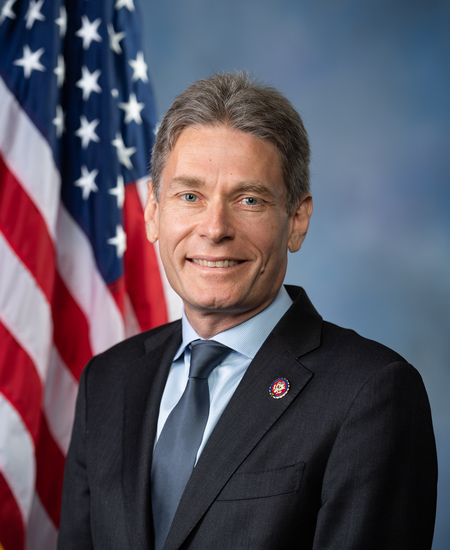
Rep. Tom Malinowski
Sponsored bills
This concurrent resolution declares that Congress should not impose any new performance fee, tax, royalty, or other charge relating to the public performance of sound recordings on a local radio station for broadcasting sound recordings over the air, or on any business for such public performance of sound recordings.
Honoring Our Promises through Expedition for Afghan SIVs Act of 2021 or the HOPE for Afghan SIVs Act of 2021 This bill authorizes the Department of State and the Department of Homeland Security (DHS) to postpone the medical exam requirement for qualifying citizens or nationals of Afghanistan seeking entry into the United States as special immigrants. Specifically, this bill applies to an existing program that provides special immigrant status to an individual (or the spouse or child of such an individual) who (1) faithfully performed sensitive and trusted duties for the U.S. government or the International Security Assistance Force in Afghanistan on or after October 7, 2001, and (2) has experienced or is experiencing an ongoing serious threat due to the performance of those duties. Under this bill, the State Department and DHS may jointly issue a blanket waiver of any requirement for such individuals to undergo a medical exam before admission into the United States. DHS shall ensure, to the greatest extent practicable, that individuals admitted under such a waiver undergo medical exams no later than 30 days after admission into the United States. Such an individual shall be admitted as a conditional permanent resident. DHS shall remove the conditions once the individual receives and passes a medical examination.
Greyhound Protection Act of 2021 This bill modifies the federal criminal statute commonly known as the Wire Act. Currently, the Wire Act contains four prohibitions on the use of a wire transmission facility (e.g., the telephone or internet) for certain gambling activities. All four prohibitions apply to sports gambling. However, there have been conflicting interpretations of the applicability of the prohibitions to nonsports gambling (e.g., state lotteries). This bill amends the Wire Act to expressly state that the statute does not authorize the use of wire communications to gamble on commercial greyhound racing or permit the transport of animals for commercial dog racing or related activities.
Temporary Family Visitation Act This bill establishes a new nonimmigrant visa classification for an alien temporarily entering the United States to visit a relative who is a U.S. citizen or lawful permanent resident. The maximum period of stay for a family visitor visa shall be 90 days. An alien seeking such a visa must have health insurance for the duration of the stay. An alien who holds such a visa may not change to another nonimmigrant visa classification except in certain limited instances. If an alien has been approved for a family-based immigrant visa and is waiting for one to become available, the alien may obtain a family visitor visa if the alien meets the eligibility requirements.
Raise the Age Act This bill establishes new restrictions on the sale or transfer of certain semiautomatic firearms to individuals under 21 years of age. Specifically, this bill makes it unlawful for a licensed gun dealer, importer, manufacturer, or collector to sell or deliver a semiautomatic center-fire rifle that has (or has the capacity to accept) an ammunition feeding device with a capacity of more than five rounds to an individual who the licensee knows or has reasonable cause to believe is under age 21. The prohibition does not apply if the individual under age 21 is a full-time law enforcement officer or active-duty member of the Armed Forces. The bill also requires the Federal Bureau of Investigation to report on the operation of its public access line, including a description of information sharing protocols and recommendations for improving such protocols.

21st Century STEM for Girls and Underrepresented Minorities Act This bill directs the Department of Education to make grants to local educational agencies to pay the costs of carrying out STEM (science, technology, engineering, and mathematics) education activities for girls and underrepresented minorities.
Justice for ALS Veterans Act of 2021 This bill extends increased dependency and indemnity compensation to the surviving spouse of a veteran who dies from amyotrophic lateral sclerosis (ALS or Lou Gehrig's disease) regardless of how long the veteran had such disease prior to death. Under current law, such compensation is paid for a service-connected disability that was rated totally disabling for a continuous period of at least eight years immediately preceding death. For purposes of this bill, a surviving spouse is a person who was married to the veteran for a continuous period of eight years or longer prior to the veteran's death.
Burial Equity for Guards and Reserves Act of 2021 This bill prohibits the Department of Veterans Affairs (VA) from establishing a condition for a cemetery grant that restricts the ability of a state to inter certain reservists (or their spouses and children) at a state-owned veterans' cemetery solely because such individuals are ineligible for burial in an open national cemetery. Specifically, as a condition for grants, the VA cannot restrict the ability of a state to inter a member of a reserve component whose service was terminated under honorable conditions; member of the Army National Guard or Air National Guard whose service was terminated under honorable conditions; member of the Reserve Officers' Training Corps of the Army, Navy, or Air Force who died under honorable conditions while a member; and spouse, minor child, or unmarried adult child of any member described above. The VA is prohibited from (1) denying an application for a grant solely on the basis that the recipient state may use funds to expand, improve, operate, or maintain a veterans' cemetery to allow for the internment of the specified individuals; and (2) enforcing certain conditions on grants for state veterans' cemeteries that were established before the date of enactment of this bill. The bill also provides for plot allowances for the individuals listed in the bill.
Public Health Workforce Loan Repayment Act of 2021 This bill establishes a student loan repayment program for public health professionals. As a condition of participation, recipients must agree to complete a period of full-time employment with a state, tribal, or local public health agency. Individuals eligible for this program include those with public health or health professions degrees, as well as those with degrees in statistics, computer science, or related information technology fields.