

Maddy summaryThis bill, titled misleadingly as the "Customs Business Fairness Act," is actually a narrow amendment to bankruptcy law, not customs policy. It modifies Section 507(d) of the Bankruptcy Code to exclude "subparagraph (F)" from certain debt treatment rules, affecting businesses filing for bankruptcy under Title 11 after the law's enactment. The amendment applies only to bankruptcy cases commenced after the bill becomes law, not to cases filed before it was enacted. This is a procedural change with no direct impact on customs operations or import/export regulations.
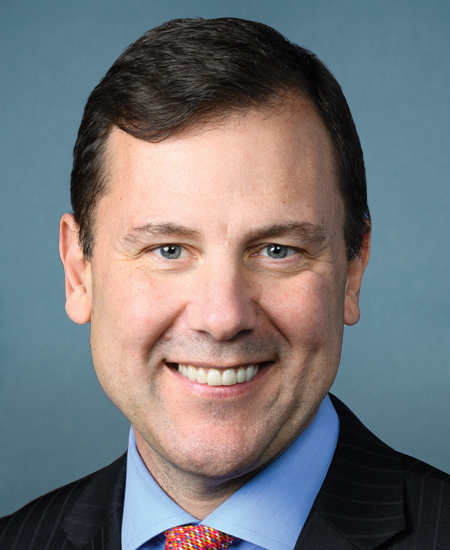
Rep. Thomas H. Kean, Jr.
Sponsored bills
Maddy summaryThe Modern, Clean, and Safe Trucks Act of 2023 would remove a 12-percent federal excise tax on new heavy trucks, tractors, and trailers. This tax, in place since 1917, adds $12,000 to $22,000 to the cost of a new truck and is argued to discourage replacing older, less efficient vehicles. The bill aims to lower costs for buyers - especially for electric and alternative-fueled trucks, which face higher upfront prices - by eliminating the tax, thereby encouraging adoption of newer, cleaner models. The repeal would apply to sales occurring on or after the bill's introduction date.
Maddy summaryHR 1388 authorizes the minting of commemorative coins to honor the 1865 Sultana steamboat disaster, the deadliest maritime tragedy in U.S. history. It specifies three coin types ($5 gold, $1 silver, and half-dollar) with defined weights and compositions, to be sold at face value plus surcharges ($35, $10, and $5 per coin, respectively). All surcharges collected will fund the Sultana Historical Preservation Society for museum development, including exhibits, artifact preservation, and facility construction. The coins are legal tender but intended for collectors, with sales limited to a one-year period starting January 2023.
Maddy summaryThe LEO Fair Retirement Act of 2023 would allow federal law enforcement officers to include unpaid overtime hours toward their retirement benefits. Currently, these officers work significant overtime that isn't compensated due to pay caps, meaning they don't receive full credit for those hours in retirement calculations. The bill would amend retirement systems to include this unpaid overtime in retirement calculations, but officers would need to make a lump-sum payment to cover the difference between what they would have contributed to retirement if paid for the overtime versus what they actually contributed. This applies to specific federal law enforcement roles including criminal investigators, federal air marshals, special agents in the Diplomatic Security Service, probation officers, and pretrial services officers. The changes would take effect one year after the bill's enactment.
Maddy summaryHR 1322 expands federal retirement benefits to include specific non-traditional law enforcement roles. It adds IRS employees focused on tax collection, U.S. Postal Inspection Service staff, Department of Veterans Affairs police officers, and U.S. Customs and Border Protection seized property specialists to the definition of "law enforcement officer" under federal retirement systems. Current employees in these newly covered positions must elect to pay deposits for past service to receive full retirement credit, while their agencies must contribute additional funds for that past service. The bill also temporarily prevents mandatory separation for current law enforcement officers for three years after enactment.
Maddy summaryHRES 132 is a non-binding House resolution expressing condolences for the over 36,000 earthquake victims in Türkiye and Syria and commending humanitarian response efforts. It specifically condemns the Assad regime for obstructing aid delivery and exploiting the disaster, urging the Biden administration to open all UN border crossings for aid and prevent U.S.-funded assistance from being diverted to Syria’s government. The resolution also calls for continued enforcement of the Caesar Syria Civilian Protection Act to protect Syrian civilians. As a symbolic resolution, it does not create new law but formally directs the administration’s diplomatic approach to the crisis.
This resolution reaffirms the U.S. commitment to Moldova in the face of Russia's malign influence and military aggression. The resolution also (1) lauds the strengthening of civil society, democracy, and democratic institutions in Moldova; (2) welcomes the strong mandate given to pro-reform forces in recent elections; and (3) urges the European Union to continue to promote Moldova's accession processes.
This resolution states that the House of Representatives opposes South Africa's hosting of military exercises with China and Russia in February 2023. The resolution calls on the government of South Africa to (1) cancel all future military exercises with China and Russia and (2) rejoin U.S.-led exercises. Additionally, the resolution calls on the Biden administration to conduct a review of the status of the United States-South Africa bilateral relationship.
CBDC Anti-Surveillance State Act This bill limits the ability of the Federal Reserve to (1) provide direct services to individuals, and (2) use a central bank digital currency. A central bank digital currency is a digital currency (e.g., Bitcoin or Ether) issued by a government-backed central bank. Specifically, the bill prohibits the Federal Reserve and the Federal Open Market Committee from using any central bank digital currency to implement monetary policy. In addition, a Federal Reserve bank is prohibited from offering products or services directly to an individual, maintaining an account on behalf of an individual, or issuing a central bank digital currency directly to an individual. The Federal Reserve must (1) consult with each Federal Reserve bank with respect to any central bank digital currency study or pilot program, and (2) issue quarterly reports on the findings and determinations of any such study or program.
Maddy summaryThe HELP Copays Act (HR 830) changes how health insurance plans calculate patient cost-sharing. It requires that payments made by third parties (like pharmacies, charities, or discount programs) toward medical costs count toward a patient's deductible, copay, or out-of-pocket limit. This directly affects insured individuals who receive financial assistance, discounts, or product vouchers for healthcare expenses. The law ensures these external payments reduce the patient's actual out-of-pocket costs more quickly, aligning with existing Affordable Care Act and Public Health Service Act requirements.