

Maddy summaryThis resolution (HRES 616) condemns the Taliban's ongoing human rights abuses in Afghanistan, specifically targeting women, girls, religious minorities (including Hazaras and Sikhs), and ethnic groups. It expresses support for Afghans who assisted U.S. missions and calls for the U.S. government to halt Taliban violence and address systemic repression. Key mechanisms include urging the State Department to assess potential crimes against humanity, developing strategies to support human rights defenders, and expediting refugee processing for Afghans with Special Immigrant Visas. The resolution does not impose new legal requirements but formalizes congressional stance and policy guidance. It directly affects U.S. foreign policy implementation toward Afghanistan.
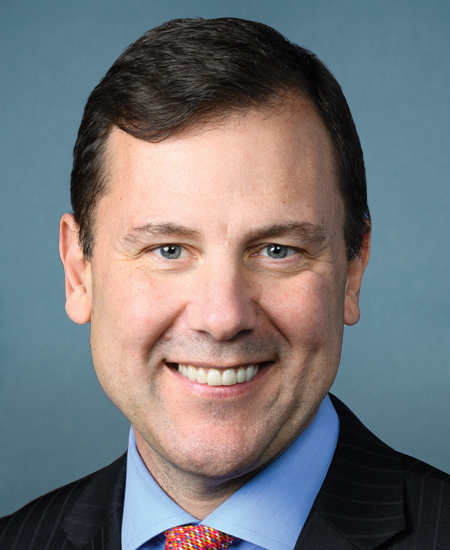
Rep. Thomas H. Kean, Jr.
Sponsored bills
Maddy summaryThis bill requires the President to provide Congress with a 15-day written notice before pausing, delaying, or suspending U.S. arms shipments to Israel, including detailed justification and impact analysis. It establishes strict congressional review periods: 15 days for initial review, plus additional 10-12 day windows if Congress introduces a disapproval resolution, effectively giving lawmakers significant power to block such pauses. The bill directly affects the President and the White House by restricting unilateral decisions on military aid to Israel, specifically targeting delays like the May 2024 pause on bomb shipments. Key provisions define "covered defense articles" as weapons under existing export laws and mandate transparency about funding, end users, and potential impacts on Israel’s military edge.
Maddy summaryThe ENFORCE Act establishes a new framework to control the export and transfer of specific artificial intelligence systems deemed critical to U.S. national security. It defines "covered artificial intelligence systems" as those with capabilities that could enable weapons of mass destruction, cyber attacks, or evasion of human oversight - using an interim definition until the Secretary of Commerce issues final regulations within 365 days. The bill requires U.S. companies and individuals, anywhere in the world, to obtain a Department of Commerce license before exporting, transferring, or supporting the development of these systems or related emerging technologies. This directly affects U.S. entities involved in high-risk AI development and trade, imposing new licensing obligations for activities involving systems posing national security threats.
Maddy summaryThis bill requires the U.S. Department of Defense and State Department to immediately deliver all previously approved military equipment and services to Israel within 15 days, reversing any pauses on arms transfers. It prohibits using federal funds to withhold, halt, or cancel defense article deliveries to Israel and mandates that unobligated security assistance funds for Israel must be spent by the end of 30 days. The bill also requires monthly reports to Congress detailing all security assistance provided to Israel since October 7, 2023, including specific items delivered and funding sources. The law directly affects U.S. agencies responsible for military aid and Israel as the recipient of the security assistance.
Maddy summaryHRES 1063 is a non-binding resolution passed by the U.S. House of Representatives to reaffirm America's commitment to NATO ahead of its 75th anniversary. It formally recognizes NATO's role in collective security, emphasizes Article 5's importance for mutual defense, and supports Finland and Sweden's membership. The resolution also calls on NATO allies to meet the 2% defense spending target, but does not create new laws or affect specific individuals or groups.
Maddy summaryHR 8046, the Rosatom Sanctions Enforcement Act, requires the U.S. to end reliance on Russia's Rosatom nuclear energy sector by imposing sanctions on Rosatom and related entities. It mandates a presidential strategy within 180 days to replace Rosatom-supplied nuclear services, block transactions with Rosatom, and pause U.S.-Russia nuclear cooperation (the 123 Agreement) until Russia meets specific conditions like ending hostilities in Ukraine. The bill blocks U.S. transactions with Rosatom, its executives, contractors for nuclear projects, and entities linked to the Zaporizhzhia plant, with limited waivers allowed for medical isotope production. It directly affects Rosatom, its affiliates, and U.S. entities engaging in significant transactions with them, while requiring congressional oversight of sanctions implementation.
Maddy summaryHR 3246, the Sanction Russian Nuclear Safety Violators Act of 2023, imposes U.S. sanctions on Russian individuals or entities that endangered the Zaporizhzhia Nuclear Power Plant’s safety or Ukrainian operational control since Russia’s 2022 invasion of Ukraine. Key provisions require the President to block assets and deny visas to targeted foreign persons, with exceptions for humanitarian aid and efforts to restore Ukrainian control of the plant. The bill directly affects Russian officials and Rosatom personnel involved in the plant’s operations, aiming to address safety risks highlighted by the IAEA.
Maddy summaryHRES 1226 is a non-binding resolution honoring 282 law enforcement officers killed in the line of duty during 2023, listed by name in the resolution. It formally acknowledges their sacrifice, expresses unwavering support for current officers, and recognizes the need for adequate resources to protect them. The resolution does not create new laws or policies but serves as a ceremonial tribute to memorialize fallen officers and support their families, aligning with existing National Police Week observances established since 1962.
Maddy summaryHR 8358, the Taiwan Allies Fund Act, creates a $40 million annual fund (2025-2027) to support countries that maintain or strengthen unofficial ties with Taiwan despite pressure from China. It targets nations facing Chinese economic or diplomatic coercion for their relations with Taiwan, such as recent diplomatic switchers like Nauru. Funds can be used for specific activities including countering Chinese propaganda, building civil society resilience, diversifying supply chains away from China, and supporting Taiwan's participation in international organizations. The bill limits aid per country to $5 million annually and requires annual reports on fund usage and coordination with Taiwan.
Maddy summaryThis bill updates the National Construction Safety Team Act by replacing "building" with "structure" throughout the law and adjusting related terminology. It ensures investigations cover a broader range of infrastructure, including bridges, dams, and other structures, not just traditional buildings. Key provisions clarify that investigations may defer to other federal agencies when appropriate and update references to "engineering standards, practices, and building codes." The bill does not change funding levels, maintaining the $5 million annual appropriation for the National Institute of Standards and Technology through 2027. It focuses on modernizing the law's language to reflect current infrastructure safety needs without introducing new requirements.