

Maddy summaryHR 9561, the Pay Our Border Patrol and Customs Agents Act of 2025, ensures that U.S. Border Patrol Agents and Customs and Border Protection officers working during a government shutdown receive their salaries. It appropriates funds from the Treasury (not regular appropriations) to cover their pay during any lapse in discretionary funding in fiscal year 2025. This bill directly affects these specific federal employees who are required to work during shutdowns but would otherwise face pay delays. It is a procedural measure focused solely on payment mechanisms, not on changing work requirements or policy.
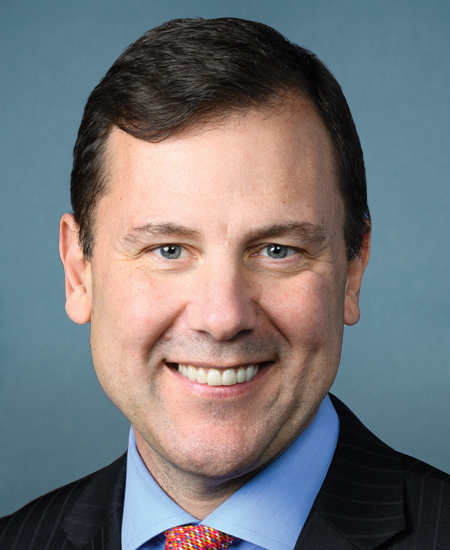
Rep. Thomas H. Kean, Jr.
Sponsored bills
Maddy summaryThis bill suspends the U.S. government's requirement to report on compliance with the Treaty on Conventional Armed Forces in Europe (CFE Treaty) during a specified period starting January 1, 2022. It directly affects the executive branch, halting mandatory reports about whether the U.S. or other treaty countries are following the treaty's rules. The key provision removes the obligation to submit these reports under the Arms Control and Disarmament Act and related treaty conditions. The suspension continues until the U.S. formally ends the treaty's operation with all other participating nations.
Maddy summaryThe LIFT AI Act (HR 9211) provides federal funding to develop AI literacy education for K-12 students and teachers. It directs the National Science Foundation to award grants to colleges, nonprofits, or consortia for creating classroom curriculum, teacher training, and evaluation tools focused on AI skills like ethical use, critical interpretation, and problem-solving. The bill specifically targets schools (K-12) and aims to integrate AI literacy into existing lessons through project-based learning and professional development. Key provisions include developing learner-centered materials, training educators on AI proficiency, and creating tools to assess student progress in AI literacy.
Maddy summaryThe CREATE AI Act of 2023 establishes a National Artificial Intelligence Research Resource (NAIRR) to improve access to AI research tools, computational resources, data, and educational materials for researchers and students across the United States. The NAIRR will provide computational resources, curated datasets, educational tools, and access to AI testbeds, with special emphasis on supporting groups historically underrepresented in STEM fields. Governed by a Steering Subcommittee chaired by the Director of the Office of Science and Technology Policy and managed by a Program Management Office within the National Science Foundation, the NAIRR includes specific requirements for ethical AI development, privacy protections, and security measures. The resource will be accessible to researchers at U.S. institutions of higher education, nonprofits, government agencies, and certain businesses, with priority given to projects addressing privacy, ethics, civil rights, and AI safety.
Maddy summaryHR 8836 establishes a grant program to fund projects improving habitat connectivity for migratory wildlife, particularly big game species like deer, elk, and pronghorn. It provides up to 90% federal funding for initiatives such as wildlife crossings, fence modifications, habitat restoration, and coordination with landowners, administered through the National Fish and Wildlife Foundation. Eligible recipients include state and tribal wildlife agencies, landowners, nonprofits, and transportation departments. The bill explicitly prohibits requiring changes to agriculture, mining, or existing land uses and preserves state/Tribal authority over wildlife management.
Maddy summaryHRES 1056 is a non-binding House resolution recognizing recent trilateral cooperation among the United States, Japan, and South Korea. It formally acknowledges specific collaborative efforts, including resumed summitry, joint military exercises, shared missile warning systems, economic partnerships, and coordinated responses to regional challenges like North Korea and crises in Sudan and Israel. The resolution does not create new policies or funding but expresses congressional support for strengthening this alliance framework. It highlights the importance of continued cooperation across diplomatic, security, and economic domains to promote stability in the Western Pacific. The resolution was introduced by multiple House members and referred to the Foreign Affairs Committee.
Maddy summaryThe Stand with Ukraine Act of 2024 establishes a framework for sustained U.S. security assistance to Ukraine in response to Russia's invasion. It endorses a 10-year bilateral security agreement and directs the U.S. government to provide military equipment, training, and security assistance to strengthen Ukraine's defense capabilities against Russian aggression. Key provisions include treating Ukraine as a major non-NATO ally for defense transfers, fast-tracking military sales through the Foreign Military Sales program, and creating mechanisms to prioritize defense article transfers. The bill also includes specific support for Ukraine's recovery, reconstruction, and demining efforts following the conflict. This legislation directly affects U.S. foreign policy implementation, military assistance programs, and Ukraine's ability to build a credible defense against Russian threats.
This resolution supports the designation of National FFA Week. It also (1) recognizes the important role of the National FFA Organization (Future Farmers of America) in developing the next generation of globally conscious leaders who will change the world; and (2) celebrates the 10th anniversary of the Give the Gift of Blue program, which has donated more than 17,000 FFA blue jackets to FFA members in need.
Maddy summaryThis bill allows the Department of Veterans Affairs to provide extended care services to spouses of veterans under specific conditions. It directly affects spouses of veterans aged 75 or older, if the VA Secretary determines such care is in the best interests of both the spouse and veteran. The key provision amends existing law to permit these services for spouses in the same manner as they are provided to veterans themselves. The bill does not create new benefits but expands access to existing care programs under defined circumstances. It focuses on practical eligibility criteria rather than broader policy changes.
Maddy summaryHR 9405, the Foreign Adversary Investment Prohibition Act, prohibits current Members of Congress (Senators and Representatives) from engaging in certain financial transactions with entities tied to specific foreign adversaries, including China, Russia, Iran, North Korea, Cuba, and Venezuela under Maduro. It defines prohibited transactions broadly to include gifts, loans, investments in securities or commodities, and similar financial dealings. Violations can result in civil penalties of up to $15,000 per offense, enforced by the Attorney General through civil action. The law directly affects Members of Congress by restricting their financial interactions with entities linked to designated countries during their service.