

Maddy summaryThe Treat and Reduce Obesity Act of 2023 expands Medicare coverage for obesity treatment by allowing a wider range of healthcare providers - including nurse practitioners, dietitians, psychologists, and community-based counseling programs - to deliver intensive behavioral therapy for obesity, provided they coordinate with primary care providers. It also adds Medicare Part D coverage for medications used to treat obesity or for weight loss management in overweight individuals with related health conditions like diabetes or high blood pressure. These changes directly affect Medicare beneficiaries, particularly older adults (65+), who face higher obesity rates and associated costs, including $50 billion annually in Medicare spending for obesity-related care. The bill requires annual reports to Congress on implementation to improve coordination of obesity care across federal health programs.
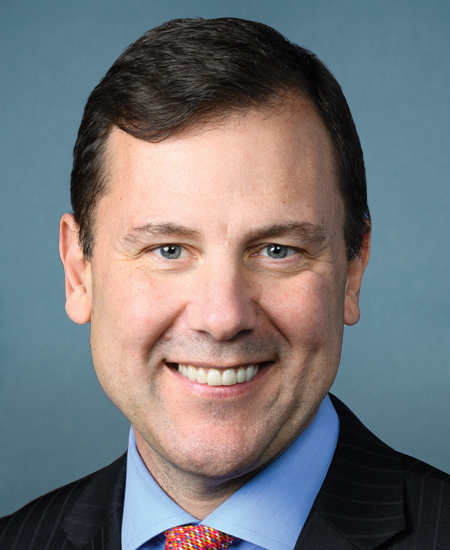
Rep. Thomas H. Kean, Jr.
Sponsored bills
Maddy summaryThis bill creates a 4-year transitional coverage period for Medicare to automatically cover "breakthrough medical devices" - new FDA-prioritized devices approved after March 2021 - as "reasonable and necessary" for treatment. During this period, these devices qualify for additional payments under Medicare's hospital and outpatient payment systems without requiring separate approval. After the 4-year period, Medicare must develop regular coverage based on additional data, with automatic coverage for all approved uses if no action is taken within two years. The bill requires Medicare to assign unique codes for these devices within three months of FDA approval and to update payment systems regularly. It also includes special provisions for "specified breakthrough devices" that lack existing Medicare benefit categories, requiring reports on their impact and cost to Congress.
Maddy summaryThis bill allows Members of Congress to use Department of Veterans Affairs (VA) facilities for meetings with veterans who are their constituents. It requires the VA Secretary to create regulations within 90 days, ensuring spaces are visible, accessible during business hours, and rented at rates similar to standard office space in the area. The regulations prohibit campaigning, political discussions, photographing patients without consent, and meetings during the 60 days before federal elections. It directly affects veterans seeking congressional assistance and Members of Congress who can now hold constituent meetings at VA locations. The bill does not change VA benefits or services but streamlines access to representatives for veterans.
Maddy summaryThe Autism CARES Act of 2024 reauthorizes and enhances federal programs supporting individuals with autism spectrum disorder. It requires the National Institutes of Health to expand research to include more fields like gerontology and psychiatry, and to ensure research reflects the full range of needs of people with autism, including those with co-occurring conditions. The bill mandates regular reports to Congress on progress, mental health needs, and transition services for young adults with autism, while increasing funding for autism-related programs from fiscal year 2025 through 2029. This legislation directly affects individuals with autism, their families, caregivers, and healthcare providers by improving access to evidence-based services and research.
Maddy summaryThe Stop Campus Hazing Act requires colleges and universities to publicly report hazing incidents involving student organizations. It defines hazing as intentional acts causing physical or psychological harm during initiation or membership in student groups, including activities like forced substance consumption, sleep deprivation, or sexual acts. Institutions must include hazing statistics in annual security reports and publish a "Campus Hazing Transparency Report" on their websites by July 1, 2025, detailing findings about organizations violating hazing policies. The reports must include organization names, violation descriptions, and key dates while excluding personally identifiable student information. This applies to all colleges participating in federal student aid programs.
Maddy summaryHR 7513, the Protecting America’s Seniors’ Access to Care Act, prohibits the Department of Health and Human Services from implementing or enforcing a proposed rule that would have set minimum staffing requirements for nursing homes and other long-term care facilities receiving Medicare or Medicaid funding. The bill specifically blocks the September 2023 proposed rule (88 Fed. Reg. 61352-61429) and any substantially similar rule. This directly affects long-term care facilities that rely on federal healthcare program payments. The key mechanism is a clear statutory prohibition preventing the rule from taking effect, without altering existing staffing standards or requirements.
Maddy summaryHR 5798, the Protecting Our Nation’s Capital Emergency Act of 2023, aims to address rising crime in Washington, D.C., by reversing two specific policies affecting the city’s police force. It restores collective bargaining rights for police discipline (by removing a 2022 restriction) and reinstates a longer statute of limitations for claims against Metropolitan Police Department members (repealing a 2022 law that shortened it). These changes target D.C. law enforcement officers directly, seeking to improve recruitment and retention by ensuring fairer treatment. The bill focuses solely on modifying these two legal provisions, without introducing new funding or crime-fighting measures.
Maddy summaryHR 5401, the 9/11 Memorial and Museum Act, provides a one-time federal grant of $5 million to $10 million to the National September 11 Memorial & Museum (operated by the World Trade Center Foundation). The grant funds the museum's operations, security, and maintenance, with specific requirements including free admission for veterans, first responders, and victims' families, dedicated weekly free public hours, and annual financial audits. The museum must also report annually to Congress on how the funds were used. This bill directly affects the museum's financial operations and access policies, not broader legislative changes.
Maddy summaryHR 3269, the Law Enforcement Innovate to De-Escalate Act, exempts specific less-than-lethal projectile devices from federal firearm taxes and National Firearms Act restrictions. The bill defines these devices as those firing projectiles at under 500 feet per second and designed not to cause death or serious injury. This directly affects law enforcement agencies using such devices and manufacturers producing them, by removing tax burdens and registration requirements. The key change is creating a clear legal exemption for these devices under federal law, streamlining their use for de-escalation purposes.
Maddy summaryThe IVF with HSAs Act of 2024 would amend federal tax law to allow individuals with any health insurance coverage (not just high deductible health plans) to contribute to a Health Savings Account (HSA). This change would expand access to HSAs, enabling more people to use these accounts for qualified medical expenses like in vitro fertilization (IVF) treatments. The bill also increases annual HSA contribution limits to $8,600 for individuals and $17,100 for families. These provisions would take effect for tax years beginning after December 31, 2024.