

Maddy summaryThis bill requires the U.S. State and Defense Departments to produce a report within 180 days analyzing how expanding the Comprehensive Security Integration and Prosperity Agreement (CSIPA) would improve regional security cooperation. The report must cover CSIPA’s benefits for military readiness, economic ties, and technology collaboration, including responses to Houthi attacks and Iranian threats, plus identify barriers to broader membership. It also mandates a follow-up strategy and briefing to engage Middle Eastern nations in joining CSIPA. The bill affects U.S. foreign policy agencies but does not alter existing laws or funding.
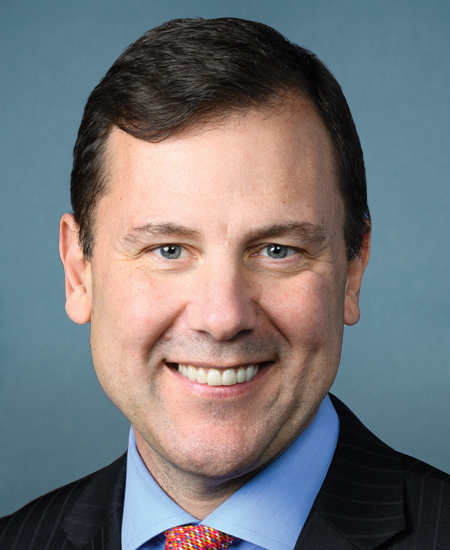
Rep. Thomas H. Kean, Jr.
Sponsored bills
Maddy summaryHR 1363 designates the "Honor and Remember Flag" (created by Honor and Remember, Inc.) as the official symbol honoring U.S. military members who died in service. It requires federal locations - including the Capitol, White House, military memorials, VA medical centers, and all post offices - to display this flag on specific days like Memorial Day, Veterans Day, and Flag Day. The bill mandates visible public display at these locations and sets deadlines for implementing the requirement (180 days for regulations, 30 days for flag procurement). It does not alter military benefits or create new programs, focusing solely on symbolic recognition through flag display.
This concurrent resolution declares that Congress should not impose any new performance fee, tax, royalty, or other charge relating to the public performance of sound recordings on a local radio station for broadcasting sound recordings over the air, or on any business for such public performance of sound recordings.
Maddy summaryHR 1303, the Protecting America’s Seniors’ Access to Care Act, would block the federal government from enforcing a 2024 rule requiring nursing homes to meet minimum staffing standards and mandating Medicaid programs to report payment transparency details. This bill directly affects long-term care facilities and Medicaid programs by preventing the implementation of these specific requirements. The legislation prohibits the Secretary of Health and Human Services from carrying out the rule published on May 10, 2024, which was designed to improve care quality and accountability in senior healthcare. It stops the rule from taking effect without creating new policies or regulations.
Maddy summaryThis bill requires federal agencies administering water infrastructure funding (like the WIFIA program) to ensure projects have construction payment and performance security. It directly affects contractors working on federally assisted water projects and state/local governments with construction requirements. The key provision mandates that projects must have security covering at least 50% of the construction contract value - either through state/local rules or federal bonds meeting specific standards under 40 U.S.C. §3131(b). This aims to protect taxpayers by reducing the risk of unpaid subcontractors or project failures. The bill modifies existing federal requirements without creating new funding or altering project eligibility.
More Homes on the Market Act This bill increases the amount of gain from the sale of a principal residence that an individual may exclude from gross income (for federal tax purposes). Under the bill, an individual may exclude from gross income gain from the sale of a principal residence of up to $500,000 (currently $250,000), and taxpayers who are married and file a joint federal income tax return may exclude up to $1 million (currently $500.000). The bill also requires these amounts to be adjusted annually for inflation.
Maddy summaryThis bill reauthorizes the Delaware River Basin Restoration Program through 2032, extending funding for watershed restoration projects. It adds Maryland as a fifth Basin state (previously a 4-State program) and requires the program to prioritize projects benefiting small, rural, or disadvantaged communities. The bill also updates definitions and administrative provisions from the original 2016 program under the Water Infrastructure Improvements for the Nation Act. This affects restoration efforts across the Delaware River Basin states (Delaware, New Jersey, New York, Pennsylvania, and Maryland).
Maddy summaryThe EAGLES Act of 2025 reauthorizes and expands the Secret Service's National Threat Assessment Center (NTAC), directing it to lead national efforts in preventing targeted violence, particularly in schools. It mandates the NTAC to provide training, research, and consultation on evidence-based threat assessment programs for schools, law enforcement, and mental health professionals, with a focus on early intervention for students showing concerning behavior. The bill allocates $10 million annually (2026-2030) for these programs, requires hiring specialists in child psychology and school threat assessment, and mandates annual reports to Congress on training reach and effectiveness. This directly affects K-12 schools, local educational agencies, and public safety officials by establishing standardized protocols to prevent violence before it occurs.
United States-Israel Defense Partnership Act of 2025 This bill requires or authorizes certain actions to increase defense-related cooperation between the United States and Israel. Specifically, the bill requires the Department of Defense (DOD) to establish a cooperative program, with the concurrence of Israel's Ministry of Defense (MOD), to develop and deploy advanced technologies for countering unmanned systems that threaten the United States and Israel; establish in Israel an office of the Defense Innovation Unit (an organization that focuses on rapidly fielding and scaling commercial technology across the U.S. military); and seek to engage Israel's MOD on the ascension of Israel into the national technology and industrial base (currently defined in law as the persons and organizations engaged in research, development, production, integration, services, or information technology activities conducted within the United States, the United Kingdom, Australia, New Zealand, and Canada). The bill authorizes DOD, upon request of Israel's MOD, to jointly conduct research, development, test, and evaluation (RDT&E) of emerging technologies such as artificial intelligence and robotics to meet defense challenges. Additionally, the bill extends the authority for DOD to (1) carry out RDT&E on a joint basis with Israel to establish anti-tunnel and counter unmanned aerial systems capabilities through 2028, and (2) transfer defense articles intended for use as reserve stocks for Israel through January 1, 2029.
Maddy summaryHR 1269, the Honoring Our Fallen Heroes Act of 2025, expands benefits for public safety officers (like police and firefighters) who develop certain cancers linked to their work. It adds 22 specific cancers - including lung, mesothelioma, and breast cancer - to the list of conditions presumed to be "exposure-related" and sustained in the line of duty. This presumption applies if the officer served at least 5 years, was diagnosed with the cancer within 15 years after last active duty, and the cancer directly caused death or permanent disability. The bill also establishes a process for adding new cancers every 3 years based on medical evidence from agencies like NIOSH, and allows claims to be filed within 3 years of the law's enactment.