

Maddy summaryHR 1705 creates a new 30% federal tax credit for agricultural businesses investing in qualifying technology projects focused on specialty crop production. The credit applies to eligible equipment, software, and systems used in precision agriculture (like GPS-guided tools for efficient input use) or controlled environment agriculture (indoor farming systems with climate control and automation). Businesses can claim this credit for property placed in service after January 1, 2025, with projects needing completion by December 31, 2035. The bill specifically targets innovations that improve efficiency in growing, processing, or packaging specialty crops as defined in existing law.
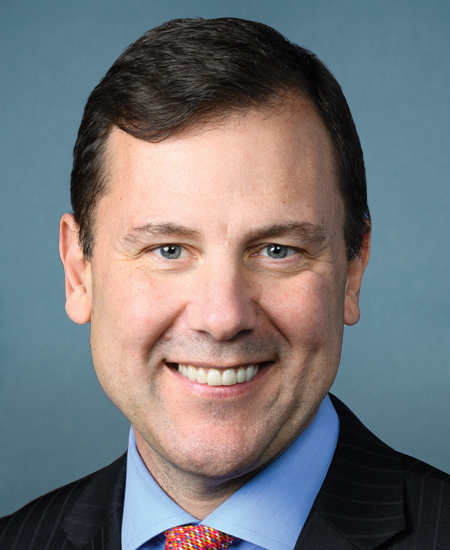
Rep. Thomas H. Kean, Jr.
Sponsored bills
Maddy summaryThis bill requires the U.S. President to impose sanctions on foreign individuals and entities that support the Palestinian Authority (PA) and Palestine Liberation Organization (PLO) system of paying terrorists and their families. It targets those who work for PA/PLO entities facilitating these payments (like the Commission of Prisoners or Institute for Care of Martyrs' Families), provide such payments, or materially assist the system. Sanctions include blocking U.S. property, denying visas, and revoking existing visas for targeted individuals. The bill terminates if the Secretary of State certifies the PA/PLO has ended these payments. (Based on HR 1710, PLO and PA Terror Payments Accountability Act of 2025)
Maddy summaryHR 1657, the Humane Cosmetics Act of 2025, prohibits cosmetic companies from conducting or contracting animal testing for products sold in the U.S. beginning one year after the law takes effect. It also bans the sale or transport of cosmetics developed using such testing after that date, with limited exemptions (e.g., for foreign regulatory requirements or when no non-animal safety alternatives exist). The bill directly affects cosmetic manufacturers, retailers, and distributors by requiring them to shift to non-animal testing methods. The Food and Drug Administration (FDA) will enforce the law, including reviewing records and imposing civil penalties for violations.
Maddy summaryThe PAST Act of 2025 amends the Horse Protection Act to ban harmful practices known as "soring," which deliberately cause pain to horses to exaggerate their gait for shows. It specifically prohibits devices like action devices (e.g., boots causing friction) and weighted shoes on Tennessee Walking Horses, Racking Horses, and Spotted Saddle Horses at events. The bill increases penalties, including escalating disqualifications for repeat offenses (180 days → 1 year → 3 years) and raises fines for violations to $5,000 per offense. It also requires stricter licensing for inspectors and mandates public posting of violation records to help event organizers enforce rules.
Maddy summaryHR 469, the Semiquincentennial Congressional Time Capsule Act, directs the Architect of the Capitol to create and bury a time capsule on the Capitol's West Lawn by July 4, 2026. The capsule will contain representative historical materials about the U.S. Semiquincentennial (250th anniversary), copies of key congressional milestones, a message from current Congress to future lawmakers, and other approved items determined by congressional leadership. It will remain sealed until July 4, 2276, when the Speaker of the House will present it to the next Congress for preservation or use. This procedural bill has no direct effect on citizens or policy, focusing solely on preserving historical materials for future Congress.
Maddy summaryThis bill awards a Congressional Gold Medal to the 761st Tank Battalion (known as the "Black Panthers"), the first predominantly Black armored unit in World War II's European Theater. It recognizes their combat service from 1944-1946, including key roles in the Battle of the Bulge and breaking the Siegfried Line, despite facing racial prejudice during and after the war. The medal will be displayed at the National Museum of African American History and Culture, with bronze duplicates available for sale to cover costs. The bill commemorates the battalion's 130,000 enemy casualties inflicted, 50% casualty rate, and their 1978 Presidential Unit Citation. It does not create new laws or affect current policies.
Maddy summaryHR 1551, the Protect and Serve Act of 2025, creates a new federal criminal offense for intentionally harming law enforcement officers under specific circumstances. It imposes harsher penalties, including up to 10 years in prison for serious injury or life imprisonment if death occurs, kidnapping is involved, or a firearm is used. The law applies when the crime crosses state lines, involves interstate weapons, occurs on federal property, or targets federal officers. Prosecutions require the Attorney General’s written certification, considering factors like prior state convictions and public safety impact. The bill directly affects law enforcement officers and federal prosecutors by expanding federal jurisdiction for certain violent crimes against them.
Maddy summaryHR 1548, the "Leveling the Playing Field 2.0 Act," amends U.S. trade laws to strengthen enforcement of antidumping and countervailing duty regulations. The bill creates new rules for handling multiple investigations on the same merchandise (successive investigations), addresses market distortions in foreign countries that affect production costs, and improves mechanisms to prevent companies from circumventing existing duties. It also establishes procedures for investigating currency undervaluation as a form of subsidy and strengthens requirements for importers to certify compliance with trade laws. These changes primarily affect U.S. importers of foreign goods, foreign exporters, and the Department of Commerce, which administers these trade enforcement mechanisms.
Maddy summaryThe American Victims of Terrorism Compensation Act amends the Justice for United States Victims of State Sponsored Terrorism Act to increase funding for victims of terrorism. It directs the transfer of approximately $1.5 billion from the Binance Holdings Limited case, plus 50% of excess unobligated balances from Department of Justice and Treasury forfeiture funds, into the Victims Fund. The bill establishes deadlines for agencies to deposit funds (within 30 days of receipt or 15 days after enactment), requires annual reports on fund activity, and authorizes annual payments to eligible claimants starting in 2026. This legislation directly affects terrorism victims who receive compensation from the fund and federal agencies that handle forfeited assets from terrorism-related cases.
Maddy summaryHR 1524, the ALYSSA Act, requires all public elementary and secondary schools receiving federal education funds to install silent panic alarms. The bill amends the Elementary and Secondary Education Act to mandate that each school must have at least one silent alarm system for security emergencies like active shooters or lockdowns. These alarms must generate a silent signal to law enforcement without alerting the threat, defined as a device manually activated for life-threatening situations. The requirement applies to all schools served by local educational agencies as a condition for receiving federal funds under the ESEA.