

Maddy summaryThis non-binding House resolution urges the President to appoint a Special Envoy for Sudan to lead U.S. diplomatic efforts addressing the ongoing conflict and humanitarian crisis. It specifically calls for the envoy to coordinate with the Middle East Special Envoy, secure humanitarian access, and advance U.S. national security interests. The resolution highlights that over 13 million people have been displaced and 30 million require aid in Sudan, with regional instability and extremist threats escalating. It also requests the State Department elevate Sudan as a strategic priority and ensure robust humanitarian assistance. The resolution reflects the House's view that a dedicated envoy would strengthen U.S. diplomatic engagement to support peace and stability.
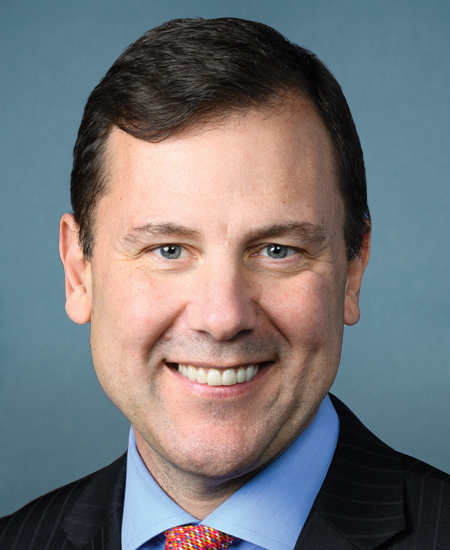
Rep. Thomas H. Kean, Jr.
Sponsored bills
Maddy summaryThis bill establishes a federal program to improve coastal flood and storm surge forecasting through better models, data, and community preparedness. It directs the Under Secretary of Commerce to prioritize real-time prediction of ocean-driven flooding, incorporate sensor data (like urban heat mapping), and develop probabilistic forecasts for use by emergency managers and communities. The program also requires identifying and filling "data voids" in vulnerable coastal areas to enhance weather observations and emergency response tools, with pilot projects focusing on critical infrastructure like dams and power plants. Key mechanisms include annual budget submissions to Congress and interagency coordination with FEMA and the National Weather Service to implement these improvements.
Maddy summaryHRES 461 is a symbolic resolution recognizing the economic contributions of independent workers (such as freelancers, app-based earners, and contractors). It highlights that 73 million Americans engaged in freelance work in 2024, contributing $1.5 trillion to the economy, and notes that many value the flexibility of independent work. The resolution does not create new laws or change policies - it simply acknowledges these workers’ role and the benefits of flexible work arrangements. It also references concerns about legislation that might reclassify independent workers as employees, potentially overriding state laws like California’s Prop 22. This resolution has no binding effect on existing laws or regulations.
Maddy summaryHR 3691 establishes a bipartisan commission to study antisemitism in the United States, directly affecting all Americans by examining the causes and scope of antisemitic incidents nationwide. The commission, composed of 8 members appointed by congressional leaders (with strict bipartisan balance), will investigate current antisemitism, review existing government data on attacks (without interfering with active investigations), and submit a report with recommendations to Congress and the President within one year. Key provisions include requiring the commission to hold monthly meetings, issue subpoenas for evidence, and terminate 120 days after its report is submitted. The bill defines antisemitism broadly as hatred or manifestations targeting Jewish individuals, property, institutions, or religious sites. This is a study-focused measure, not a new law imposing penalties or policies.
Maddy summaryHR 3694, the VALID Act of 2025, requires lenders to include specific information about VA loans in mortgage disclosures. It amends the National Housing Act to mandate that disclosures state the loan-to-value ratio and clarify that VA loans are available under Chapter 37 of Title 38 (veterans' benefits law), assuming prevailing interest rates. The bill also requires the Federal Housing Finance Agency to add a military service question to the Uniform Residential Loan Application form, placing it above the signature line within six months of enactment. This directly affects veterans and active-duty service members applying for VA-guaranteed mortgages, as well as the lenders processing those applications.
Maddy summaryThe FBI Animal Cruelty Taskforce Act of 2025 establishes a dedicated FBI unit to investigate federal animal cruelty crimes, specifically targeting dogfighting, cockfighting, and "crush videos." This taskforce will create training materials for local law enforcement to help them detect and investigate these offenses. It also requires the taskforce to coordinate with agencies like the Department of Agriculture and U.S. Customs, and to submit annual reports to Congress detailing filed charges, convictions, and unresolved investigations. The bill directly affects local police departments through new training resources and federal agencies through mandated coordination and reporting.
Maddy summaryHR 3635, the Foreign Adversary Investment Prohibition Act, bans Members of Congress (Senators and Representatives) from conducting certain financial transactions that benefit specific foreign adversaries during their term in office. It prohibits gifts, loans, investments in securities or commodities, and complex financial instruments (like derivatives) that directly or indirectly benefit countries listed as "foreign adversaries" (including China, Russia, Iran, North Korea, Cuba, and Venezuela under Maduro). Violations could result in civil penalties of up to $15,000 per offense, enforced by the Attorney General through civil court actions. The law directly affects sitting lawmakers by restricting their financial dealings with entities tied to these nations.
Maddy summaryThe DEFIANCE Act of 2025 creates a new civil legal remedy for victims of non-consensual intimate digital forgeries (synthetic images or videos manipulating real people into sexual contexts without consent). It allows affected individuals to sue perpetrators in federal court for damages up to $250,000, injunctions to remove content, and privacy protections like pseudonyms. The bill specifically covers cases where forgeries are created or shared with intent to disclose, including scenarios involving sexual assault or harassment. It expands existing federal protections under 15 U.S.C. 6851 to address digital forgeries while ensuring state laws remain in effect.
Maddy summaryHR 3533, the Blockchain Regulatory Certainty Act, creates a legal exemption for most blockchain developers and service providers. It prevents these entities from being classified as money transmitters, financial institutions, or subject to related licensing requirements under federal or state law - unless they personally control users' digital assets. The bill specifically exempts developers who create blockchain software or provide access to blockchain networks (like public ledgers for digital assets), as long as they lack unilateral authority over those assets. This provides regulatory clarity for the industry while preserving existing intellectual property laws and state regulations that align with the bill.
Clinical Trial Modernization Act This bill authorizes a grant program and provides certain exemptions to support the participation of individuals in clinical trials. Specifically, the bill authorizes a grant program to support outreach, education, and recruitment efforts for clinical trials that may benefit certain underrepresented populations or communities in need, such as rural or tribal areas. The bill also exempts from anti-kickback laws for federal health care programs (1) remuneration that is offered to cover participants' expenses to participate in clinical trials, (2) the provision of free digital health technologies to support participation of underrepresented populations in clinical trials, and (3) payment for participants' cost-sharing obligations in relation to clinical trials. Finally, the bill exempts up to $2,000 in remuneration that is received for participating in a clinical trial from income tax.