Fair COLA for Seniors Act This bill bases cost-of-living adjustments for certain benefits available through federal and military retirement programs, Social Security, and specified programs for veterans on a price index that tracks the spending patterns of older consumers. The Bureau of Labor Statistics of the Department of Labor must publish that price index on a monthly basis.
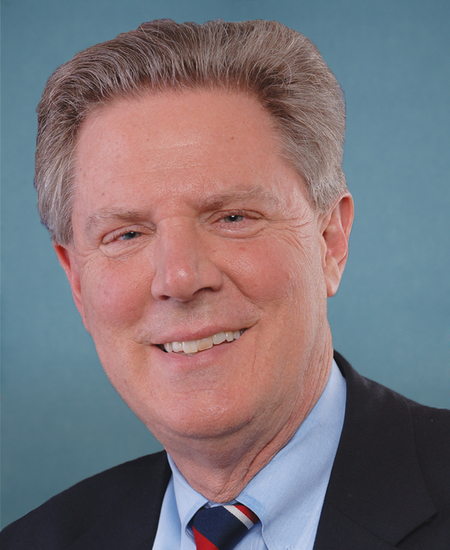
Rep. Frank Pallone, Jr.
Sponsored bills
Nursing Home Improvement and Accountability Act of 2021 This bill establishes reporting, staffing, and other quality control requirements for Medicare skilled nursing facilities and Medicaid nursing facilities. For example, the bill requires facilities to have registered professional nurses available 24-7 and to provide infection control services overseen by infection preventionists at least 40 hours per week. It also establishes civil penalties for facilities that submit inaccurate reports relating to staffing data and prohibits facilities from entering into pre-dispute arbitration agreements. Additionally, the Centers for Medicare & Medicaid Services (CMS) must conduct additional quality control and oversight, including (1) auditing facility cost reports; (2) reviewing the quality and effectiveness of compliance surveys; and (3) establishing on-site educational programming for facilities that fail to meet applicable standards. The CMS must also establish minimum staff-to-resident ratios for nursing staff, as it determines appropriate. The bill also establishes a demonstration program to evaluate the impact of certain changes to facility design, staffing, and care coordination on the health outcomes of residents in skilled nursing facilities. Among other requirements, selected facilities must serve between 5 and 14 residents, offer private rooms, and have resident and family councils.
Harlem Hellfighters Congressional Gold Medal Act This bill provides for the award of a Congressional Gold Medal to the 369th Infantry Regiment, commonly known as the Harlem Hellfighters, in recognition of their bravery and outstanding service during World War I.
Migratory Bird Protection Act of 2021 This bill prohibits the incidental taking (e.g., capturing or killing) of migratory birds by commercial activities unless the activity is authorized under a permit or is identified as posing de minimis risk to migratory birds. The U.S. Fish and Wildlife Service (USFWS) must regulate such incidental taking, including by (1) issuing general permits for certain industries, (2) creating a mitigation fee for any incidental taking of migratory birds, and (3) identifying categories of de minimis risk activities that are exempt from liability for the taking of migratory birds. In addition, the USFWS must establish and maintain a research program (1) to evaluate the impacts of commercial activities on birds, (2) to evaluate the effectiveness of best management practices and technologies to avoid or minimize such impacts, and (3) to develop new or improved best management practices and technologies.
Creative Economy Revitalization Act This bill requires the Department of Labor to award grants to government and nonprofit agencies to provide programs that employ individuals and provide public access to art or arts programming.
Food Labeling Modernization Act of 2021 This bill imposes additional labeling requirements for food and addresses related issues. A food intended for human consumption must include on its principal display panel a summary of nutritional information using a system that (1) clearly distinguishes between products of greater or lesser nutritional value; and (2) uses standardized symbols to provide warning about products that are high in certain substances, such as trans fats. The Food and Drug Administration (FDA) must promulgate regulations establishing the requirements for such a system. Labels that use certain terms, such as whole wheat , fruit , or vegetable , must include additional information, such as the amount or quantity of that item in the food. The FDA must promulgate certain regulations relating to the use of the terms natural or healthy on food labels. The bill also imposes labeling requirements for certain foods that contain added coloring, added flavoring, phosphorus, caffeine, gluten, allulose, polydextrose, sugar alcohols, or isolated fibers. The FDA may, by regulation, deem a food ingredient to be a major food allergen. The FDA must also impose certain restrictions on the types of beverages that may be identified as infant formula or formula. The FDA must require food manufacturers to submit all information on the label of a food offered for sale in package form and update such submissions as necessary. The information must be made available in a public database on the FDA's website.
Lonnie Kilpatrick Central Pacific Relief Act This bill provides a presumption of service-connection for diseases associated with exposure to certain herbicide agents to veterans who served on (1) Guam or American Samoa, or in the territorial waters thereof, between January 9, 1962, and July 31, 1980; or (2) Johnston Atoll or a ship that went to Johnston Atoll between January 1, 1972, and September 30, 1977. Under a presumption of service-connection, specific diseases diagnosed in certain veterans are presumed to have been caused by the circumstances of their military service. Health care benefits and disability compensation may then be awarded. Additionally, the bill expands eligibility for hospital care, medical services, and nursing home care to veterans with a disability associated with exposure to certain herbicides during specified times of military service on Guam, American Samoa, or Johnston Atoll.
Protecting Renters from Evictions Act of 2021 This bill extends through December 31, 2021, the order issued by the Centers for Disease Control and Prevention titled Temporary Halt in Residential Evictions To Prevent the Further Spread of COVID–19 and published on September 4, 2020.
Closing the Meal Gap Act of 202 1 This bill revises the requirements for calculating Supplemental Nutrition Assistance Program (SNAP) benefits. The bill increases the minimum SNAP benefit and requires benefits to be calculated using the value of a low-cost food plan. The Department of Agriculture (USDA) must determine the requirements for the low-cost food plan, which is the diet required to feed a family of four, consisting of a man and a woman 19-50 years of age, a child 6-8 years of age, and a child 9-11 years of age. USDA must (1) reevaluate and publish the market baskets of the plan by January 1, 2027, and every five years thereafter, based on current food prices, food composition data, consumption patterns, and dietary guidance; and (2) make adjustments to the plan to account for household size, changes in the cost of the diet, and the costs of food in specified areas. The bill modifies the requirements for calculating household income to determine SNAP eligibility by (1) authorizing a standard medical expense deduction for households containing an elderly or disabled member, and (2) eliminating the cap on the excess shelter expense deduction. The bill eliminates certain work requirements for SNAP. The requirements apply to able-bodied adults who are ages 18-49 and have no dependent children. The bill allows Puerto Rico, American Samoa, and the Northern Mariana Islands to participate in SNAP. Currently, the three territories receive block grants instead of participating in SNAP.

Native Behavioral Health Access Improvement Act of 2021 This bill establishes a special tribal behavioral health grant program and expands the applicability of certain federal health care provisions to American Indians and Alaska Natives. Specifically, the bill provides funds for and requires the Indian Health Service (IHS) to award grants to eligible entities (e.g., tribal health programs) for the prevention and treatment of mental health and substance use disorders. The bill defines Indian for purposes of health insurance reform, exchanges, and subsidies to include individuals of Indian descent who are members of an Indian community served by the IHS and individuals considered by the Department of Health and Human Services to be Indian for purposes of eligibility for Indian health care services. Individuals included in the definition are eligible for special monthly enrollment periods on health insurance exchanges and elimination of cost sharing under individual health coverage for those whose income is not more than 300% of the poverty line. Under current law, only members of Indian tribes are eligible for these benefits.