

Maddy summaryHR 698, the Assault Weapons Ban of 2023, prohibits the sale, manufacture, transfer, and possession of specific firearms and ammunition devices commonly referred to as "assault weapons" and "large capacity magazines" in interstate commerce. The bill defines "semiautomatic assault weapons" to include rifles like AR-15s and AK-47s, as well as firearms with specific features such as folding stocks, pistol grips, threaded barrels, and detachable magazines holding more than 15 rounds. It exempts law enforcement, military, antique firearms, and weapons already lawfully owned before the law's enactment (known as "grandfathered" weapons). The bill also requires new identification markings on these weapons and large capacity magazines, and adds background check requirements for transfers of grandfathered weapons.
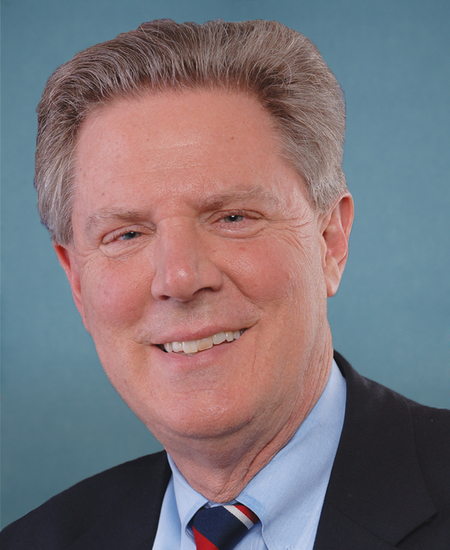
Rep. Frank Pallone, Jr.
Sponsored bills
Maddy summaryHR 3792 extends U.S. security funding for Israel through 2028 (Section 3) and expands energy cooperation to include advanced nuclear technologies and carbon capture (Section 5). It requires annual reports on regional security partnerships involving Israel (Section 6) and ensures countries in the Abraham Accords can access U.S. development programs (Section 8). The bill also mandates reports on diplomatic efforts against ICC investigations targeting the U.S. and Israel (Section 10) and encourages people-to-people programs to strengthen the Abraham Accords (Sections 7, 9). These provisions directly affect Israel’s diplomatic engagement, security partnerships, and economic cooperation in the Middle East.
Maddy summaryThe Universal School Meals Program Act of 2023 would establish a universal school meals program providing free breakfast and lunch to all children enrolled in participating schools, regardless of family income. Key provisions include eliminating income-based eligibility requirements for school breakfast and lunch programs, setting specific reimbursement rates ($2.80 for breakfast and $4.63 for lunch with annual inflation adjustments), and prohibiting schools from collecting debt for unpaid meals or "shaming" students. The bill also replaces references to "free or reduced price" with "economically disadvantaged students" in related laws and establishes new methods for identifying children from low-income backgrounds. This legislation would directly affect all public schools participating in the National School Lunch Program and School Breakfast Program.
Maddy summaryThis bill removes a barrier for college students seeking food assistance by amending the SNAP program rules. It directly affects students enrolled at least half-time in recognized colleges or training programs, who were previously automatically ineligible unless they met separate requirements. The key change eliminates the prior restriction (in section 6(e)) that barred most higher education students from SNAP, allowing them to qualify under the new provision in section 3(m)(5)(F). The changes take effect January 2, 2024.
Maddy summaryHR 3660, the BOSS and SWIFT ACT of 2023, requires all ticket sellers (both primary sellers like venues and secondary marketplaces) to clearly display the total ticket cost - including base price and all mandatory fees - before purchase. It mandates itemized pricing showing base price separately from fees, prohibits hidden price changes during checkout, and ensures refunds for non-delivery (with options for full refund or replacement). The law also bans deceptive website designs that obscure pricing choices and restricts secondary marketplaces from using misleading domain names or hiding ticket ownership details. These rules apply to all ticket sales for events like concerts and sports, aiming to increase transparency for consumers.
Maddy summaryHRES 439 is a non-binding resolution expressing the House of Representatives' support for keeping the U.S. Postal Service (USPS) as an independent federal agency, not subject to privatization. It highlights USPS's constitutional role, self-sustaining nature (relying on service revenue, not taxpayer funds), and its importance to rural communities, e-commerce, and over 600,000 employees. The resolution urges Congress to take action to preserve USPS's independence, emphasizing that privatization could raise prices, reduce services, and harm the nation's mail infrastructure. As a procedural resolution, it does not change law but formally states the House's position.
Maddy summaryHR 3610, the Neighbors Not Enemies Act, repeals specific sections (4067-4070) of the Alien Enemies Act of 1798 from U.S. law. This bill removes the legal authority allowing the president to detain or deport non-citizens during wartime based on that historical statute. The repeal directly affects the federal legal framework governing emergency powers over non-citizens, eliminating a provision dating to the Quasi-War with France. The bill makes no new policy changes but formally removes this outdated legal mechanism from the U.S. Code.
This resolution encourages the U.S. Holocaust Memorial Museum to continue its work in educating the public about the dangers of antisemitism and the origins of the Holocaust, congratulates those responsible for the creation of the museum, condemns antisemitism, supports educational and community-based programs that counter antisemitism and hate, and supports the designation of a U.S. Holocaust Memorial Museum Day.
Historic Preservation Fund Reauthorization Act This bill extends through FY2033 and increases funding for the National Park Service's Historic Preservation Fund. The funding is provided from revenues from Outer Continental Shelf oil and gas leases, and awards from the fund are made to states and other entities, including tribes and nonprofits.
Maddy summaryThis bill would withhold 50% of federal highway funds from states implementing congestion pricing systems similar to New York City's Manhattan Central Business District Tolling Program (referenced in a 2023 environmental assessment). It directly affects states like New York that have adopted or plan to adopt such tolling systems, targeting specific programs rather than all congestion pricing. The mechanism requires the Secretary of Transportation to withhold these funds annually starting October 1, 2023, from apportionments under specific highway funding formulas. The bill does not create new tolling policies but adds a federal funding penalty for states using the targeted congestion pricing model.