Maddy summaryHR 4579, the Fairness for Farm Workers Act, amends the Fair Labor Standards Act to establish phased overtime requirements for agricultural workers. Starting in 2024, most farm employers must pay overtime for hours worked beyond 55 per week (reducing to 50 in 2025, 45 in 2026, and 40 in 2027), with small farms (25 or fewer employees) getting a 3-year delay on the full 40-hour standard. The bill also removes existing exemptions that allowed some agricultural employers to avoid overtime pay for certain workers. This directly affects farm workers in agriculture and their employers, requiring compliance with standard overtime rules previously not applied to this sector.
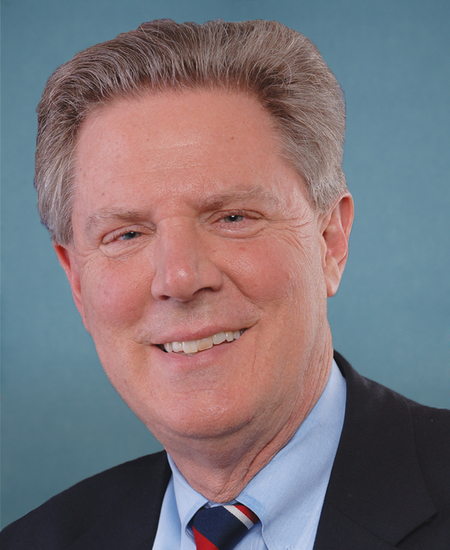
Rep. Frank Pallone, Jr.
Sponsored bills
Legacies of War Recognition and Unexploded Ordnance Removal Act This bill authorizes humanitarian assistance to Vietnam, Laos, and Cambodia to clear landmines and other explosive remnants of war. Under the bill, the President may, from FY2024 through FY2029, provide humanitarian assistance to (1) develop national surveys of landmines and other explosive remnants of war; (2) clear such explosive remnants of war; (3) manage stockpiles of small arms, light weapons, and ammunition; (4) build capacity and improve physical security related to such explosive remnants of war; and (5) support survivors of incidents involving such explosive remnants of war, including by providing related medical assistance and prosthetic devices. The bill also requires the President to report to Congress about any assistance provided.
Maddy summaryThis bill requires national parks to reduce disposable plastic products, primarily targeting plastic water bottles and food containers sold to visitors. Park directors must eliminate these sales where feasible after considering factors like operational costs, waste reduction, infrastructure for refill stations, and impacts on park vendors. Each park must also implement visitor education about water availability and report biennially on progress, including visitor satisfaction and safety metrics. The law directly affects all national park units, concessionaire businesses, and park visitors. It mandates a phased, practical approach without banning all plastics immediately.
This resolution expresses the sense of the House of Representatives that (1) lesbian, gay, bisexual, transgender, queer, intersex, and asexual (LGBTQIA+) rights are human rights and protected by the U.S. Constitution; (2) LGBTQIA+ Pride Month should be celebrated; and (3) all Americans should be treated equally regardless of sexual orientation, sex characteristics, or gender identity.
Maddy summaryThis bill prohibits defendants in federal criminal cases from using a victim's LGBTQ+ identity (sexual orientation, gender identity, or expression) as a legal excuse for violence or to reduce sentences - a practice known as the "LGBTQ+ panic defense." It specifically bans arguments that a "nonviolent sexual advance or perception" of the victim's identity justified the crime, while allowing evidence of the defendant's past trauma under standard evidence rules. The law directly affects federal criminal trials where defendants attempt to justify violence against LGBTQ+ victims using prejudice-based excuses. It also requires the Attorney General to report annually on federal prosecutions involving bias-motivated crimes against LGBTQ+ individuals.
Maddy summaryHR 4422 (Global Respect Act) requires the President to publicly identify foreign officials responsible for violence, torture, or arbitrary detention against LGBTQI individuals and block their entry to the U.S., including revoking visas for them and their immediate families. It mandates annual reporting to Congress on the list of sanctioned individuals, the reasons for additions/removals, and efforts to coordinate with other countries on similar sanctions. The bill also updates U.S. human rights reporting requirements to explicitly include data on violence and discrimination against LGBTQI people worldwide. These measures aim to increase accountability for human rights violations against LGBTQI individuals without advocating for specific policy outcomes.
This resolution expresses support for (1) equal rights and protections for all people, regardless of actual or perceived sexual orientation, gender identity, or sex characteristics; and (2) the designation of LGBTQI+ Equality Day to commemorate Supreme Court decisions handed down on June 26 in 2003, 2013, and 2015. The resolution also acknowledges the need for further legislation to ensure that people in the United States are free from all forms of discrimination on the basis of actual or perceived sexual orientation, gender identity, or sex characteristics.
Maddy summary# Summary of National Flood Insurance Program Reform Bill This comprehensive legislation proposes significant reforms to the National Flood Insurance Program (NFIP) with a focus on policyholder protections, program transparency, and program solvency. ## Key Provisions: ### Policyholder Protections (Sections 401-416) - **Enhanced Appeals Process**: Creates an Independent Office for Policyholder Appeals with a 90-day deadline for final decisions - **Foundation Damage Presumption**: Establishes a rebuttable presumption that foundation/structural damage was caused by flood, not earth movement - **Mold Remediation Guidance**: Requires FEMA to provide policyholders with guidance on mold prevention after floods - **Transparency in Claims**: Mandates disclosure of all claim documents to policyholders upon request - **Training Requirements**: Requires continuing education for insurance agents every 2 years - **Prohibition on Report Manipulation**: Prevents alteration of engineer reports before providing them to policyholders - **Agent Advisory Council**: Establishes a council with diverse representation to advise FEMA on policyholder experience ### Solvency Measures (Sections 301-306) - **Interest Forbearance**: Forbids interest on NFIP debt for 5 years - **Write Your Own Company Compensation Cap**: Limits reimbursement to 22.46% of premiums - **Third-Party Cost Transparency**: Requires public disclosure of vendor costs - **Mitigation Assistance**: Requires policyholders to accept mitigation offers or face 25% premium increases ### Flood Risk Disclosure (Section 416) - Requires property flood hazard disclosure before property transfer, including flood risk information and insurance cost estimates - Sets a deadline of October 1, 2024 for adoption of disclosure requirements ### Additional Key Provisions - **Appeals Process**: Creates formal appeals for map changes and levee protection assessments - **Levee Protection**: Requires proper assessment of levee systems and mandates flood insurance purchase only in unprotected areas - **Premium Calculator**: Requires public tool to estimate flood insurance rates and show impact of mitigation - **Grace Period**: Allows policyholders to renew within 90 days of lapse at the original renewal rate This legislation aims to balance program solvency with improved consumer protections, increased transparency, and better risk management for flood insurance policyholders.

Maddy summaryThe Equal Dignity for Married Taxpayers Act of 2023 updates the Internal Revenue Code to use gender-neutral language regarding married couples. It replaces terms like "husband and wife" with "married couple" and "his spouse" with "the individual's spouse" throughout tax code provisions. The bill makes these language changes to ensure the tax code applies equally to all married couples regardless of gender, without altering tax rates, deductions, or other substantive tax policies. This affects all married taxpayers and tax professionals who apply the tax code. The bill is a language update rather than a policy change, making the tax code more inclusive while maintaining existing tax treatment.
Maddy summaryThe Downpayment Toward Equity Act of 2023 creates a federal program to provide down payment assistance to first-generation homebuyers, defined as individuals whose parents did not own a home. The program would provide grants to states (75% of funds) and eligible entities (25% on competitive basis) to help cover down payments, closing costs, and mortgage interest reductions, with maximum assistance of $20,000 or 10% of purchase price. To qualify, homebuyers must have household income up to 120-140% of median area income, be first-time homebuyers, and meet the "first-generation" definition. States must comply with fair housing requirements, and recipients must repay assistance if they don't occupy the home as their primary residence within five years, with exceptions for hardship.