

Maddy summaryHR 2381, the SCREENS for Cancer Act of 2025, reauthorizes and updates the National Breast and Cervical Cancer Early Detection Program (NBCCEDP). It directly affects low-income, uninsured, or underinsured women across all 50 states, territories, and tribal communities by expanding access to breast and cervical cancer screenings, diagnostic services, and patient navigation support. Key provisions include updating program language to emphasize prevention alongside detection and control, adding specific strategies to reduce disparities, and appropriating $235 million annually for fiscal years 2026-2030. The bill also requires a GAO study by 2027 to assess program eligibility, service trends, and barriers to screening access.
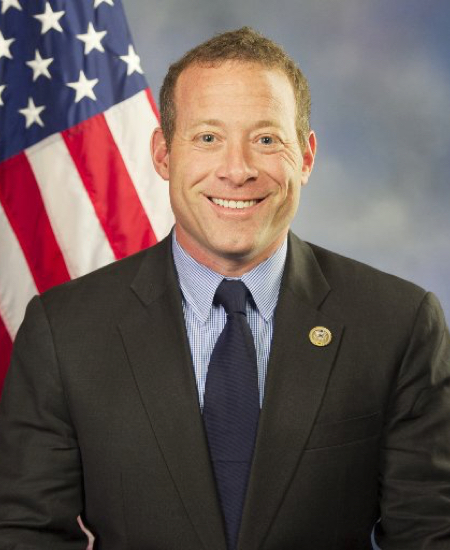
Rep. Josh Gottheimer
Sponsored bills
Maddy summaryThis bill allows schools to use existing public health block grants to purchase naloxone (a medication that reverses opioid overdoses) and provide training for school staff on its use. It directly affects schools, teachers, nurses, administrators, and students by requiring the allocation of funds for naloxone kits, staff training, and fentanyl awareness education. Key provisions include adding specific grant uses for naloxone procurement, training school personnel in administration, and distributing fentanyl safety materials to students. The bill amends the Public Health Service Act to enable these concrete, preventative measures within educational settings.
Maddy summaryThis bill would require federal firearms licensees to prohibit sales of specific high-capacity rifles and shotguns to people under 21. It targets semiautomatic centerfire rifles and shotguns capable of holding more than 5 rounds in their magazines, raising the age limit from 18 to 21 for these weapons. Exceptions apply for active military members and certain government employees authorized to carry firearms. The law directly affects gun retailers and individuals under 21 seeking to purchase these specific firearms. It modifies existing federal gun sale rules without changing age requirements for other firearms.
Maddy summaryHCONRES 21 is a symbolic House resolution recognizing the persistent gender wage gap in the U.S., where women earn significantly less than men for comparable work. It cites specific data showing women overall earn 75 cents and women of color earn even less (e.g., 58 cents for Latinas) per dollar earned by White, non-Hispanic men. The resolution does not create new laws or policies but formally acknowledges the economic impact of this disparity, including annual lost wages exceeding $994 million for full-time women workers. It also highlights designated Equal Pay Days for different demographic groups to underscore the varying timelines to close the gap.
Maddy summaryThis bill designates Uyghurs and other Muslim minority group members from Xinjiang who have experienced or fear persecution for peaceful political, religious, or cultural expression as "persons of special humanitarian concern" for refugee resettlement. It provides for Priority 2 processing under the refugee system, waives the presumption that applicants are immigrants, and excludes them from numerical visa limits. The bill requires regular reporting on refugee applications from Xinjiang, including wait times and denial reasons, and encourages other countries to make similar accommodations for Xinjiang refugees. The provisions apply to individuals who fled Xinjiang due to detention, forced labor, family separation, or other human rights abuses documented in the bill's findings. The bill would expire 10 years after enactment.
Brake for Kids Act of 2025 This bill directs the Department of Transportation (DOT) to produce and distribute a national public safety campaign on the dangers of illegally passing stopped school buses. Specifically, the campaign must increase awareness and education about the issue through a variety of media, including television, radio, and social media advertising. DOT must use Infrastructure Investment and Jobs Act funds to produce and distribute the campaign.
Maddy summaryThis bill adds Medicare coverage for home-based treatment of Alpha-1 Antitrypsin Deficiency Disorder (a rare genetic condition causing lung and liver damage). It specifically covers "augmentation therapy" (replacement protein therapy) delivered at home by qualified suppliers to Medicare Part A and B enrollees with this diagnosis who aren't in Medicare Advantage plans. The bill establishes payment for intravenous kits and up to 2 hours of nursing services per session, set at 80% of the lesser of actual cost or a defined rate. It amends Medicare rules to include this treatment under coverage, effective January 2027.
Maddy summaryThis bill authorizes the President to award Doris Miller the Medal of Honor posthumously for her heroic actions during the Pearl Harbor attack in 1941. It directly affects Miller, an African American Navy cook who was initially recognized with a Navy Cross for saving lives and operating a machine gun under fire while serving in a role typically restricted to Black sailors. The bill overrides standard time limits for awarding the Medal of Honor, enabling the upgrade from her existing Navy Cross citation. This would correct the historical oversight where Miller - unlike other Pearl Harbor heroes - was denied the Medal of Honor despite her documented valor.
Maddy summaryThis bill imposes U.S. economic sanctions and visa restrictions on the Popular Resistance Committees (PRC) and related entities, targeting individuals and groups linked to the October 7, 2023, attacks on Israel. It requires the President to block assets and deny visas to PRC members, affiliates, and any group operating under their umbrella, effective 90 days after enactment. The law also mandates a report within 90 days on whether "Lion’s Den" meets criteria for terrorism designation under existing U.S. law. These measures apply specifically to designated terrorist organizations and their networks, without altering broader U.S. counterterrorism policy.
Maddy summaryThe Paycheck Fairness Act strengthens equal pay protections by expanding the definition of "sex" to include pregnancy, childbirth, sexual orientation, gender identity, and sex characteristics. It modifies employer defenses for pay disparities to require proof that any pay difference is job-related, not based on sex, and accounts for the entire pay gap. The bill prohibits employers from asking about salary history, enhances penalties for violations, and requires employers with 100+ employees to collect and report detailed pay data by race, sex, and job category. It also establishes training programs for employers on eliminating pay bias and creates a National Equal Pay Enforcement Task Force to coordinate enforcement efforts. This legislation directly affects employers, particularly those with 100+ employees, and aims to address pay disparities impacting women, people of color, and other underrepresented groups.