

Maddy summaryHR 2585, the Armenian Genocide Education Act, establishes a federal program through the Library of Congress to develop educational resources about the 1915-1923 Armenian Genocide for K-12 schools. It requires the Librarian to create and distribute accurate teaching materials, provide teacher training workshops, and maintain an online resource hub focused on the genocide's history, lessons, and prevention of hate. The program directly supports local educational agencies, independent schools, and educators by offering professional development and curriculum resources. It defines key terms like "denial" and "distortion" to guide the educational content, aiming to improve understanding of this historical event and its relevance to preventing modern-day hate crimes.
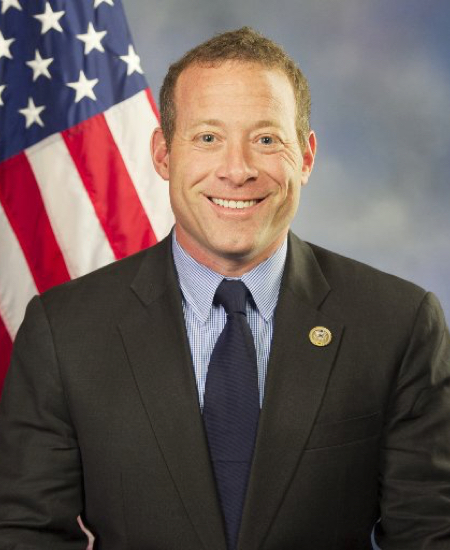
Rep. Josh Gottheimer
Sponsored bills
Maddy summaryHR 2577, the PLAN for School Safety Act of 2025, establishes a federal grant program to create statewide or regional School Safety Development Centers. These centers, funded through $25 million annually (2026-2030), will provide schools - especially those in rural, Tribal, or low-resourced communities - with free, customized consulting to develop or improve evidence-based school safety and mental health plans. Centers must offer tailored consultations, help schools access federal/state funding, and provide training, while prohibiting the use of funds for firearm training or hiring school staff. The bill directly affects public schools and their communities by supporting data-driven safety planning without altering existing civil rights or safety laws.
Maddy summaryThis bill, titled "Secure Family Futures Act of 2025" but actually focused on tax code changes, primarily affects a specific subset of insurance companies. It amends the Internal Revenue Code to exclude certain debts (like bonds or notes) held by these companies from being counted as capital assets (Section 2), and extends their capital loss carryover period to 10 years for losses from foreign expropriation or losses incurred by these companies (Section 3). The changes apply to debts acquired and losses arising after December 31, 2025. The bill's title is misleading, as it does not relate to family policy but is a technical tax amendment targeting defined insurance industry entities.
Sanctioning Russia Act of 2025 This bill imposes penalties on certain persons (individuals and entities) if the President determines that the Russian government or a person acting at Russia's direction is involved with (1) refusing to negotiate a peace agreement with Ukraine; (2) violating a negotiated peace agreement; (3) initiating another invasion of Ukraine; or (4) overthrowing, dismantling, or seeking to subvert the Ukrainian government. If the President makes such a determination, the bill requires certain actions including the President must impose visa- and property-blocking sanctions on specified persons such as the Russian president, certain Russian military commanders, and any foreign person that knowingly provides defense items to the Russian armed forces; the President must increase the rate of duty on all goods and services imported from Russia into the United States to at least 500% relative to the value of such goods and services; the President must increase the rate of duty on all goods and services imported into the United States from countries that knowingly engage in the exchange of Russian-origin uranium and petroleum products to at least 500% relative to the value of such goods and services; the Department of the Treasury must impose property-blocking sanctions on any financial institution organized under Russian law and owned wholly or partly by Russia, and any financial institution that engages in transactions with those entities; and the Department of Commerce must prohibit the export, reexport, or in-country transfer to or in Russia of any U.S.-produced energy or energy product.
Maddy summaryHR 2533, the EASE Act of 2025, requires Medicare and Medicaid to test a new telehealth model designed to improve specialty care access for rural and underserved Medicare/Medicaid beneficiaries. The bill mandates the Centers for Medicare & Medicaid Services (CMS) to partner with nonprofit provider networks - comprising at least 50 community health centers or rural clinics (half in rural areas) - to deliver specialty care via telehealth and coordinate with primary care providers. Eligible individuals must be enrolled in Medicare Part B, Medicaid, or CHIP and reside in designated rural or underserved areas. The model requires networks to collect and evaluate data on service delivery, with funding subject to existing program rules. This creates a structured pilot program focused on expanding remote specialty care access in underserved regions.
Maddy summaryThis symbolic resolution (HCONRES 23) expresses Congress's support for International Transgender Day of Visibility, observed annually on March 31. It encourages Americans to recognize and celebrate transgender community achievements while acknowledging ongoing challenges like discrimination in employment, healthcare, and public accommodations. The resolution does not create new laws or policies but formally endorses the day's purpose through non-binding statements of support and recognition. It directly affects the broader public by promoting awareness and respect for transgender individuals' rights and contributions.
Maddy summaryThis bill establishes new security cooperation mechanisms between the United States, Israel, Greece, and Cyprus to enhance counterterrorism and maritime security efforts in the Eastern Mediterranean. It creates two new working groups - an interparliamentary group for legislative coordination and an interexecutive group for executive-level security discussions - that will meet at least twice yearly. The bill authorizes funding for specialized training programs at the Cyprus Center for Land, Open-seas, and Port Security and at Greece's Souda Naval Base to improve interoperability among these nations. It also requires regular reports to Congress on the implementation of these security cooperation initiatives.
Maddy summaryThis bill directs the U.S. Department of Health and Human Services to launch a national public education campaign about abortion access. The campaign must provide medically accurate information on where to obtain abortion services (including medication abortion), legal rights for out-of-state care, identifying misleading anti-abortion centers, spotting disinformation, and protecting personal health data. It specifically targets underserved communities like people of color, immigrants, LGBTQ+ individuals, rural residents, and those with low incomes, while prohibiting the promotion of misinformation or abstinence-only programs.
Maddy summaryHR 2526, the Bus Parity and Clarity Act, clarifies that over-the-road buses operating in scheduled or charter service must pay the same tolls and access terms as public transit buses at toll roads, bridges, tunnels, and HOV lanes. It updates federal definitions to explicitly include "charter service" under existing equal access rules and requires toll facilities to offer these buses identical rates. The bill mandates the Federal Highway Administration to publish a public database of toll rates and terms within 180 days of enactment. This directly affects commercial bus operators using toll infrastructure, ensuring they receive equitable treatment compared to public transit vehicles.
Maddy summaryThe ABC Act (HR 2491) requires the Centers for Medicare & Medicaid Services and the Social Security Administration to review and simplify eligibility processes, forms, and communications for Medicare, Medicaid, CHIP, and Social Security programs. It specifically aims to reduce duplicate paperwork for family caregivers - defined as individuals supporting people with disabilities or health needs - and improve accessibility through features like ADA-compliant websites, translation services, and reduced call wait times. The agencies must gather input from caregivers and organizations, then implement changes to streamline interactions. Within two years, they must report findings and proposed actions to Congress, with follow-up reports every two years. This procedural bill focuses on administrative improvements, not new benefits.