

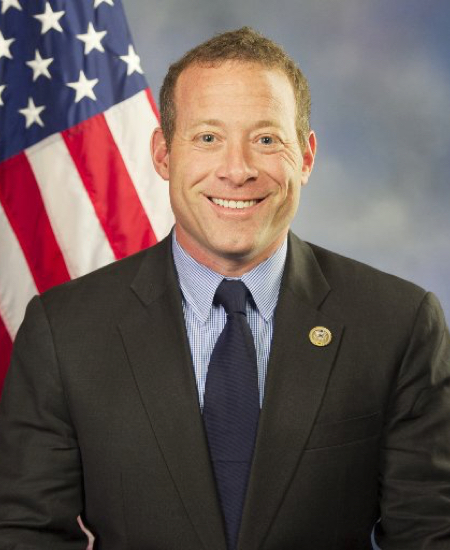
Photo of Josh Gottheimer
D United States House · District 5 · New Jersey On the 2026 ballot

Rep. Josh Gottheimer

Compare
Total votes
2,837
all sessions
Attendance
94%
174 missed
Lower than 95% of chamber peers
With party
93%
of cast votes
Lower than 94% of chamber peers
Bipartisan score
4%
crosses aisle rarely
Higher than 92% of chamber peers
Sponsored
2,786
bills & resolutions
Higher than 98% of chamber peers
Committees
7
assignments
2,786 bills and resolutions

Sponsored bills

Total
2,786
Primary
166
Co-sponsor
2,620
This page
2,786
matching current filters
Co-sponsor HR 4751
In committee · United States House · Co-sponsor
To amend the Virginia Graeme Baker Pool and Spa Safety Act to reauthorize certain programs, and for other purposes.

Maddy summaryHR 4751 reauthorizes two existing programs under the Virginia Graeme Baker Pool and Spa Safety Act by extending their funding periods. It updates the Swimming Pool Safety Grant Program and Education and Awareness Program to run through fiscal years 2025-2027, instead of ending after 2023. These programs directly affect state and local governments receiving grants for pool safety improvements and entities promoting public awareness about pool safety standards. The bill makes no changes to safety requirements but ensures continued funding for these specific initiatives.

In committee Jul 23, 2025 1 co-sponsor
Co-sponsor HR 4655
In committee · United States House · Co-sponsor
United States-Israel PTSD Collaborative Research Act

Maddy summaryHR 4655 establishes a grant program to fund joint U.S.-Israel research on post-traumatic stress disorder (PTSD). It directs the Secretary of Defense to award grants to U.S. academic institutions or nonprofits partnering with Israeli organizations to develop new PTSD treatments and diagnostics. The program requires research projects to address specific PTSD needs identified by the Department of Defense and mandates joint agreements between U.S. and Israeli entities. Grants must be used for collaborative research, with reports submitted to Congress within 180 days of project completion, and the program terminates 7 years after the first grant is awarded.

In committee Jul 23, 2025 1 co-sponsor
Co-sponsor HR 4606
In committee · United States House · Co-sponsor
Ally’s Act

Maddy summaryHR 4606, the Ally’s Act, requires private health insurance plans (including employer-sponsored plans and individual coverage) to cover hearing implants and related services. It directly affects people with hearing loss who need cochlear implants, bone conduction devices, or external sound processors, as determined by a physician or audiologist. The bill mandates coverage for devices, maintenance, repairs, upgrades every 5 years, hearing assessments, surgery, and rehabilitation - without separate cost-sharing or stricter limits than other medical services. Insurers cannot deny coverage if a provider deems the service medically necessary. The law applies to all applicable health plans and takes effect for plan years beginning January 1, 2026.

In committee Jul 22, 2025 1 co-sponsor
Co-sponsor HR 4583
In committee · United States House · Co-sponsor
Living Donor Protection Act of 2025

Maddy summaryThis bill prohibits life, disability, and long-term care insurers from denying coverage, canceling policies, or increasing premiums based solely on a person's status as a living organ donor. It directly protects living organ donors by preventing insurance discrimination unrelated to actual health risks. The bill also requires the Health and Human Services Secretary to update public educational materials about organ donation benefits, risks, and insurance impacts within six months of enactment. These materials will include information on the new insurance protections established by the bill. The law relies on state insurance regulators for enforcement of the insurance provisions.

In committee Jul 22, 2025 1 co-sponsor
Co-sponsor HR 4602
In committee · United States House · Co-sponsor
Countering Threats and Attacks on Our Judges Act

Maddy summaryThis bill establishes state-level judicial threat intelligence centers to improve safety for judges and court staff. It defines "eligible organizations" (nonprofits with judicial security expertise) and requires the State Justice Institute to fund these centers to provide security training, threat monitoring, coordinate with law enforcement, and develop standardized reporting systems. The centers will create resources for judicial officer safety, conduct security assessments, and track threats through a national database. State Justice Institute must submit annual reports detailing threat types and severity to congressional committees. The bill directly affects state and local judges, court staff, and the nonprofit organizations operating these centers.

In committee Jul 22, 2025 1 co-sponsor
Co-sponsor HR 4582
In committee · United States House · Co-sponsor
To amend the Family and Medical Leave Act of 1993 and title 5, United States Code, to clarify that organ donation surgery qualifies as a serious health condition.

Maddy summaryThis bill amends the Family and Medical Leave Act (FMLA) and federal employee leave rules to clarify that recovery from organ donation surgery qualifies as a "serious health condition." It directly affects private-sector workers covered by the FMLA and federal civil service employees. The key change adds "including recovery from surgery related to organ donation" to the definitions of serious health conditions in both the FMLA and federal leave statutes. This ensures eligible employees can use their existing family and medical leave benefits to recover after donating an organ, without requiring new leave entitlements.

In committee Jul 22, 2025 1 co-sponsor
Co-sponsor HR 4335
In committee · United States House · Co-sponsor
Abraham Accords Defense Against Terror Act

Maddy summaryHR 4335, the Abraham Accords Defense Against Terror Act, streamlines U.S. defense exports to countries that have normalized relations with Israel (via the Abraham Accords) and cooperate with the U.S. on countering Iran and Iran-aligned threats in the Middle East and North Africa. The bill authorizes the Secretary of State to identify qualifying countries and fast-tracks approval for military sales, leases, or transfers to them, requiring a 15-day congressional notification with specific safeguards. Key safeguards include ensuring sensitive U.S. technology isn’t shared with China or Russia and mandating regular strategy reports to Congress on implementation, threat assessments, and pending defense deals over $25 million. This directly affects participating Middle Eastern nations and U.S. defense export processes, aiming to accelerate security cooperation without altering Israel’s military edge. The bill focuses on procedural changes to expedite defense cooperation, not on new funding or policy outcomes.

In committee Jul 22, 2025 1 co-sponsor
Co-sponsor HR 3351
Passed · United States House · Co-sponsor
Improving Access to Small Business Information Act

Maddy summaryHR 3351, the Improving Access to Small Business Information Act, exempts certain actions by the Small Business Capital Formation Advocate from federal paperwork rules under the Paperwork Reduction Act. Specifically, it clarifies that the Advocate’s routine communications and information-sharing activities are not considered "collections of information" requiring prior approval or specific formatting under those rules. However, the bill retains some requirements, such as needing to display control numbers on forms, though it removes the need for the Advocate to submit paperwork to the Office of Management and Budget. This procedural change aims to streamline the Advocate’s ability to provide information to small businesses without triggering additional federal administrative burdens.

Passed Jul 22, 2025 1 co-sponsor
Co-sponsor HR 2384
Passed · United States House · Co-sponsor
Financial Technology Protection Act of 2025

Maddy summaryThe Financial Technology Protection Act of 2025 creates a new government working group to study how terrorists and criminals use digital assets (like cryptocurrencies) and emerging technologies for illicit activities. The group, composed of federal agencies (Treasury, FBI, Justice, Homeland Security, etc.) and private sector representatives from fintech, blockchain, and privacy organizations, will research threats and develop proposals to strengthen anti-money laundering and counter-terrorism efforts. It must submit annual reports to Congress for four years, detailing findings and recommendations, and will terminate after that period. The bill also requires the President to submit a public report within 180 days on how foreign actors might exploit digital assets to evade sanctions, along with a strategy to prevent such misuse.

Passed Jul 22, 2025 1 co-sponsor
Primary HR 1469
Passed · United States House · Lead sponsor
Senior Security Act of 2025

Maddy summaryThe Senior Security Act of 2025 establishes a Senior Investor Taskforce within the Securities and Exchange Commission (SEC) to address challenges faced by senior investors (defined as those over age 65), including financial exploitation and cognitive decline. The Taskforce will identify regulatory gaps, coordinate with agencies like state regulators and law enforcement, and issue biennial reports to Congress with recommendations for improving protections. Additionally, the bill mandates a Government Accountability Office (GAO) study on the economic costs, frequency, and reporting of financial exploitation of seniors, analyzing factors like race, social isolation, and income to inform future policy.

Passed Jul 22, 2025 0 co-sponsors
Showing 541 to 550 of 2,786 bills
Previous 1 … 54 55 56 … 279 Next