

Maddy summaryThis bill establishes a Lung Cancer Task Force within the National Institutes of Health (NIH) to examine key issues in lung cancer research and care. The task force, appointed by the NIH Director, will specifically study differences in research funding and patient access compared to other diseases, assess if federal funding matches lung cancer's health impact, and review current lung cancer screening practices in the U.S. Within 180 days of the bill's passage, the task force must submit a report to Congress with its findings and recommendations for increasing federal funding for lung cancer research. The bill directly affects federal health agencies (NIH and CDC) and aims to inform future policy decisions based on the task force's analysis.
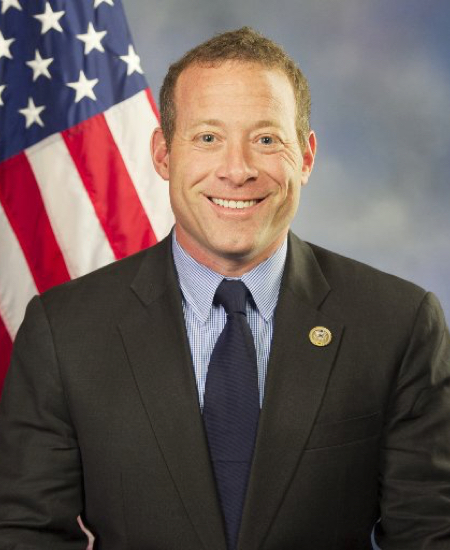
Rep. Josh Gottheimer
Sponsored bills
Maddy summaryThis bill requires Medicare to cover lung cancer biomarker testing for beneficiaries diagnosed with lung cancer, starting January 1, 2027. It defines the testing as procedures analyzing tissue, blood, or bodily fluids to identify specific biomarkers (like genes or proteins) for treatment planning. Medicare will pay 100% of reasonable charges for these tests, removing out-of-pocket costs for patients. The policy directly affects Medicare patients with lung cancer who need this specialized testing to guide personalized treatment options.
Maddy summaryThis bill updates securities laws to expand exemptions for retirement plans used by charities and educational institutions. It specifically modifies definitions in the Investment Company Act, Securities Act, and Securities Exchange Act to include 403(b) plans meeting certain conditions - such as being subject to ERISA, having employer fiduciary oversight, or being governmental plans. These changes reduce regulatory hurdles for organizations offering these plans, making it easier to administer retirement benefits for their employees. The bill directly affects charities, schools, and other non-profits that sponsor 403(b) retirement plans.
Maddy summaryThis bill provides $50 million annually from 2026 through 2030 to fund security measures for public transit systems in urbanized areas, removing previous population requirements that limited access. It allows transit agencies to use these funds for hiring additional officers, contracting with local police, and making physical safety upgrades like monitoring devices and operator shields. Additionally, it mandates a study by the National Academies (with input from transit workers) to evaluate crime prevention tactics, including successful and unsuccessful approaches used by transit agencies. The bill directly affects transit agencies and passengers by prioritizing safety infrastructure and data-driven crime reduction strategies.
Maddy summaryThe Hunger Clearinghouse Enhancement Act of 2025 updates the National School Lunch Program's information clearinghouse to better support communities combating hunger. It requires the clearinghouse to provide new information about volunteer programs and resources for preventing hunger, expanding its existing role in sharing food assistance details. The bill also increases annual funding for the clearinghouse from $250,000 to $750,000 per year for fiscal years 2026 through 2032. These changes directly affect schools, community organizations, and local governments using the clearinghouse to access resources for hunger prevention and food assistance programs.
Maddy summaryHRES 906 would change House rules to require a 60% vote of members present and voting to censure, disapprove, or remove any House member, delegate, or resident commissioner from committee assignments. Currently, a simple majority (50%+1) could trigger these actions, but this bill raises the threshold to a supermajority. The change applies directly to all voting members of the House and affects disciplinary procedures for members. This is a procedural rule change that makes it harder to take formal disciplinary actions against House members.
Maddy summaryThis bill expands Medicare coverage to include genetic counseling services provided by licensed or certified genetic counselors, effective January 1, 2027. It defines "covered genetic counseling services" as those furnished by qualified counselors under state law or certification, with payments set at 80% of the lesser of the actual charge or 85% of the physician fee schedule. Medicare beneficiaries seeking genetic counseling will gain access to these services through covered providers, while preventing balance billing for these specific services. The bill does not restrict physicians from billing for similar services under existing Medicare rules.
Maddy summaryHR 6286, the Indo-Pacific Partner and Ally Tariff Repeal Act, repeals tariffs imposed on 39 specific Indo-Pacific countries and territories through two executive orders. The bill directly affects these nations, including Australia, Japan, India, South Korea, and others, by eliminating tariffs that were applied under Executive Orders 14257 and 14326. Its key provision requires the immediate termination of these tariffs upon the bill's enactment. The legislation targets only the listed countries and does not alter tariffs on other nations.
Maddy summaryThis bill expands eligibility for federal TIFIA loans to include most airport infrastructure projects, such as new terminals, security systems, or surface transportation links, regardless of revenue generation or public access. It raises the maximum loan amount from $75 million to $100 million and removes certain eligibility barriers for airport projects seeking loan waivers. The changes directly affect airport authorities and developers seeking federal financing for aviation facility construction or upgrades. Key provisions clarify that projects enhancing air transportation safety, passenger movement, or airport operations qualify under TIFIA. The bill modifies existing transportation law to simplify access to federal credit for airport infrastructure.
Maddy summaryHR 6215, the Small Business RELIEF Act, exempts small businesses from import duties imposed under Executive Order 14257 (90 Fed. Reg. 15041) for goods they import or use. It requires the President to refund duties paid by small businesses within 90 days of the bill's enactment. The bill defines "small business concern" using the standard Small Business Act criteria (15 U.S.C. 632). This directly affects small businesses importing goods, providing immediate cost relief by removing a specific tariff and refunding past payments.