

Maddy summaryHR 7227, the Mental Health and MAMA Act of 2026, eliminates cost-sharing (like copays or deductibles) for mental health and substance use treatment services during pregnancy and for one year after childbirth. It directly affects pregnant and postpartum individuals covered by group health plans or individual insurance policies, requiring these plans to cover such services with no out-of-pocket costs from pregnancy diagnosis through the 12-month period following birth. The law applies to in-network providers and includes telehealth services, with implementation delayed until two years after enactment. It amends key laws including the Public Health Service Act, ERISA, and the Internal Revenue Code to standardize this coverage requirement across health insurance systems. This policy change aims to improve access to care during a critical health period without altering existing coverage definitions.
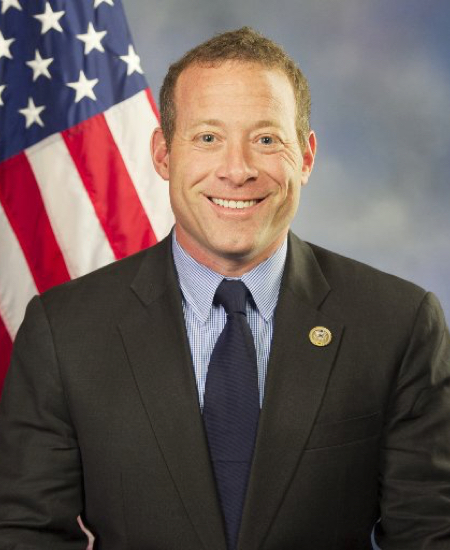
Rep. Josh Gottheimer
Sponsored bills
Maddy summaryHR 7178, the U.S.-Israel Anti-Killer Drone Act of 2026, requires enhanced U.S.-Israel cooperation to counter Iranian unmanned systems. The bill directs the U.S. and Israel to jointly develop, test, and deploy counter-drone technologies through their existing Operations Technology-Working Group, including sharing threat intelligence and conducting joint training. It increases annual funding for this cooperation from $55 million to $100 million and mandates detailed annual reports to Congress on progress, threat assessments, and the adequacy of current counter-drone capabilities. The bill directly affects U.S. and Israeli military forces by accelerating joint efforts to address threats from Iran-origin drones targeting U.S. allies and military assets in the Middle East.
Maddy summaryThis bill amends the National Defense Authorization Act to require a new unclassified strategy for countering drug trafficking in the Middle East following the fall of Syria's Assad regime. It directs U.S. agencies to assess Captagon and methamphetamine trafficking patterns, identify countries receiving large shipments, evaluate those nations' counter-narcotics capacity, and review U.S. assistance programs. The strategy must also evaluate international cooperation efforts and provide recommendations to disrupt networks linked to former Assad regime actors, Hezbollah, and Iran-backed groups. The bill directly affects U.S. military and law enforcement agencies (like U.S. Central Command) and countries receiving U.S. counter-narcotics aid in the region.
Maddy summaryHR 7168, the Seton Hall Fire Victims Remembrance Act of 2026, requires the U.S. Department of Education to establish mandatory fire suppression standards for dormitories and residential facilities at colleges and universities receiving federal education funds. Covered institutions must conduct annual compliance assessments verified by fire safety experts and submit them to the Department, which will publicly rate campuses as "Federally Recognized Fire-Safe Campus" or "Not Federally Recognized Fire-Safe Campus" based on adherence to the standards. The law updates the Higher Education Act to include a compliance requirement and mandates the Department to provide technical assistance and submit compliance recommendations to Congress within three years. It applies broadly to all institutions receiving federal education funding, not just those associated with a specific fire incident.
Maddy summaryThe PrEP Access Act expands Medicare Part B coverage to include pharmacist-provided HIV prevention services, such as pre-exposure prophylaxis (PrEP) counseling, medication administration, and related testing. It directly affects Medicare beneficiaries (primarily seniors) and pharmacists, allowing pharmacists to bill Medicare for these services under state law. Key provisions set payment at 80% of the lesser of actual charges or 85% of physician rates, and prohibit balance billing for these services. The policy change takes effect January 1, 2027, making PrEP more accessible through pharmacy settings.
Maddy summaryHR 3307, the Eastern Mediterranean Gateway Act, directs the U.S. government to prioritize diplomatic and security cooperation with Egypt, Greece, Cyprus, and Israel to support their role as a strategic gateway for the India-Middle East-Europe Economic Corridor (IMEC). The bill requires the Secretary of State to institutionalize strategic dialogues with these countries, prioritize energy and defense cooperation in the region, and submit annual reports on implementation and multilateral initiatives. It also mandates studies on expanding U.S. bilateral programs (like those with Israel) to include Eastern Mediterranean partners and analyzing the Cyprus security center as a model. The bill does not create new funding but guides existing U.S. policy and coordination efforts.
Maddy summaryThis bill creates a new grant program to increase U.S. artificial intelligence research capacity by funding specific institutions. It provides competitive funding to institutions not in the top 100 for federal research spending, historically Black colleges, minority-serving institutions, Tribal Colleges, or consortia of these entities. Funds can be used for AI research programs, faculty development, student bridge programs, research resources, and integrating ethical AI practices. The program aims to broaden participation in AI from underserved communities and avoid duplicating existing federal AI initiatives.
Maddy summaryThe WATCH Act requires foreign laboratories receiving U.S. federal funding for animal research to undergo quarterly inspections to verify compliance with animal welfare standards. These inspections will evaluate animal care committees, treatment protocols, and record-keeping, with results published publicly. Laboratories found non-compliant will be given a chance to correct issues before facing suspension or revocation of their research grants. The law takes effect 180 days after enactment and requires coordination with foreign regulatory authorities to implement these oversight measures.
Maddy summaryHR 7137, the Shutdown Fairness Act, requires federal agencies to pay covered employees (including most federal workers and military personnel) and covered contractors their regular pay during government shutdowns. It appropriates funds from the Treasury to cover standard employee compensation and contractor payments for work performed during a lapse in regular appropriations, ensuring pay continues without delay (within 7 days if a shutdown is ongoing at enactment) and aligns with regular pay schedules. The bill applies only to individuals employed or with accepted offers before the shutdown began and mandates that these payments be charged to future appropriations. It does not change agency obligations under existing contracts or authorize new spending beyond the specified shutdown period.
Maddy summaryThe SEPSIS Act (HR 7116) establishes a dedicated sepsis program within the CDC to improve national sepsis response. It requires the CDC Director to lead education campaigns on hospital sepsis best practices, enhance pediatric sepsis data collection, and coordinate with Medicare/Medicaid to develop quality measures. Hospitals would be asked to report on sepsis protocol adoption, with a voluntary "honor roll" recognizing top performers in early detection and treatment. The bill authorizes $20 million annually (2026-2030) for these efforts and mandates annual congressional briefings on sepsis data and hospital progress. This directly affects hospitals, CDC operations, and federal health agencies working to reduce sepsis-related deaths and costs.