This resolution expresses support for the goals and ideals of Korean American Day and honors the 119th anniversary of the arrival of the first Korean immigrants to the United States.
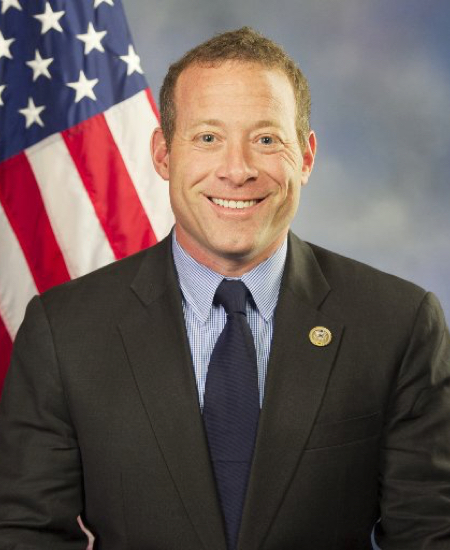
Rep. Josh Gottheimer
Sponsored bills
Maddy summaryThis bill (H.J.Res. 68) is a symbolic, procedural measure that would require the President to issue an annual proclamation designating a day as "Democracy Day." It directs the President to call on state/local governments and citizens to observe the day through programs and activities, with January 6 referenced as a potential date. The bill does not create new government programs or change existing laws - it only establishes a recurring presidential proclamation. It directly affects federal, state, and local governments by encouraging them to participate in annual observances. The bill has no budgetary impact and remains focused on promoting civic engagement through a designated day.
COVID-19 Supply Chain Relief Act This bill establishes in the Executive Office of the President an Office of Supply Chain Policy, headed by a Supply Chain Czar appointed by the President. Such office shall coordinate a national response to supply chain disruptions, shortages, and increased prices; serve as a resource for states as they deploy unused COVID-19 relief funds to address supply chain bottlenecks; and appoint, oversee, and coordinate among regional supply chain leaders. Unobligated COVID-19 relief funds may be made available to states, territories, or tribal governments to help address supply chain disruptions and labor shortages by undertaking one or more of the following: promoting employment in the trucking and logistics industries, implementing apprenticeship programs to recruit more women and military veterans to become licensed commercial motor vehicle drivers, undertaking port and shipping infrastructure projects, and providing relief from other detrimental economic impacts of supply chain disruptions. The Department of Commerce must issue guidance, as needed, to define the scope of the allowable activities listed above. Further, Commerce shall publish and submit to Congress a report on (1) supply chain points of congestion or blockages; (2) underlying causes of supply chain disruptions, shortages, and delays; and (3) other supply chain shortcomings which could be remedied with public or private investment.

Survivor Benefits Fairness Act This bill adjusts the effective date of a reduction or discontinuance of compensation, dependency and indemnity compensation, or pension payments to the last day of the month during which a marriage, remarriage, or death of a payee occurs.
PrEP Access and Coverage Act This bill requires private health insurance plans to cover prescription drugs that prevent HIV, including related screenings, diagnostic procedures, administrative fees, and clinical follow-ups, without any cost-sharing obligation for the plan holder. Further, insurance plans must not impose any preauthorization requirement for this coverage. These coverage requirements also apply to public health insurance programs, including Medicare, Medicaid, and the Children's Health Insurance Program. Additionally, the bill prohibits denying, limiting, or qualifying coverage or increasing premiums for disability insurance, long-term care insurance, or life insurance policies based on an individual taking medication for HIV prevention. The bill further requires the Department of Health and Human Services to award grants to states, or directly to eligible local organizations, to provide uninsured individuals and underinsured individuals access to prescription drugs and related services that prevent HIV. The Centers for Disease Control and Prevention also must develop a public awareness campaign that focuses efforts in communities with a high need for HIV prevention treatment.
Domain Reform for Unlawful Drug Sellers Act or the DRUGS Act This bill requires a website domain name registrar (or registry operator) to take down a domain name under the registrar's control upon receiving an eligible notification that the domain name is facilitating illegal online drug sales. Upon receiving an eligible notification, the registrar must lock the domain name within 24 hours and suspend the domain name within seven days. An eligible notification must come from a trusted notifier and include certain information, such as a summary of the alleged illegal activities and a statement that the evidence supporting the allegations is available to be shared with the registrar. The bill defines trusted notifiers as (1) certain government agencies, such as the Food and Drug Administration or the office of a state attorney general; and (2) qualifying private or nonprofit entities given such status by specified government agencies. The registrant of the affected domain name may appeal a lock or suspension by providing the trusted notifier with information to establish that the registrant's drug sales are legal, such as pharmacy licenses and the licensing information of the prescribing medical practitioners, if applicable. The trusted notifier must conduct a reasonable investigation and consider the information provided by the registrant. If the appeal is successful, the registrar must reverse the lock and suspension within 15 days. The domain name must remain locked and suspended while the appeal is pending.
Knock Out Cancer Act or the KO Cancer Act This bill provides additional funding through FY2027 to the National Institutes of Health (NIH) for cancer research. The amount of additional funding each fiscal year is equal to 25% of the total amount allocated to the NIH for cancer research in FY2021.
Accelerating Access to Critical Therapies for ALS Act This bill establishes grant programs to address neurodegenerative diseases, such as amyotrophic lateral sclerosis (also known as ALS or Lou Gehrig's disease), and contains other related provisions. The Department of Health and Human Services (HHS) shall award grants to eligible entities for scientific research utilizing data from expanded access to investigational ALS treatments for individuals who are not otherwise eligible for clinical trials. The Food and Drug Administration (FDA) shall award grants to public and private entities to cover the costs of research and development of drugs that diagnose or treat ALS and other rare neurodegenerative diseases. HHS shall also establish the Public-Private Partnership for Neurodegenerative Diseases between the National Institutes of Health, the FDA, and at least one eligible entity (generally, an institution of higher education or a nonprofit organization). The partnership shall support the development and regulatory review of drugs that address ALS and other rare neurodegenerative diseases. The FDA shall publish on its website a five-year action plan for fostering the development of drugs that improve or extend the lives of people living with rare neurodegenerative diseases. The Government Accountability Office must report to Congress about the grants provided under this bill, including an analysis of the impact of such grants on research and development of treatments for ALS.
Wildlife Conservation and Anti-Trafficking Act of 2021 This bill sets forth provisions relating to wildlife conservation, anti-trafficking and poaching, and illegal fishing. Specifically, the bill directs the Departments of Justice, the Interior, Commerce, State, and the Treasury to develop a plan of action for awards to whistleblowers of violations of laws applicable to wildlife trafficking; directs Interior to carry out the International Wildlife Conservation Program to, among other things, address global conservation threats and combat wildlife trafficking and poaching; provides funding for the conservation of certain endangered species; authorizes Interior, in consultation with the State Department, to station not less than one U.S. Fish and Wildlife Service officer in the primary diplomatic or consular post of the United States in a focus country or country of concern (i.e., countries engaging in wildlife trafficking); and directs Commerce to make amounts available for illegal, unreported, and unregulated fishing enforcement. The bill also modifies the federal criminal code to make wildlife trafficking and illegal fishing predicates with respect to the enforcement of certain criminal offenses, including racketeering and money laundering.
Maddy summaryThe Health Coverage Tax Credit Reauthorization Act of 2021 extends the expiration date of the Health Coverage Tax Credit from January 1, 2022, to January 1, 2026. This tax credit helps individuals purchasing health insurance through the Marketplace reduce their premium costs. The extension applies to months beginning after December 31, 2021, ensuring continued support for eligible individuals through 2025.