

Reporting Efficiently to Proper Officials in Response to Terrorism Act of 2021 or the REPORT Act This bill requires specified federal agencies to report to Congress concerning any act of terrorism that occurs in the United States. Whenever an act of terrorism occurs, the Department of Homeland Security (DHS), the Department of Justice (DOJ), the Federal Bureau of Investigation (FBI), and, as appropriate, the National Counterterrorism Center (NCC), must submit to the appropriate congressional committees, as specified by this bill, an unclassified report not later than one year after the completion of the investigation by the primary agency conducting the investigation concerning the terrorist act. Such report shall (1) include a statement of the facts of the act of terrorism that are known at the time of such report; (2) identify any gaps in homeland or national security that could be addressed to prevent future acts of terrorism; and (3) include any recommendations for additional measures that could be taken to improve homeland or national security, such as changes in law enforcement practices or changes in law. If DHS, DOJ, and the FBI or, as appropriate, the NCC, determines any information required to be reported could jeopardize an ongoing investigation or prosecution, such entities (1) may withhold from reporting such information, and (2) shall notify the appropriate congressional committees of that determination.
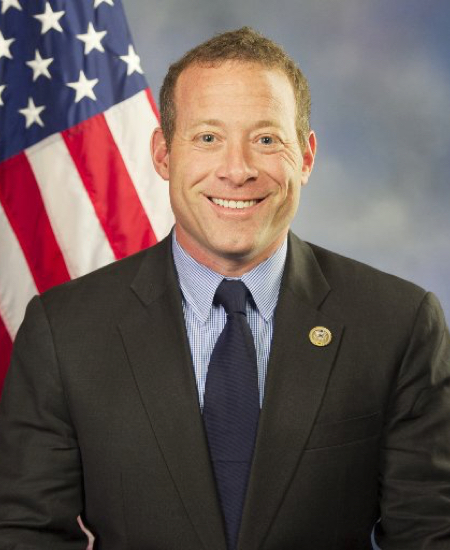
Rep. Josh Gottheimer
Sponsored bills
Educators Expense Deduction Modernization Act of 2022 This bill increases the tax deduction for the expenses of eligible educators from $250 to $1,000, An eligible educator is, with respect to any taxable year, an individual who is a kindergarten through grade 12 teacher, instructor, counselor, principal, or aide in a school for at least 900 hours during a school year.
Ensuring Lasting Smiles Act This bill requires private health insurance plans to cover diagnosis and treatment of congenital anomalies and birth defects, such as reconstructive services and items. Coverage must include services and items that functionally improve, repair, or restore any body part that is medically necessary for normal bodily functions or appearance, as determined by the treating physician. Coverage limits and cost-sharing requirements for such services and items may not be more restrictive than those applicable to all medical and surgical benefits under the plan.
Supply Chain Disruptions Relief Act This bill modifies the treatment of liquidations of new motor vehicle inventory as qualified LIFO (last in first out accounting method) inventory. It allows new motor vehicle dealers to elect to wait until the end of 2025 to replace their inventory for purposes of determining income attributable to the sale of such inventory during 2020 and 2021.
Student and Student Athlete Opioid Misuse Prevention Act or the Student Athlete Opioid Prevention Act This bill authorizes a program through which the Substance Abuse and Mental Health Services Administration may award grants or other assistance for preventing and addressing the misuse of opioids and other medications used for treating pain or injury recovery among students and student athletes. Entities eligible for the grants include states, nonprofits, and drug-free community coalitions.
Strengthen Kids' Mental Health Now Act of 2022 This bill establishes several requirements to support the provision of behavioral health services under Medicaid and other programs, particularly for children. For example, the bill temporarily requires payment for pediatric mental, emotional, and behavioral health services under Medicaid to align with Medicare payments to providers. The bill provides for a 100% Federal Medical Assistance Percentage (i.e., federal matching rate) for any associated additional expenditures. The Centers for Medicare & Medicaid Services must issue guidance on how state Medicaid programs may expand the availability of telehealth services and mental, emotional, and behavioral health services. In addition, the Health Resources and Services Administration must award grants to support (1) pediatric behavioral health care integration in communities, (2) pediatric mental health and substance use disorder workforce training, and (3) the infrastructure of pediatric hospitals and rural health clinics with respect to behavioral health services.
This resolution honors the life and legacy of the late Representative Don Young and directs the Sergeant at Arms to designate a Don Young Reserved Seat on the floor of the chamber of the House of Representatives.
This resolution supports the goals and ideals of National Women's History Month and recognizes the women and organizations that continue to promote the teaching of women's history.
Equitable Community Access to Pharmacist Services Act This bill expands Medicare coverage to permanently include services provided by a pharmacist, including incidental services and supplies, related to testing, drug regimens, and vaccines for COVID-19, influenza, and certain other illnesses. Specifically, the bill provides for continued coverage of pharmacist services relating to testing and vaccines for COVID-19 and influenza, as well as coverage of testing for respiratory syncytial virus and streptococcal pharyngitis (i.e., strep throat) and the initiation of drug regimens that are used to treat COVID-19, influenza, or strep throat. It also generally provides for coverage of pharmacist services during a public health emergency or to address health equity. A pharmacist, or the facility with which the pharmacist is contracted or employed, may present a claim for reimbursement of 85% (or 100% during a declared emergency) of the applicable amount. A pharmacist may not bill an individual for such a service other than for the applicable deductible or coinsurance amounts.
COI Elimination Act This bill limits U.S. contributions to the United Nations pertaining to the U.N. Independent International Commission of Inquiry on the Occupied Palestinian Territory, including East Jerusalem, and Israel. Current law imposes a cap on the annual U.S. contribution to the U.N. budget. The bill lowers that cap by 25% of the amount budgeted for the commission. The bill also states that it shall be U.S. policy to seek the abolition of the commission and combat systemic anti-Israel bias in international bodies.