

Correcting Guam's History in the PACT Act This bill expands eligibility for a presumption of service-connection for specified diseases associated with exposure to certain herbicide agents. Under a presumption of service-connection, specific conditions diagnosed in certain veterans are presumed to have been caused by the circumstances of their military service. Health care benefits and disability compensation may then be awarded. Under the bill, service performed in Guam or its territorial waters between August 15, 1958, and July 31, 1980, provides a veteran who has a specified disease that is associated with exposure to certain herbicide agents with eligibility for a presumption of service-connection. (Under current law, the eligible time frame for service in Guam is between January 9, 1962, and July 31, 1980.)
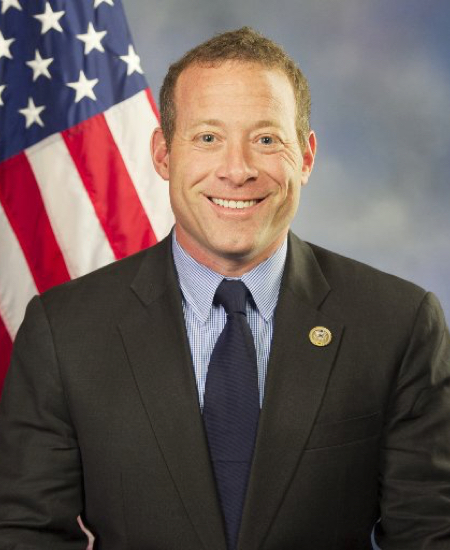
Rep. Josh Gottheimer
Sponsored bills
Maddy summaryThis bill prohibits colleges receiving federal funds from retaliating against students who belong to single-sex social organizations (like traditional fraternities or sororities). It specifically bans schools from requiring students to waive membership rights as a condition of enrollment or taking adverse actions - such as disciplinary measures, denying financial aid, or restricting housing - solely based on their membership in these groups. The bill clarifies that institutions aren't required to officially recognize such organizations and can still take action for misconduct unrelated to the group's single-sex policy. It defines "adverse action" broadly to include denials of scholarships, housing, or leadership opportunities tied to membership. The law directly affects students in single-sex organizations and the federal funding policies of colleges under the Higher Education Act.
Establishing Accreditation Grants for Law Enforcement Act of 2023 or the EAGLE Act of 2023 This bill requires the Department of Justice to provide grants to eligible local law enforcement agencies for activities related to obtaining qualified accreditation or recertification. Such accreditation or recertification shall be provided by a professional law enforcement organization involved in developing standards for law enforcement at the national, state, regional, or tribal level, such as the Commission on Accreditation for Law Enforcement Agencies.
Maddy summaryHR 1503, the Prescription Information Modernization Act of 2023, allows drug manufacturers to provide FDA-approved prescribing information exclusively via digital means (like email or online portals) to doctors and pharmacists, while requiring them to still offer paper copies upon request at no extra cost. The bill directly affects drug manufacturers and distributors, who must implement this change by 2025 (or when regulations take effect), and ensures prescribers and dispensers can choose their preferred format. Key provisions include mandating manufacturers to honor paper requests promptly without additional fees and requiring the Health Secretary to issue implementing regulations within one year. The law aims to modernize how medical information is shared while maintaining accessibility for healthcare providers.
Strengthening Medicaid Incentives for Licensees Enrolled in Dental Act or the SMILED Act This bill requires state Medicaid programs to implement certain measures to improve the participation of dentists and the processing of related claims under Medicaid. Specifically, states must assure the Centers for Medicare & Medicaid Services that they will address dentist participation by improving eligibility verification and simplifying participation requirements and claims administration. States must also (1) use an electronic, integrated data collection system to credential participating dentists within 90 days of application receipt; and (2) develop procedures for conducting audits that are consistent with practice standards and that allow for improper claims to be rectified through claims adjustments.
Maddy summaryThe Dental and Optometric Care Access Act of 2023 (DOC Access Act) requires health insurance plans covering dental and vision care to allow providers (like dentists and optometrists) to charge patients the usual and customary rate for uncovered services, with a specific rule limiting dental cleanings to the network fee even if it exceeds annual coverage limits. It prohibits plans from restricting providers' choices of laboratories or suppliers for patient care. This law directly affects dental and vision care providers and the health insurance plans that offer these services. The bill establishes concrete billing and coverage standards to improve access to necessary dental and vision care.
Make Transportation Authorities Accountable and Transparent Act This bill directs the inspector general of the Department of Transportation to conduct an audit of public transportation coronavirus relief spending and report to Congress.
This resolution demands that Russia respect Ukraine's sovereignty and territorial integrity, as well as immediately withdraw its military forces from inside Ukraine. Affirming strong support for continued U.S. support to Ukraine, the resolution also calls on allies and partners in Europe to increase national defense spending, supports robust transparency and accountability mechanisms for U.S. assistance to Ukraine, and condemns Russian war crimes.
Maddy summaryHR 1591 amends the Elementary and Secondary Education Act to increase annual federal funding for impact aid programs that support school districts near military bases, national parks, and other federal properties. It authorizes specific, rising funding levels for four key areas: payments for federal land acquisitions ($90 million in 2024, growing to $150 million by 2029), basic payments to heavily impacted school districts ($1.6 billion in 2024, growing to $2.45 billion by 2029), payments for students with disabilities ($60 million in 2024, growing to $120 million by 2029), and school construction projects ($22.9 million in 2024, growing to $45.4 million by 2029). These appropriations represent incremental steps toward full federal funding for these aid programs, as specified in the bill's text. The bill directly affects school districts located near federal land, providing predictable annual funding increases for their operational and infrastructure needs.
Maddy summaryThis bill authorizes a Congressional Gold Medal to honor the "Hello Girls" - female telephone operators who served in the Army Signal Corps during World War I. They provided critical battlefield communications in France (connecting 26 million calls), wore military uniforms, and faced combat risks, but were denied veteran benefits for 60 years due to being classified as civilian contractors. The medal recognizes their pioneering service, devotion, and the decades-long struggle to gain military recognition. The award follows similar recognition for other WWII women veterans and aims to correct the historical injustice they faced.