

Animal Welfare Enforcement Improvement Act This bill revises the licensing process of the Department of Agriculture (USDA) for animal dealers and exhibitors to expand USDA's oversight and enforcement of animal welfare requirements. Dealers and exhibitors must apply to USDA for licenses or renewal licenses each year. In order to obtain the licenses or renewals, dealers and exhibitors must meet certain standards for the humane treatment of animals and pass inspections as specified by this bill. USDA may not issue or renew such licenses if the dealers or exhibitors have violated laws relating to animals or if the issuance of the licenses would facilitate the circumvention of state or local laws that prohibit the private ownership of certain animals. Further, USDA must suspend the licenses of dealers or exhibitors whose violations present a risk to animal welfare. USDA must revoke the licenses if the violations persist or if the licensees commit multiple violations. Dealers and exhibitors with suspended or revoked licenses may not be (1) granted another license, (2) granted another license through another person or entity, or (3) employed by another licensee to work with animals during the period of the suspension or revocation.
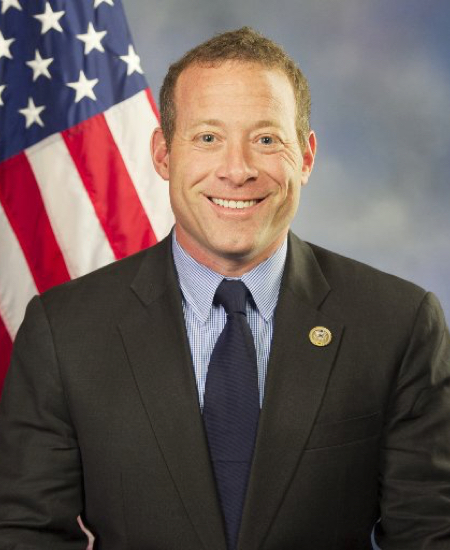
Rep. Josh Gottheimer
Sponsored bills
Maddy summaryThis bill adds spotted lanternfly control to the list of high-priority research initiatives funded by the USDA. It enables federal grants for developing and sharing practical tools to combat this invasive insect pest, directly affecting agricultural researchers and farmers in affected areas (like Pennsylvania, where the pest causes significant crop damage). The key provision modifies existing law to specifically include lanternfly research under funding programs, without changing current grant rules. The bill also extends the funding authorization period for such initiatives through 2028.
This resolution condemns Iran for the 1988 massacre of political prisoners. It also urges the Biden Administration and U.S. allies to publicly condemn the massacre and to pressure Iran to provide information to the families of the victims.
Maddy summaryHRES 623 is a resolution to formally censure Representative Paul Gosar (AZ-9) for promoting a website containing Holocaust denial, pro-Nazi rhetoric, and antisemitic conspiracy theories through his official congressional newsletter. The resolution cites specific instances where Gosar shared content from the site - including posts calling the Holocaust a "Holohoax" and urging people to "stand up for Hitler" - on multiple occasions, including days before Holocaust Remembrance Day. If passed, the resolution would require Gosar to appear in the House chamber for the censure to be read aloud by the Speaker. This is a procedural action by the House, not a law, and would formally condemn Gosar's use of congressional resources to amplify extremist content.
Maddy summaryThe SOS Act of 2023 increases annual funding for school resource officers from $1,047,119,000 (for 2006-2009) to $1,097,119,000 for fiscal years 2024-2033. It also requires that at least $50 million of this funding be allocated through grants to local governments or law enforcement agencies specifically for school safety programs. This bill directly affects schools and local law enforcement by changing federal funding levels and mandating a dedicated portion for school-based safety initiatives. The key change is the increased funding amount and the new requirement for $50 million in targeted grants for school safety applications.
Maddy summaryHR 4963, the Tax Fairness for Workers Act, would restore tax deductions for certain employee expenses. It creates an above-the-line deduction for union dues and expenses paid by wage-earning employees, and allows miscellaneous itemized deductions for other work-related expenses (like uniforms or supplies) that were previously disallowed after 2017 tax law changes. These provisions directly affect employees who pay union dues or incur qualifying job-related costs. The bill amends specific sections of the Internal Revenue Code to make these deductions available for taxable years beginning after December 31, 2022. It does not change tax rates or provide new benefits, only reinstating previously eliminated deductions for eligible workers.
Maddy summaryThe Rebuild America's Schools Act of 2023 creates a $20 billion annual federal grant program to fund long-term improvements to public school facilities across the United States. It requires states to prioritize school districts serving high-poverty students (with high percentages of students eligible for free/reduced lunch) and those with deteriorating infrastructure, while mandating that recipient schools develop 10-year facilities master plans. The bill specifies that funds must be used for construction, renovation, and modernization projects that improve energy efficiency, address environmental health hazards (including lead, asbestos, and poor air quality), and ensure school safety, while requiring the use of American-made materials for construction projects.
Maddy summaryThe PLANT Act (Peas, Legumes, And Nuts Today Act) creates new support systems for plant-based food producers by amending agricultural programs to include plant protein products like peas, legumes, and mushrooms. It increases marketing loan rates for certain commodities (including mushrooms at $1.16 per pound), defines "plant protein products" for the first time, and establishes an Office of Plant-Based Foods and Innovative Production. The bill authorizes $25 million annually for fiscal years 2024-2028 to fund research, business development, and market expansion for plant-based foods through programs like the Plant-Based Food Innovation Initiatives. It directly affects farmers growing plant-based ingredients, food processors, and rural communities working with these products. The legislation provides concrete policy changes to support the growing plant-based food industry through defined programs and dedicated funding.
Maddy summaryThe Strong Communities Act of 2023 creates a new grant program to fund law enforcement training. It provides competitive grants to local law enforcement agencies, allowing them to send officers and recruits to training programs at eligible entities (like colleges or police departments). To receive training benefits, participants must agree to serve full-time in their local community for four years within a specified distance from their long-term residence (7 miles or 20 miles depending on county size). Failure to complete this service requires repayment of the training benefits received.
Maddy summaryThis bill regulates "ghost guns" (unserialized firearms assembled from kits or parts) by requiring all firearms to have unique serial numbers for traceability. It makes it unlawful for unlicensed individuals to manufacture, sell, transfer, or possess ghost guns in interstate commerce, with limited exceptions for licensed dealers during a one-year transition period. The law defines ghost guns as firearms lacking a serial number from a licensed manufacturer and prohibits unlicensed people from engraving serial numbers or using machines to manufacture firearms. It directly affects individuals building or possessing untraceable firearms, including those using 3D-printed parts or unfinished frames. The bill aims to improve law enforcement's ability to track firearms used in crimes, referencing that 27.4% of traced firearms in 2021 were recovered across state lines.