

Maddy summaryThe ProTECT Act of 2024 bans the hunting, taking, or importing of hunting trophies from species listed as "threatened" under the Endangered Species Act. It directly affects hunters, importers, and businesses involved in trading trophies of threatened species, which currently face fewer protections than endangered species. The bill extends existing prohibitions - previously limited to endangered species - to explicitly cover threatened species, including banning permits for such activities and defining "trophy" to include processed animal parts. This creates a uniform ban on trophy hunting and trade for all listed threatened species, closing a gap in current law.
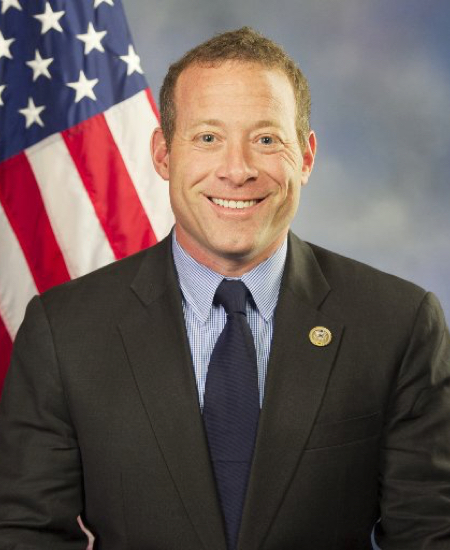
Rep. Josh Gottheimer
Sponsored bills
Maddy summaryThis bill establishes a commission to study whether the Weitzman National Museum of American Jewish History in Philadelphia should be transferred to the Smithsonian Institution. The commission, composed of 8 members appointed by congressional leaders with expertise in Jewish American history and museum administration, will examine the museum's collections, financial status, governance, and feasibility of transfer within two years. The commission must submit a report detailing findings, a fundraising plan, and legislative recommendations for any potential transfer. The bill does not transfer the museum but creates a process to evaluate the possibility.
Maddy summaryHR 7438 directs the U.S. Treasury to mint commemorative coins for the 2026 FIFA World Cup, including 100,000 $5 gold coins, 500,000 $1 silver coins, and 750,000 half-dollar coins. The coins will be sold to the public at face value plus surcharges ($35, $10, and $5 per coin, respectively), with all surcharge revenue paid to FWC2026 US, Inc. for U.S. soccer programs. These funds must support soccer initiatives, particularly in underserved communities and youth development, as specified in the bill. The coins are legal tender but will only be issued during 2026, with no net cost to the U.S. government.
Maddy summaryThis bill extends funding for the existing Public Health Service Act program focused on raising public awareness about Alzheimer's disease and related dementias. It authorizes $33 million annually for fiscal years 2025 through 2029 to support public health education and outreach initiatives. The program directly affects public health organizations and community groups that develop and distribute educational materials about Alzheimer's prevention, diagnosis, and care. The key provision is the multi-year funding extension, ensuring continued support for nationwide awareness efforts without altering the program's core structure.
Maddy summaryThis bill designates the U.S. Customs and Border Protection Air and Marine Operations Marine Unit at 101 Km 18.5 in Cabo Rojo, Puerto Rico, as the "Michel O. Maceda Marine Unit" to honor Marine Interdiction Agent Michel O. Maceda, who was mortally wounded during a 2022 drug interdiction operation. The bill ensures all future government documents, maps, and references will use this new name for the unit. It does not change policies, funding, or operations - only commemorates Agent Maceda's service and sacrifice.
Maddy summaryHR 2892, the WARN Act, directs the Comptroller General to study how local alert systems deliver weather emergency information during events like storms or power outages. The study will evaluate different alert methods - including social media - and develop best practices for clearer, faster public notifications. It requires a report to Congress within one year, but the bill itself creates no new laws or directly affects any group. This is a procedural study bill focused on improving future emergency communication systems.
Maddy summaryThis bill reauthorizes federal conservation funding for the Delaware River Basin through 2030, extending the program's expiration date from 2023. It adds Maryland as a basin state (making it a 5-State basin) and modifies cost-sharing rules to provide 90% federal funding for projects serving small, rural, or disadvantaged communities, with a possible 100% federal share if financial hardship is proven. The bill directly affects the five basin states (Pennsylvania, New Jersey, Delaware, Maryland, and New York) and communities within them, particularly those facing economic challenges. The key change is ensuring greater federal financial support for conservation projects in underserved areas while maintaining program continuity through 2030.
Maddy summaryHR 7480, the Disabled Veterans Housing Support Act, changes how housing programs calculate income eligibility for veterans. It requires states and local governments to exclude service-connected disability compensation from the Department of Veterans Affairs (VA) when determining if a veteran qualifies as "low or moderate income" for HUD housing programs (like Section 8 or public housing). This directly helps disabled veterans whose VA disability pay would otherwise disqualify them from housing assistance they need. The bill also mandates a report within one year examining how VA disability pay is treated across HUD programs and recommending improvements to better serve veterans. The change simplifies access to housing support by ensuring VA benefits aren't counted as income for these programs.
Maddy summaryHR 6751 authorizes the U.S. Mint to produce commemorative coins honoring Roberto Clemente, a Hall of Fame baseball player and humanitarian, including 50,000 $5 gold coins, 400,000 $1 silver coins, and 750,000 half-dollar coins. The coins must feature Clemente's image and inscriptions like "Roberto Clemente" and "2027," with all sales including a surcharge ($5-$35 per coin) paid to the Roberto Clemente Foundation. The foundation, which supports youth sports, education, and disaster relief programs, will use these funds for its mission, while the U.S. Treasury must recover all production costs. The coins will be sold exclusively in 2027, with no net cost to the government.
Maddy summaryHR 9151 establishes a new Department of Justice task force within 120 days to investigate and prosecute international trade crimes like tariff evasion, smuggling, and trade-based money laundering. The task force will hire specialized prosecutors, coordinate with U.S. Customs and Border Protection and Homeland Security, and focus on violations under specific U.S. Code sections including smuggling (18 U.S.C. 545) and fraud (18 U.S.C. 1001). It authorizes $20 million for fiscal year 2025, with 80% dedicated to criminal prosecutions, and requires annual congressional reports detailing case statistics, funding use, and future needs. The bill directly affects importers/exporters engaging in trade violations and DOJ agencies handling cross-border enforcement.