

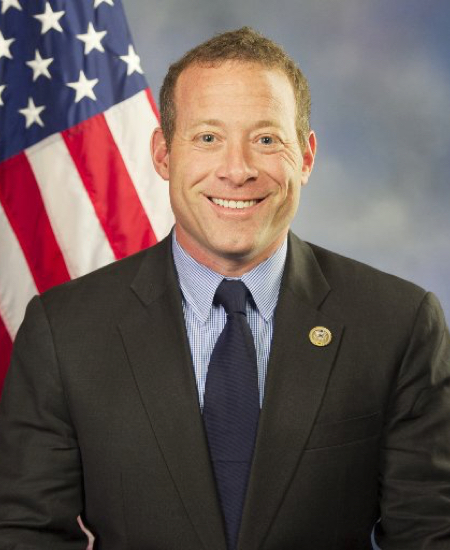
Photo of Josh Gottheimer
D United States House · District 5 · New Jersey On the 2026 ballot

Rep. Josh Gottheimer

Compare
Total votes
2,837
all sessions
Attendance
94%
174 missed
Lower than 95% of chamber peers
With party
93%
of cast votes
Lower than 94% of chamber peers
Bipartisan score
4%
crosses aisle rarely
Higher than 92% of chamber peers
Sponsored
2,786
bills & resolutions
Higher than 98% of chamber peers
Committees
7
assignments
2,786 bills and resolutions

Sponsored bills

Total
2,786
Primary
166
Co-sponsor
2,620
This page
2,786
matching current filters
Co-sponsor HR 7274
In committee · United States House · Co-sponsor
Connecting Caregivers to Medicare Act of 2024

Maddy summaryThis bill requires Medicare to provide clear outreach and education so Medicare beneficiaries (enrolled in Part A, Part B, or Medicare Advantage plans) can authorize family caregivers to access their health information via 1-800-MEDICARE. It mandates the inclusion of a specific authorization form (CMS-10106) in Medicare notices and on Medicare.gov, along with training for call center staff. The Secretary must also share best practices to prevent fraud related to caregiver access and make materials available in non-English languages. It directly affects beneficiaries, their family caregivers, healthcare providers, and Medicare call center operators.

In committee Dec 17, 2024 1 co-sponsor
Co-sponsor HR 7222
In committee · United States House · Co-sponsor
Lowering Costs for Caregivers Act of 2023

Maddy summaryThis bill expands eligibility for certain tax-advantaged health accounts to cover medical expenses for parents. It amends the tax code to allow individuals to use funds from Health Savings Accounts (HSAs), Flexible Spending Accounts (FSAs), and Health Reimbursement Arrangements (HRAs) for qualified medical care of their parents or their spouse's parents - previously limited to immediate family members. The changes apply to expenses incurred after December 31, 2023, directly benefiting adult caregivers (like children supporting elderly parents) who use these accounts for parental healthcare costs. The bill makes no new funding commitments but adjusts existing account rules to reduce out-of-pocket costs for caregivers.

In committee Dec 17, 2024 1 co-sponsor
Co-sponsor HR 7174
In committee · United States House · Co-sponsor
To amend title XI of the Social Security Act to equalize the negotiation period between small-molecule and biologic candidates under the Drug Price Negotiation Program.

Maddy summaryThis bill changes the negotiation period for small-molecule drugs under the federal Drug Price Negotiation Program from 7 years to 11 years, matching the existing 11-year period for biologic drugs. It directly affects drug manufacturers participating in the program by extending the timeframe for price negotiations with the government. The amendment applies to all small-molecule drugs covered under the program, creating a uniform negotiation timeline for both drug types. The change takes effect as if included in the Inflation Reduction Act of 2022.

In committee Dec 17, 2024 1 co-sponsor
Co-sponsor HR 7050
In committee · United States House · Co-sponsor
Substance Use Disorder Workforce Act

Maddy summaryThis bill adds 1,000 new medical residency positions (500 in 2024 and 500 across 2025-2028) specifically for training in addiction medicine, addiction psychiatry, or pain medicine. It directly affects hospitals that have or will establish approved residency programs in these fields. Hospitals receiving these positions must use them for addiction-related training for five years, with unused positions redistributed if requirements aren't met. The goal is to expand the healthcare workforce addressing the substance use disorder crisis by increasing specialized training opportunities.

In committee Dec 17, 2024 1 co-sponsor
Co-sponsor HR 6858
In committee · United States House · Co-sponsor
Social Security Overpayment Relief Act

Maddy summaryHR 6858, the Social Security Overpayment Relief Act, limits the Social Security Administration's ability to recover overpayments made to beneficiaries. It amends Sections 204 of Title II (retirement/disability benefits) and 1631(b) of Title XVI (Supplemental Security Income) to prohibit recovery of overpayments older than 10 years from the date the Commissioner identifies the overpayment. This directly affects individuals who received Social Security or SSI benefits in error more than a decade ago, preventing the government from seeking repayment for those old overpayments. The key provision sets a clear 10-year limit on recovery efforts, applying to both retirement/disability and SSI programs. The bill makes a concrete change to existing recovery rules without altering benefit eligibility or payment amounts.

In committee Dec 17, 2024 1 co-sponsor
Co-sponsor HR 6716
In committee · United States House · Co-sponsor
Healthy MOM Act

Maddy summaryThe Healthy MOM Act (HR 6716) would require health insurance plans to provide a special enrollment period for pregnant individuals beginning when pregnancy is reported to the insurer. It would mandate that group health plans cover maternity care for all dependents, including young women who might otherwise lack coverage due to plan exclusions. The bill would extend Medicaid coverage for pregnant individuals and infants to a full 12 months postpartum, rather than the current 60-day period. These provisions aim to improve access to comprehensive maternity care, which the bill states could prevent 3 in 5 pregnancy-related deaths by addressing coverage gaps that disproportionately affect women of color.

In committee Dec 17, 2024 1 co-sponsor
Co-sponsor HR 6683
In committee · United States House · Co-sponsor
Preserving Seniors’ Access to Physicians Act of 2023

Maddy summaryThe Preserving Seniors’ Access to Physicians Act of 2023 increases the Medicare payment adjustment rate for physicians from 1.25% to 4.62%, directly affecting doctors who treat Medicare patients (primarily seniors). It also reduces the funding for the Medicaid improvement fund from $5,796,117,810 to $3,973,117,810. These changes impact Medicare providers and Medicaid programs, with the Medicare adjustment aimed at supporting physicians adjusting to payment changes. The bill does not specify how the Medicaid funding reduction relates to its stated goal of preserving seniors' access to physicians.

In committee Dec 17, 2024 1 co-sponsor
Co-sponsor HR 6445
In committee · United States House · Co-sponsor
Medicare Audiology Access Improvement Act of 2023

Maddy summaryThis bill adds audiology services to Medicare's covered benefits under Section 1861(s)(2)(KK), effective January 1, 2025. It allows qualified audiologists to provide hearing and balance assessments and diagnostic/treatment services without requiring a physician referral or supervision, directly affecting Medicare beneficiaries seeking these services and audiologists practicing under state law. Payment will be 80% of the lower of actual charge or the Medicare fee schedule. The bill does not expand the types of audiology services covered but changes how they are accessed and paid for under Medicare.

In committee Dec 17, 2024 1 co-sponsor
Co-sponsor HR 6417
In committee · United States House · Co-sponsor
Ending Importation of Laundered Russian Oil Act

Maddy summaryHR 6417 amends the existing "Ending Importation of Russian Oil Act" to ban imports of energy products (classified under Harmonized Tariff Schedule chapter 27) produced at any refinery using crude oil originating in Russia. This directly affects U.S. importers and companies bringing in such refined petroleum products. The key provision prohibits these imports regardless of where the refinery is located, targeting oil that has been "laundered" through foreign processing. The bill updates the existing law by adding this origin-based import ban as a new section.

In committee Dec 17, 2024 1 co-sponsor
Co-sponsor HR 6377
In committee · United States House · Co-sponsor
ARCC Act

Maddy summaryThe ARCC Act provides $100 million in federal funding to help apprentices and pre-apprentices in job training programs cover childcare costs. It authorizes competitive grants to 10 states, which must distribute monthly stipends of at least $500 per dependent child directly to eligible childcare providers on behalf of participants in these programs. The bill prioritizes individuals from historically underrepresented groups (based on race, ethnicity, or gender) and ensures stipends are tax-free while not affecting eligibility for other federal benefits. States must report on participation, program completion rates, and demographic data, with the Secretary later summarizing program impacts for Congress.

In committee Dec 17, 2024 1 co-sponsor
Showing 1,061 to 1,070 of 2,786 bills