

Maddy summaryHRES 966 is a symbolic resolution condemning alleged sexual violence committed by Hamas during its October 7, 2023, attack on Israel. It specifically references eyewitness accounts, forensic evidence, and Hamas fighters' admissions of ordering gang rape, sexual mutilation, and assault against Israeli civilians. The resolution calls for international condemnation of such acts as weapons of war, urges nations to criminalize sexual violence, and supports investigations into Hamas' actions. As a non-binding resolution, it does not create new laws or directly affect any individuals but formally expresses the House's position on the issue.
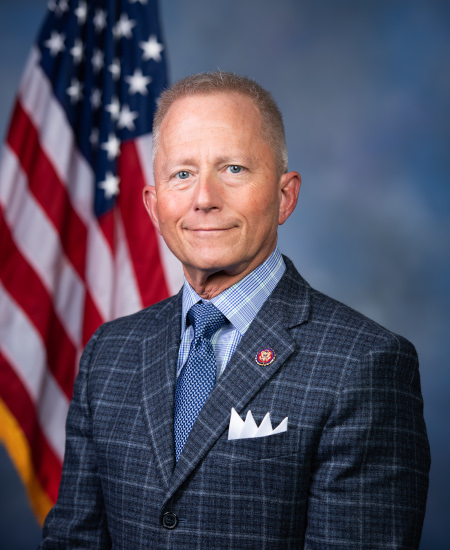
Rep. Jefferson Van Drew
Sponsored bills
Maddy summaryHR 4316, the Citizen Ballot Protection Act, amends the National Voter Registration Act to allow states to require mail voter registration applicants to provide proof of U.S. citizenship after federal elections. This change applies specifically to the state mail voter registration form, adding a citizenship verification step that states may implement following federal election cycles. The bill does not alter current in-person registration requirements or the timing of citizenship proof for initial registration. It directly affects voters who submit registration applications by mail for federal offices. The law would take effect upon its enactment.
Medicaid Coverage for Addiction Recovery Expansion Act This bill allows state Medicaid programs to cover residential addiction treatment facility services for adults between the ages of 22 and 64 if such services are offered as part of a full continuum of evidence-based treatment services. Residential addiction treatment facility services are medically necessary inpatient services provided in an accredited, size-limited facility for the purpose of treating a substance-use disorder within a specified time period. In addition, the bill establishes a grant program for states to expand infrastructure and treatment capabilities of existing youth addiction treatment facilities that (1) provide addiction treatment services to youths under Medicaid or the Children's Health Insurance Program (CHIP), and (2) are located in communities with high numbers of medically underserved populations of at-risk youths. At least 15% of grant funds awarded to a state must be used for making payments to rural facilities.
Maddy summaryHJRES 114 is a joint resolution seeking congressional disapproval of a Federal Highway Administration (FHWA) rule that would have required tracking greenhouse gas emissions as part of assessing performance for the National Highway System. The rule, published in the Federal Register in December 2023, aimed to establish specific metrics for evaluating highway system performance, including emissions data. If approved, this resolution would nullify the rule, preventing the FHWA from implementing the emissions tracking requirement. This action directly affects how the FHWA measures highway system performance, specifically regarding environmental metrics.
Maddy summaryHR 7303, the Preserve Geographic Names Act, abolishes the Board on Geographic Names established in 1947 and terminates all its functions. The bill updates the 1947 law by removing all references to the Board, including its name, duties, and authority, and revises related sections to reflect its elimination. This is a procedural change that affects no specific geographic names or people, as it only eliminates the federal board responsible for coordinating geographic naming. The bill does not alter how geographic names are approved or managed by federal agencies.
This resolution expresses the sense of the House of Representatives that former President Trump did not engage in insurrection or rebellion against, nor give aid or comfort to the enemies of, the United States.
Maddy summaryHR 7232, the "No Visas for Anti-Semitic Students Act," revokes student visas (F or M status) for international students who are or were members of antisemitic organizations or made public antisemitic statements. It directly affects non-U.S. students holding valid F- or M- visas who engage in such activities, requiring the Secretary of State to revoke their visas upon the bill's enactment. The bill defines antisemitism broadly as hatred toward Jews expressed through rhetoric or physical acts targeting Jewish individuals, property, community institutions, or religious facilities. It also prohibits granting new student visas to applicants with such affiliations or statements. The law amends existing immigration rules to void visas if students later engage in antisemitic conduct while holding F- or M-status.
Maddy summaryHR 7231, the CAMPUS Act, prohibits U.S. colleges and universities receiving federal student aid (Title IV funds) from promoting antisemitism. It blocks federal funding for institutions that either fund organizations engaging in antisemitic harassment or allow faculty to promote antisemitism during classes. The Secretary of Education would determine violations, give institutions 30 days to correct issues (like disciplining staff), and cut funding if unresolved. This directly affects all colleges participating in federal student aid programs that fail to address such activity.
Maddy summaryThis resolution disapproves a Department of Energy rule that would have set new energy efficiency standards for consumer furnaces. The rule, published in the Federal Register (88 Fed. Reg. 87502), aimed to require furnace manufacturers to produce models meeting higher energy conservation levels. If enacted, this resolution would cancel the rule, preventing it from taking effect. As a result, current energy efficiency standards for furnaces would remain unchanged, and manufacturers would not face the new requirements.
Maddy summaryHR 7183, the PROTECTS Act of 2024, prohibits federal funding from being used to provide or refer for specific gender transition procedures to individuals under 18. The bill defines prohibited procedures broadly to include surgeries (like hysterectomy, mastectomy, or genital reconstruction), puberty-blocking medications, and hormone treatments administered at supraphysiologic doses. It includes limited exceptions for medically necessary care, such as treating precocious puberty or correcting genetic disorders of sex development. The law directly affects minors seeking gender-affirming medical care covered by federal programs, restricting federal financial support for these services.