

Maddy summaryHJRES 146 is a congressional disapproval resolution targeting a Centers for Medicare & Medicaid Services (CMS) rule published on May 8, 2024, that would have clarified eligibility for health insurance subsidies under the Affordable Care Act for Deferred Action for Childhood Arrivals (DACA) recipients and certain other noncitizens. The rule aimed to allow these individuals to access premium tax credits, cost-sharing reductions, and basic health programs through health insurance marketplaces. If enacted, this resolution would block the CMS rule from taking effect, maintaining current restrictions that prevent DACA recipients from qualifying for these subsidies.
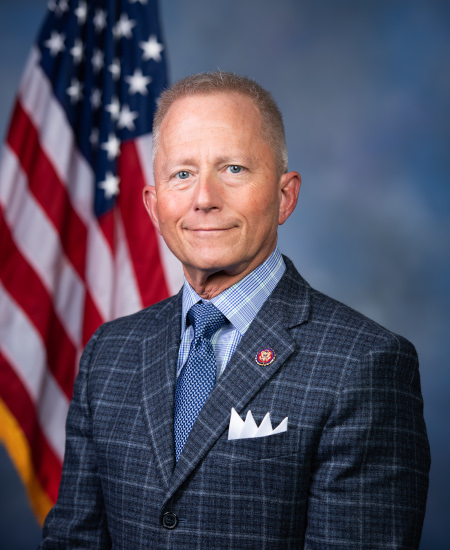
Rep. Jefferson Van Drew
Sponsored bills
Maddy summaryHJRES 145 is a joint resolution seeking congressional disapproval of a specific FDA rule regarding medical tests developed in laboratories (LDTs). It targets the FDA's May 2024 rule (89 Fed. Reg. 37286) that would have regulated these tests as medical devices. The resolution uses the Congressional Review Act (Chapter 8 of Title 5, U.S. Code) to block the rule from taking effect, stating it "shall have no force or effect." This resolution directly affects the FDA's regulatory authority over laboratory-developed medical tests but does not change existing medical device laws.
Maddy summaryThe SCREENS for Cancer Act of 2024 reauthorizes and expands the National Breast and Cervical Cancer Early Detection Program (NBCCEDP), which provides free screenings and care coordination to low-income, uninsured, or underinsured women. It increases annual funding from $275 million (2024) to $500 million (2028) and explicitly adds "prevention" to the program’s mission, requiring it to reduce racial and ethnic disparities in cancer outcomes. The bill mandates the program to address barriers like social determinants of health and implement evidence-based strategies to boost screenings, particularly for underserved communities disproportionately affected by pandemic-related screening declines. This directly benefits millions of women, especially Black, Hispanic, and Asian women, who face higher cancer death rates and reduced access to care.
Maddy summaryThis bill reauthorizes the National Alzheimer's Project Act through 2035 (extending the previous deadline of 2025) and adds new requirements to promote healthy aging and reduce Alzheimer’s risk factors. It mandates the program to provide information on healthy behaviors that may lower cognitive decline risk and expands the advisory group to include representatives from agencies like the Department of Justice, FEMA, and Social Security Administration, plus experts with diverse clinical trial experience. The bill directly affects Alzheimer’s research, care programs, and the federal advisory group overseeing national efforts. Key changes include requiring annual evaluations instead of initial ones and adding a focus on reducing health disparities in Alzheimer’s initiatives.
Maddy summaryThis non-binding resolution (HRES 1258) expresses the House's appreciation for U.S. military service members and veterans, honoring their journey from enlistment through veteran status. It lists existing support areas - such as employment assistance, education access, healthcare, mental health services, and family economic stability - but does not create new laws, funding, or obligations. The resolution is purely symbolic, with no concrete policy changes or legislative impact. It was introduced by Rep. Van Drew on May 23, 2024, and referred to the Armed Services and Veterans' Affairs committees.
Maddy summaryThis bill amends the 2022 Camp Lejeune Justice Act to clarify and correct technical details. It updates eligibility requirements for claimants (requiring 30 days at Camp Lejeune and defining "latent harm" instead of "latent disease"), clarifies court jurisdiction for cases, and specifies attorney fee structures (20% pre-litigation, 25% post-litigation). The changes directly affect individuals who developed health issues due to contaminated water at Camp Lejeune, streamlining their legal process under the existing 2022 law.
Maddy summaryHR 895, the Combating Organized Retail Crime Act of 2023, expands federal law to better prosecute organized retail theft by amending sections 2314 and 2315 of Title 18. It clarifies that crimes involving stolen goods valued at $5,000 or more over 12 months - including retail theft - can be prosecuted under existing federal statutes, and broadens definitions to include goods taken via "any facility of interstate or foreign commerce." The bill also creates a new Organized Retail Crime Coordination Center within Homeland Security, requiring it to coordinate federal, state, and local law enforcement efforts, share threat information with retailers, and produce annual public reports on trends. This directly affects law enforcement agencies, retailers, and criminal justice systems by standardizing prosecution thresholds and enhancing interagency collaboration.
Maddy summaryThis resolution (HRES 1245) symbolically recognizes "National Public Works Week" occurring May 19-25, 2024. It honors public works professionals, first responders, and support staff who maintain infrastructure like transportation, water systems, and public buildings. The resolution encourages the public to acknowledge their contributions to community health, safety, and quality of life but does not create new laws or allocate funding. As a procedural resolution, it serves solely as a formal acknowledgment without policy impact.
Maddy summaryHRES 1247 is a non-binding House resolution recognizing National Safe Boating Week. It acknowledges the significance of this annual observance (held in late May) and highlights statistics about boating safety, including that drowning causes 75% of boating fatalities. The resolution supports existing safety procedures like life jacket use and encourages Americans to boat safely. It does not create new laws or policies, but formally urges federal, state, and local partners to continue promoting safe boating through events during this week.
Maddy summaryHR 8498 authorizes $1.02 billion in funding to modernize and rebuild facilities at the United States Merchant Marine Academy. The bill allocates $54 million for planning in fiscal year 2025 and $107.33 million annually from 2026 through 2034 for construction, following the "Full Speed Ahead" infrastructure plan. This funding directly affects the Academy's physical infrastructure, including rehabilitation, modernization, and new construction projects. The bill specifies that funds must align with the Maritime Security Infrastructure Council's plan outlined in the February 28, 2024, Congressional Record.