

Uyghur Stop Oppressive Sterilizations Act or the Uyghur SOS Act This bill expands existing visa-blocking sanctions to cover certain high-ranking foreign government officials who are responsible for coercive population control policies, such as forced abortions, with a focus on those responsible for such policies against ethnic minority groups in China. Specifically, the Department of State may not issue a visa to a foreign national who is a head of state, head of government, or cabinet-level minister and responsible for establishing or enforcing such policies if the policies are (1) imposed with the intent to destroy a national, ethnic, racial, or religious group; or (2) targeting ethnic minority groups (e.g., Uyghurs, Kazakhs, or Tibetans) or individuals peacefully expressing internationally-recognized human rights in China. (Currently, these sanctions do not apply to any foreign government officials at these higher ranks.) The State Department must make a public announcement each time sanctions are imposed under this bill. The bill also requires the State Department to provide all appropriate assistance to women who belong to an ethnic minority group in China and who have experienced sexual violence, torture, or coercive population control policies.
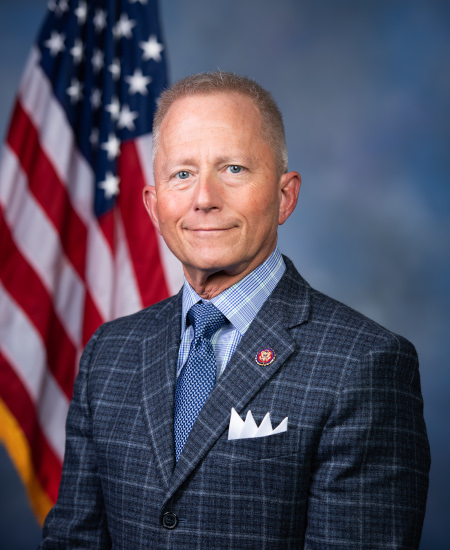
Rep. Jefferson Van Drew
Sponsored bills
United States Postal Service Shipping Equity Act This bill authorizes the mailing of alcoholic beverages by certain entities in accordance with the delivery requirements otherwise applicable to a privately carried shipment. The authorization applies to an entity (including a winery, brewery, beverage distilled spirits plant, or other wholesaler, distributer, importer, or retailer of alcoholic beverages) that has registered with, obtained a permit from, or obtained approval of an application from the Department of the Treasury. The bill directs the U.S. Postal Service (USPS) to prescribe regulations (1) requiring direct delivery to a duly authorized agent at a postal facility or to the addressee, who must be at least 21 years of age and present a valid, government-issued photo identification at the time of delivery; (2) prohibiting such alcoholic beverages from being for resale or any other commercial purpose; and (3) requiring such entity to certify that the mailing is not in violation of applicable laws or regulations and to provide other information as directed by the USPS. The U.S. district courts shall have jurisdiction to render judgment upon any claim brought by a state, local, or tribal government against the USPS of a violation of state, local, or tribal law regarding the sale, mailing, transportation, or importation of alcoholic beverages into any U.S. state, territory, or district. The USPS shall not be liable for interest prior to judgment or for punitive damages.
Federal Firearms Licensee Protection Act This bill modifies provisions related to theft of firearms. Under current law, it is unlawful to steal a firearm from a licensed importer, manufacturer, or dealer, or from their business premises. This bill broadens the scope of unlawful conduct to also prohibit stealing a firearm from a gun range that rents firearms or a shooting club. An attempt to commit an offense is subject to the same penalties as a substantive offense. The bill modifies these penalties by increasing the maximum prison term.
Temporary Family Visitation Act This bill establishes a new nonimmigrant visa classification for an alien temporarily entering the United States to visit a relative who is a U.S. citizen or lawful permanent resident. The maximum period of stay for a family visitor visa shall be 90 days. An alien seeking such a visa must have health insurance for the duration of the stay. An alien who holds such a visa may not change to another nonimmigrant visa classification except in certain limited instances. If an alien has been approved for a family-based immigrant visa and is waiting for one to become available, the alien may obtain a family visitor visa if the alien meets the eligibility requirements.
David Dorn Back the Blue Act This bill directs the Department of Justice (DOJ) to provide programs to support the hiring and retention of law enforcement personnel and to increase their salaries. Further, DOJ may make grants to state and local law enforcement agencies for this purpose.
Protect and Serve Act of 2021 This bill establishes a new criminal offense for knowingly assaulting a law enforcement officer and causing serious bodily injury (or attempting to do so) in circumstances that affect interstate commerce. It imposes criminal penalties—a prison term, a fine, or both—on a violator.
Vietnam Human Rights Act This bill requires actions related to human rights in Vietnam and addresses related issues. The Department of State must assist eligible individuals and entities working to secure the release of political and religious prisoners in Vietnam. The Office of Internet Freedom within the U.S. Agency for Global Media and the Bureau of Democracy, Human Rights, and Labor within the State Department shall prioritize (1) the immediate distribution of censorship circumvention tools for computers and smartphones in Vietnam; and (2) projects to ensure the safety and privacy of bloggers, journalists, and human rights defenders in Vietnam. Foreign assistance may not be used to assist any unit of the Vietnamese government engaged in cyberespionage activities. The State Department may establish programs to (1) monitor and halt sex trafficking of women from Vietnam and other Asian countries, and (2) address Vietnam's growing sex-ratio disparity. The bill also requires various reports to Congress, including reports on (1) persons subject to U.S. sanctions for human rights violations in Vietnam, (2) a strategy to promote internet freedom in Vietnam, and (3) cyberespionage activities sanctioned by the Vietnamese government targeting Vietnamese dissidents and human rights advocates living outside of Vietnam.
Protecting America's First Responders Act of 2021 This bill makes changes to the Public Safety Officers' Benefits (PSOB) program. The PSOB program provides death, disability, and education benefits to public safety officers and survivors of public safety officers who are killed in the line of duty or permanently disabled as a result of catastrophic injuries sustained in the line of duty. Among the changes, the bill expands the public safety officers eligible for coverage under the PSOB program to include firefighters whose primary duty during an emergency response is to secure the scene or manage traffic and cadets or trainees in candidate-officer training; extends coverage under the PSOB program to certain public safety officers responding outside their jurisdiction; increases the interim benefit amount payable on a claim for death benefits and requires the interim amount to be adjusted annually for inflation; increases the benefit amount payable on a death or disability claim that has been pending for more than 365 days on the date of the final determination; allows the Department of Justice (DOJ) to use investigative tools, including subpoenas, to expedite the processing of claims and obtain information or documentation from third parties (e.g., public agencies); specifies that an injury resulting from a neurocognitive disorder qualifies as a catastrophic injury for the purposes of disability benefits; requires (currently, authorizes) DOJ to provide retroactive education benefits to qualifying children and spouses; specifies that hearing officers appointed to review claims are special government employees (i.e., employees who perform temporary duties for a limited period of time) and are authorized to conduct examinations; and allows responders to the World Trade Center or their surviving family members to file claims for death or disability benefits in certain circumstances.
Stop Vaccine Mandates Act This bill rescinds the executive order titled Ensuring Adequate COVID Safety Protocols for Federal Contractors and the executive order titled Requiring Coronavirus Disease 2019 Vaccination for Federal Employees , both published on September 9, 2021. The bill provides that these executive orders shall have no force or effect.
Keeping Our COVID-19 Heroes Employed Act This bill exempts essential workers from COVID-19 vaccination requirements imposed by the federal government and contractors, public entities that received federal COVID-19 relief funds, and private entities that received any federal funds. An essential worker is an individual who was deemed to be essential or exempted from response measures during the COVID-19 pandemic by a state, tribe, or territory.