

Maddy summaryHR 24, the Federal Reserve Transparency Act of 2023, requires a comprehensive audit of the Federal Reserve System's Board of Governors and Federal Reserve banks within 12 months of the bill's enactment. The Congressional auditor (Comptroller General) must then submit a detailed report to Congress within 90 days, including findings, conclusions, and recommendations for improving transparency. This bill directly affects the Federal Reserve System by mandating greater oversight of its operations and financial activities. The key provision repeals a prior limitation that prevented audits of certain Fed programs, aiming to clarify which activities are subject to audit under existing law.
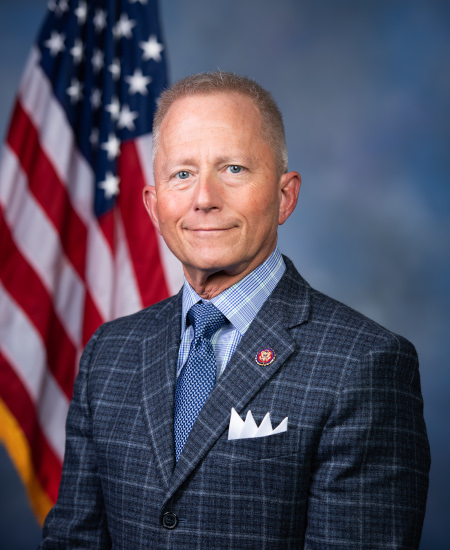
Rep. Jefferson Van Drew
Sponsored bills
WHO Withdrawal Act This bill requires the President to immediately withdraw the United States from the World Health Organization (WHO) and prohibits using any federal funds to provide for U.S. participation in the WHO. The bill also repeals the 1948 act authorizing the United States to join the WHO.
COI Elimination Act This bill limits U.S. contributions to the United Nations pertaining to the U.N. Independent International Commission of Inquiry on the Occupied Palestinian Territory, including East Jerusalem, and Israel. Current law imposes a cap on the annual U.S. contribution to the U.N. budget. The bill lowers that cap by 25% of the amount budgeted for the commission. The bill also states that it shall be U.S. policy to seek the abolition of the commission and combat systemic anti-Israel bias in international bodies.
Maddy summaryHR 199, the "Secure America’s Borders First Act," prohibits using U.S. funds for Ukraine security programs until two conditions are met: a border wall system is completed along the U.S.-Mexico border and full border control is achieved (as defined in the 2006 Secure Fence Act). The bill specifically blocks Department of Defense funding and security assistance for Ukraine until these border requirements are satisfied. The border wall must include a 30-foot steel barrier, access roads, lighting, and surveillance technology. This restriction applies only to Ukraine-related security aid, not other defense spending.
Maddy summaryThis bill establishes nationwide recognition for valid concealed carry permits. It allows permit holders from any state to carry concealed handguns in states that either issue such permits or don't ban concealed carry, provided they carry a photo ID and their valid permit. Key provisions include making presentation of a valid permit and ID prima facie evidence of compliance, shifting the burden of proof to prosecutors if challenged, and requiring courts to award attorney fees to successful defendants. It does not override state laws prohibiting concealed carry on private property or government lands, nor does it affect restrictions on federal lands like national parks.
Maddy summaryHR 208, the Pet Safety and Protection Act of 2023, restricts where research facilities can obtain dogs and cats for laboratory use. It requires facilities to source animals only from licensed breeders, registered shelters meeting specific criteria, owners who've had the pet over a year, or other research facilities - banning purchases from pet stores or random sources. The bill amends the Animal Welfare Act to define permissible sources and imposes $1,000 fines per violation for non-compliance. It affects research facilities, shelters, and breeders by changing their legal sourcing options for animals used in research. The changes take effect 90 days after the bill becomes law.
Maddy summaryHR 53 (FIND Act) requires federal contractors to certify they do not refuse to work with firearm manufacturers, dealers, ammunition sellers, or related safety device companies based on bias. It prohibits main contractors from awarding subcontracts exceeding 10% of a contract’s value to entities that fail to make this certification, and bans efforts to circumvent the rule through complex subcontract tiers. The law applies to all federal procurement contracts, directly affecting businesses bidding on government work. Violations risk contract termination and suspension from future government contracts.
Sami's Law This act addresses safety requirements for passengers and drivers of ride-sharing companies (e.g., Uber, Lyft, or taxicabs). The act requires the Government Accountability Office to submit to Congress a biennial report that includes the results of a study regarding (1) the incidence of fatal and non-fatal physical assault and sexual assault in the preceding two calendar years on drivers by passengers of ride-sharing vehicles and on passengers by drivers of such vehicles, (2) the nature and specifics of any background checks conducted on prospective drivers of ride-sharing vehicles, and (3) the safety steps taken by ride-sharing companies related to rider and driver safety.
Human Trafficking Prevention Act of 2022 This act requires the posting of contact information of the national human trafficking hotline in specific places. Specifically, the information must be posted in a visible place in all federal buildings; in the restrooms of each U.S. aircraft, airport, over-the-road bus, bus station, passenger train, and passenger railroad station; and at each port of entry.
Aviation Funding Stability Act of 20 21 This bill provides continuing appropriations to the Federal Aviation Administration (FAA) from the Airport and Airway Trust Fund if an appropriations bill for the FAA has not been enacted before a fiscal year begins or a joint resolution making continuing appropriations for the FAA is not in effect. The bill provides appropriations at the rate of operations that was provided for the prior fiscal year to continue programs, projects, and activities for which funds were provided in the preceding fiscal year.