

Maddy summaryHR 3303, the Maternal Health for Veterans Act, requires the Department of Veterans Affairs (VA) to annually report on maternity care coordination programs and maternal health outcomes for veterans receiving care through VA facilities or VA-contracted providers. The bill mandates the VA to collect data on maternal outcomes - including disparities affecting high-risk demographic groups - and submit recommendations to Congress by September 2028. It authorizes $15 million annually (2024-2028) for VA maternity care coordination programs, supplementing existing funding without reducing current resources. The law directly affects veterans using VA maternity services, aiming to improve care through data-driven strategies.
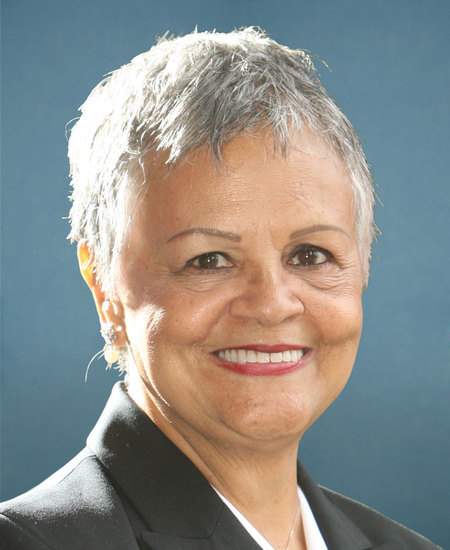
Rep. Bonnie Watson Coleman
Sponsored bills
Maddy summaryHR 1083, the Caring for Survivors Act of 2023, increases financial support for surviving spouses of veterans. It amends Title 38 to raise dependency and indemnity compensation from a fixed $1,154 to 55% of the monthly compensation rate under section 1114(j), effective six months after enactment. The bill also modifies eligibility for survivors of veterans who died before 1993, ensuring they receive the greater of their current benefit or the new calculation. Additionally, it reduces the required continuous service rating period for survivors from 10 years to five years when a veteran was totally disabled at death. These changes directly affect surviving spouses, particularly those with veterans who died prior to 1993.
Maddy summaryHRES 1148 is a resolution passed by the U.S. House of Representatives that condemns the Iranian government for supporting terrorism, regional proxy conflicts, and internal suppression of dissent - including its crackdown on protests following Mahsa Amini's death in 2022. It specifically calls for maintaining sanctions against Iran, supporting the Iranian Resistance's Ten-Point Plan (which advocates for a democratic, secular, nonnuclear Iran), and protecting Iranian political refugees in Albania. The resolution also affirms the Iranian people's right to self-determination under international law and urges the U.S. to recognize their struggle for freedom. As a non-binding resolution, it does not create new laws but formally expresses congressional stance.
Maddy summaryHR 8013, the Gig Is Up Act, requires large employers (those with $100 million+ in annual gross receipts and 10,000+ independent contractors) to treat payments to certain gig workers as wages for payroll tax purposes. This means these employers must withhold Social Security and Medicare taxes at double the standard rate (instead of the usual 7.65%), similar to how they handle employee wages. The change applies to payments made after December 31, 2024, and directly affects major gig platforms and their workers who currently pay self-employment taxes. The bill does not reclassify workers as employees but alters how their payments are taxed under the Social Security system.
Maddy summaryThis bill creates a new federal tax credit for family child care providers who operate from their primary residence and hold state licenses. It allows qualifying providers to claim up to $5,000 in startup costs per year, including licensing fees, supplies, insurance, safety equipment, furniture, and required home renovations. The credit applies only once per provider (no repeat claims) and expires after 7 years. It directly benefits small-scale, licensed family child care providers serving at least two non-family children, aiming to reduce their initial business setup costs.
Maddy summaryThe Combating Hate Across Campus Act (HR 7998) requires colleges and universities to collect and report campus hate crime statistics with more detailed demographic breakdowns. It amends the Higher Education Act to mandate that institutions disaggregate hate crime data by the specific identity of the targeted individual or group (such as race, religion, or sexual orientation), using the FBI's most recent hate crime data collection guidelines. This change ensures reports provide precise information about the nature and scope of hate incidents on campus. The requirement applies to all institutions of higher education receiving federal student aid under the Higher Education Act.
Maddy summaryThis bill authorizes $5 billion annually (2025-2034) for three key housing programs - Home Investment Partnerships, Community Development Block Grants, and the Housing Trust Fund - but restricts funding to areas already designated with a "high housing cost adjustment" by HUD. It mandates a two-year assessment by the Secretary of Housing and Urban Development to evaluate how area median income (AMI) calculations impact affordability, particularly in high-cost urban areas, including analyzing ZIP code-level metrics and alternatives to AMI. The study must examine rent burdens, income limits for tax-subsidized housing, and the specific effects of high-cost adjustments in places like New York City. The bill directly affects low-income and middle-class families in urban areas where housing costs significantly exceed local median income, aiming to inform potential reforms to housing affordability metrics.
Maddy summaryHRES 1135 is a non-binding resolution supporting the "Rise Up for LGBTQI+ Youth in Schools" initiative. It calls for communities to demand equal educational opportunities, civil rights protections, and an end to exclusion for LGBTQI+ students in K-12 schools, particularly transgender, nonbinary, Black, Indigenous, and disabled youth. The resolution encourages states and school districts to adopt policies prohibiting bias-based bullying, harassment, and erasure - such as inclusive sports participation, bathroom access, and curriculum inclusion - without creating new legal requirements. It references growing state-level restrictions targeting LGBTQI+ students, including sports bans and curriculum censorship, as context for the call to action. The resolution itself does not enact new laws but formally recognizes efforts to foster safer, affirming school environments.
Maddy summaryHR 7921, the Countering Antisemitism Act, establishes a National Coordinator to Counter Antisemitism within the Executive Office of the President and creates an Interagency Task Force to coordinate federal efforts against antisemitism across multiple agencies. The bill requires federal agencies to report on implementing the U.S. National Strategy to Counter Antisemitism, mandates annual threat assessments of antisemitic violent extremism from the FBI, DHS, and National Counterterrorism Center, and addresses antisemitic discrimination in higher education through a designated Office for Civil Rights Designee. It also includes provisions for a study on Holocaust education by the U.S. Holocaust Memorial Museum, a study on online antisemitism with recommendations for Congress, and amendments to the Nonprofit Security Grant Program to require public reporting on grant applications and awards.
Maddy summaryHR 7862 directs federal agencies to annually report on converting unused government-owned buildings into affordable housing. It establishes two grant programs: a $1.75 million annual grant for exploring office-to-residential conversions, and a $250 million annual program for states and local governments to convert underutilized public buildings into rental housing. The state/local program requires converted housing to maintain affordability for 30 years, with at least 20% of units reserved for households earning ≤50% of local median income, or 40% for households ≤60% of median income. This bill directly affects federal agencies (through reporting) and state/local governments (through grant funding), focusing on repurposing vacant public property to expand affordable housing options.