

Maddy summaryHR 9894, the Cool Roof Rebate Act of 2024, creates a federal program offering rebates to eligible low-income households for installing cool roofs that reflect sunlight. Households qualify if they live in single/multi-family homes, earn under 200% of their zip code’s median income, and reside in areas ranked in the top 25% for heat vulnerability by the CDC. Rebates pay $0.25 to $0.75 per square foot based on roof type (low-sloped or steep-sloped) and meeting specific sunlight-reflecting standards, with funding set at $25 million annually from 2025 through 2029. The program requires participants to report on their roof replacement details and the products used, with a final report due to Congress after its 2029 end date.
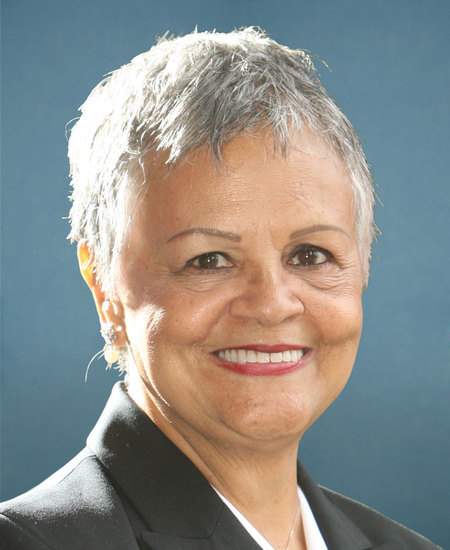
Rep. Bonnie Watson Coleman
Sponsored bills
Maddy summaryThe Long COVID Research Moonshot Act establishes a dedicated National Institutes of Health research program to accelerate scientific understanding and treatment development for Long COVID, directly affecting millions of people experiencing persistent health issues after COVID-19 infection. The bill creates a Long COVID Research Program with a specific Director to coordinate all NIH research, develop an annual research plan, and establish a patient-informed advisory board with representation from both patients and scientific experts. It authorizes $1 billion annually for 10 years (2025-2034) to fund research on Long COVID's causes, prevention, detection, management, and treatment, including a clinical trial registry and public health surveillance through the CDC. The legislation also includes provisions for public education campaigns, provider training, and a national network of multidisciplinary Long COVID clinics to improve care access, particularly for underserved populations. This comprehensive approach aims to address Long COVID through coordinated research, surveillance, and clinical care improvements.
Maddy summaryHR 9878, the No Shame at School Act of 2024, requires schools to automatically certify students from households with unpaid meal fees for free or reduced-price meals (instead of allowing discretion), and mandates retroactive reimbursement for past unpaid meals. It directly affects school districts and students in households owing meal fees by prohibiting stigmatizing practices like special tokens, public lists of names, or withholding grades due to unpaid fees. Key provisions ban schools from physically segregating students, using debt collectors, or taking food away from students who owe fees, while requiring clear communication to households about meal applications. The bill defines "covered child" as any student enrolled in a participating school meal program whose household owes fees or is eligible for free/reduced meals.
Maddy summaryThe Child Safety and Well-Being Act of 2024 (HR 9875) establishes a Children's Commission to represent children's interests in federal policymaking. The Commission, composed of 15 diverse members including experts, youth with lived experience, and representatives from various backgrounds, will advise Congress and federal agencies on policies affecting children, particularly marginalized youth defined as those experiencing systemic barriers. The Commission will review agency actions, receive complaints about how children are treated, and publish annual reports with recommendations to improve child well-being policies. It is authorized $5 million annually for operations and must study the feasibility of requiring agencies to create "child impact statements" assessing how policies affect children.
Maddy summaryHRES 1513 is a symbolic House resolution affirming that the term "woke" originates from Black history and liberation movements, not modern political discourse. It highlights historical roots, including Marcus Garvey’s "Wake up Ethiopia!" and 1940s labor activism, while condemning media and right-wing groups for misusing and distorting the term (e.g., the Stop W.O.K.E. Act). The resolution encourages accurate historical use of "woke" and opposes efforts to erase its connection to social justice. It does not create new laws but directly addresses Black educators and movements targeted by legislation seeking to limit inclusive history teaching.
Maddy summaryHRES 1516 is a resolution passed by the U.S. House of Representatives to commend Big Brothers-Big Sisters of America on its 120th anniversary. It recognizes the organization’s work in providing youth mentorship that helps young people graduate from school and plan for their future. The resolution highlights how the organization, operating in over 5,000 communities nationwide, has supported millions of young people through long-term mentor relationships. As a symbolic gesture, it does not create new laws or policies but expresses congressional support for the organization’s mission.
Maddy summaryThis resolution designates the week of September 23-29, 2024, as "See Tracks? Think Train! Week" in the United States. It expresses congressional support for the existing public awareness campaign run by Operation Lifesaver, which aims to reduce highway-rail grade crossing incidents, fatalities, and injuries through education and safety awareness. The resolution does not create new laws or funding but encourages public participation in safety activities during this designated week. It references 2023 data showing 2,192 grade-crossing incidents resulting in 247 deaths, highlighting the campaign's focus on preventing preventable rail-related tragedies.
Maddy summaryThis resolution formally censures Representative Glen Clay Higgins (LA-03) for a September 25, 2024, social media post containing racist remarks and false claims about Haitians. The bill requires Higgins to appear in the House chamber to receive the censure, with the resolution publicly read by the Speaker. It specifically references his post describing Haiti as "the nastiest country," falsely accusing Haitians of eating pets, and labeling them "slapstick gangsters and thugs." The censure is a formal disciplinary action by the House, not a policy change.
Maddy summaryThis bill requires the Transportation Security Administration (TSA) to develop and update guidance within 90 days (and every five years) to prevent contamination of breast milk, baby formula, and related cooling items during airport security screening. The guidance must be created with input from maternal health organizations and ensure hygienic handling during re-screening or additional testing. It also mandates a DHS Inspector General audit within one year to review compliance and assess how screening technologies affect these items' processing. The bill directly affects breastfeeding parents traveling with infants by standardizing secure handling of essential items.
Maddy summaryHCONRES 130 is a symbolic concurrent resolution commending state and local governments that treat reproductive rights as human rights following the *Dobbs* decision. It recognizes efforts by cities like Austin, Texas, and Montgomery County, Maryland, to expand abortion access and condemn criminalization of pregnancy outcomes. The resolution affirms that reproductive rights are human rights, urges states to repeal restrictive laws, and references U.S. obligations under international human rights treaties. As a non-binding resolution, it does not create new laws or alter existing policies.