

Maddy summaryHR 646, the Build Housing with Care Act of 2025, establishes a HUD grant program to fund the co-location of affordable housing developments with child care facilities. It directly affects housing developers, child care providers, and residents of affordable housing by requiring grants to support projects in "child care deserts" (areas with severe child care shortages), prioritizing low-income, rural, or Head Start-serving providers. Key provisions mandate that projects must not evict residents, include resident engagement plans, and ensure child care providers serve low-income families or dual-language learners. The bill authorizes $100 million annually (2025-2030) and requires annual reports tracking child care slots created, resident usage, and demographic data.
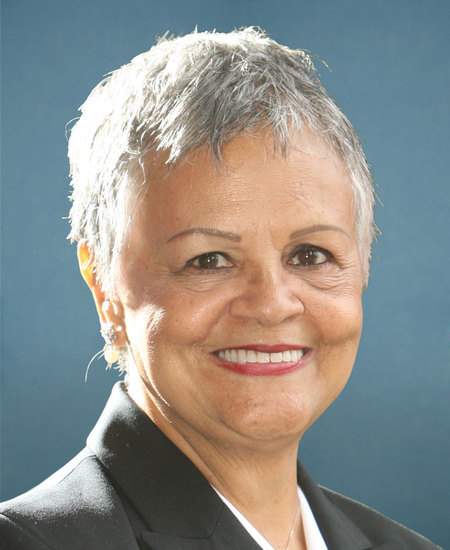
Rep. Bonnie Watson Coleman
Sponsored bills
Maddy summaryHR 612, the Health Care Providers Safety Act of 2025, provides federal funding to help health care facilities improve safety. It authorizes the Secretary to award grants to hospitals, clinics, and other health care providers to cover costs for physical security (like structural improvements) and cyber security (such as data privacy tools and video surveillance systems). These grants directly help health care providers protect their facilities, staff, and patients from security threats. The bill creates a new funding mechanism under the Public Health Service Act, making specific security upgrades eligible for federal support.
Neighbors Not Enemies Act This bill repeals provisions authorizing the President to apprehend and remove from the United States the citizens of a particular nation, if the United States has declared war against that nation or that nation has threatened an invasion against the United States.
Maddy summaryThe Close the Medigap Act of 2025 would prohibit Medigap insurance issuers from denying coverage or charging higher premiums based on health status, pre-existing conditions, genetic information, or other factors. It requires insurers to spend a minimum percentage of premiums on health care claims and improves the Medicare Plan Finder website to provide clearer information about coverage options, out-of-pocket costs, and guaranteed issue requirements. The bill applies to Medigap policies effective January 1, 2026, with full implementation by 2031, and requires Medigap brokers to disclose payments they receive from insurers. These changes would directly affect Medicare beneficiaries, particularly those with pre-existing conditions who have historically faced barriers to obtaining affordable supplemental coverage.
Supporting Accurate Views of Emergency Services Act of 2025 or the 911 SAVES Act This bill requires the Office of Management and Budget to categorize public safety telecommunicators as a protective service occupation under the Standard Occupational Classification system no later than 30 days after the enactment of this bill. (The Standard Occupational Classification system is a federal statistical standard used by federal agencies to classify workers into occupational categories for the purpose of collecting, calculating, or disseminating data.)
Maddy summaryHR 576 makes Executive Order 14096 legally binding by codifying it into federal law. This order directs federal agencies to prioritize environmental justice, focusing on communities disproportionately affected by pollution and environmental hazards. The bill requires agencies to integrate environmental justice considerations into their decision-making processes, directly affecting federal departments managing environmental programs. It transforms an executive directive into a permanent legal requirement, ensuring continued focus on equitable environmental policies.
Maddy summaryHRES 48 is a ceremonial resolution honoring Dr. Martin Luther King, Jr., by commemorating his 96th birthday on January 20, 2025. The resolution affirms his teachings on diversity, equality, and nonviolence, and specifically condemns hate, discrimination, and harassment targeting Black Americans, Indigenous peoples, Jewish communities, Asian-American/Pacific Islander groups, Muslim communities, Hispanic/Latino communities, LGBTQ+ individuals, and others. It calls on all people to uphold Dr. King’s values of justice, tolerance, and peace. As a symbolic gesture, this resolution has no legal effect but expresses the House’s commitment to these principles.
Maddy summaryHRES 52 is a symbolic resolution recognizing community organizations and individuals who create and maintain services and educational programs for LGBTQIA+ communities. It does not establish new laws, funding, or policy changes, but formally honors their work in fostering safe spaces and resilience. The resolution cites historical examples like Stonewall and ACT UP, along with statistics on declining LGBTQIA+ venues and hate violence, to underscore the importance of these efforts. It calls for Congress to acknowledge this work through non-binding statements of support.
Chiropractic Medicare Coverage Modernization Act of 2025 This bill expands Medicare coverage of chiropractic services to include all services provided by chiropractors, rather than only subluxation corrections through manual manipulation of the spine.
This bill increases the annual limit on the tax credit for qualified railroad track maintenance expenses (also referred to as the short line railroad tax credit) and expands eligibility for claiming the credit. Under current law, the tax credit is limited each tax year to $3,500 multiplied by the sum of the number of miles of railroad track owned or leased by the taxpayer (miles owned or leased) and the number of railroad track miles assigned to the taxpayer by a Class II or III railroad (miles assigned). This bill increases the annual limit to $6,100 multiplied by the sum of miles owned or leased and miles assigned. The $6,100 amount used in the calculation of the tax credit limit is adjusted for inflation for tax years beginning after 2025. The bill also expands eligibility for the tax credit to include gross expenses for maintaining railroad tracks owned or leased as of January 1, 2024. Under current law, the tax credit is limited to gross expenses for maintaining railroad tracks owned or leased as of January 1, 2015.