

Maddy summaryThis bill reauthorizes the Delaware River Basin Restoration Program through 2032, extending funding for watershed restoration projects. It adds Maryland as a fifth Basin state (previously a 4-State program) and requires the program to prioritize projects benefiting small, rural, or disadvantaged communities. The bill also updates definitions and administrative provisions from the original 2016 program under the Water Infrastructure Improvements for the Nation Act. This affects restoration efforts across the Delaware River Basin states (Delaware, New Jersey, New York, Pennsylvania, and Maryland).
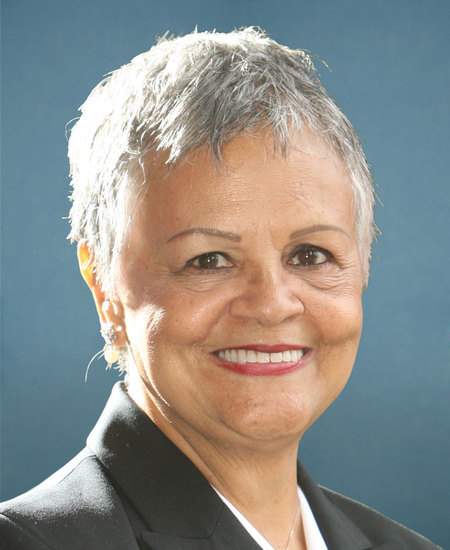
Rep. Bonnie Watson Coleman
Sponsored bills
Maddy summaryHR 1277, the First Rhode Island Regiment Congressional Gold Medal Act, authorizes a single gold medal to honor the First Rhode Island Regiment for its service during the Revolutionary War. The bill commemorates the regiment as one of the first integrated military units in U.S. history, formed in 1778 when Rhode Island allowed enslaved and Indigenous men to enlist and gain freedom upon service. The medal, designed by the Treasury Secretary, will be displayed at the Rhode Island State Library, with Congress encouraging its availability for research and display at relevant historical sites. This is a commemorative measure with no direct policy impact or financial provisions for individuals, focusing solely on historical recognition.
Maddy summaryHR 1251, the All Access Act of 2025, requires Members of Congress (House members and Senators) to present official identification to enter federal public buildings during regular business hours. For access outside these hours, Members must notify the building head at least 12 hours in advance. The bill establishes clear, procedural access rules for congressional members but does not create new policies or affect the public. It is a straightforward procedural measure governing Member access to federal facilities.
Maddy summaryThis bill restricts access to Treasury payment systems (including the Bureau of the Fiscal Service) to only Treasury employees with a "fully successful" performance rating and at least one year of civil service, or contractors/outsiders with security clearances, required privacy/cybersecurity training, ethics agreements, and no conflicts of interest. It treats non-government users accessing these systems as government employees for ethics rules and defines specific actions (like stopping payments) as "personal and substantial participation" in government matters. The Treasury Inspector General must investigate any unauthorized access within 30 days and report to Congress, detailing the breach, security risks, and any halted payments. The bill directly affects Treasury staff, contractors, and any external entities accessing federal payment systems.
Maddy summaryThis proposed bill (HR 220) would expand VA healthcare benefits to cover infertility treatments like in vitro fertilization (IVF) and fertility preservation services for veterans with infertility or at risk of infertility (e.g., due to medical treatments), and their partners. It limits VA coverage to three successful IVF cycles or ten attempts, requires consent from veterans, partners, and donors, and allows use of donated eggs or embryos. Partners would receive travel reimbursement as if they were veterans, and temporary rules during implementation will immediately allow partners to access care without marriage requirements. The bill clarifies VA isn’t required to cover maternity care beyond existing rules and defers full implementation until VA issues final regulations within one year of enactment.
Maddy summaryThis bill, titled the "Nobody Elected Elon Musk Act," makes the head of the Department of Government Efficiency personally liable for any legal claims against the federal government related to the department's activities. The department leader, defined as a special Government employee, would cover costs for claims arising from violations of labor laws, data privacy laws, security threats, or other federal statutes. This shifts financial responsibility from the government to the department leader for all such claims. The bill does not create new policies but directly imposes personal liability on the department head for the department's actions.
Maddy summaryThe Polluters Pay Climate Fund Act of 2025 imposes a tax on major fossil fuel companies for historical carbon dioxide emissions exceeding 1 billion metric tons during 2000-2023, with payments due by September 2026. The tax revenue will fund a new Climate Fund that must be used for climate resilience, adaptation, and disaster response programs, with 40% specifically directed to environmental justice communities. The bill requires at least $15 billion annually for FEMA climate programs and $6 billion for Clean Air Act climate resilience grants. It explicitly states the fund does not affect existing legal claims against polluters for climate-related harms.
Maddy summaryThe Department of Peacebuilding Act of 2025 would establish a new federal department within the executive branch dedicated to promoting peacebuilding, nonviolent conflict resolution, and violence prevention both domestically and internationally. The department would include seven specialized offices focused on peace education, domestic peacebuilding, international peacebuilding, technology for peace, arms control, research, and human rights. It would develop new policies to address violence in communities, create a Peace Academy for training peacebuilders, and establish grant programs for schools and community organizations to implement peacebuilding initiatives. The bill requires the department to consult with other federal agencies on matters related to conflict prevention and mandates that at least 85% of funds would support domestic peace programs. The department would also research and report on violence prevention metrics and develop peace education curricula for schools.
Maddy summaryHRES 119, introduced in the U.S. House of Representatives on February 6, 2025, declares racism a public health crisis. This non-binding resolution recognizes documented health disparities affecting racial and ethnic minorities - including higher infant mortality, chronic disease rates, and barriers to care - based on data from public health experts. It calls for coordinated government action to address systemic inequities but does not create new laws or allocate funding. The resolution aligns with existing CDC acknowledgment that racism meets public health crisis criteria.
Maddy summaryThis resolution (HRES 120) expresses the U.S. House of Representatives' condemnation of Azerbaijan's treatment of Dr. Gubad Ibadoghlu, a detained academic and economist. It urges Azerbaijan to immediately release Dr. Ibadoghlu, who was arrested in 2023 without evidence, subjected to severe beatings, poor prison conditions, denied medical care and legal access, and later placed under house arrest with a travel ban. The resolution specifically calls for his "immediate and unconditional release" and directs the Secretary of State to prioritize his well-being and release in diplomatic engagements with Azerbaijan. It directly addresses the Azerbaijani government's actions toward Dr. Ibadoghlu and his family, who face ongoing harassment.