End Double Taxation of Successful Consumer Claims Act This bill allows a deduction from gross income (above-the-line deduction) for attorney fees and court costs in connection with a claim of a consumer protection violation.
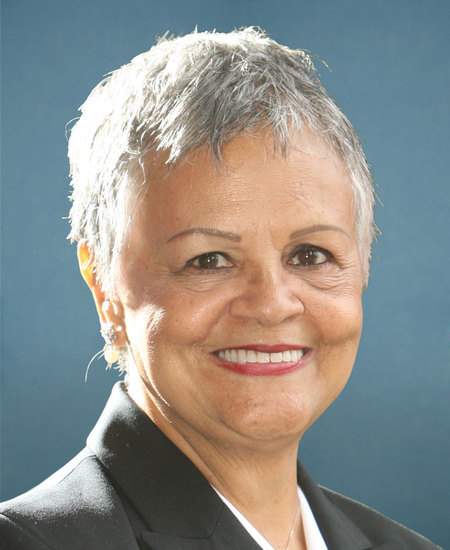
Rep. Bonnie Watson Coleman
Sponsored bills
Green New Deal for Public Schools Act of 2021 This bill provides environmental and educational resources to public elementary and secondary schools and Bureau of Indian Education (BIE) schools. Specifically, the bill requires the Department of Energy's (DOE's) Office of Energy Efficiency and Renewable Energy to provide climate capital facilities grants to eligible entities (e.g., public schools and BIE schools). Grant recipients must use these funds to construct new, or convert existing facilities into, healthy zero-carbon schools. Healthy zero-carbon school refers to a school with highly energy-efficient facilities that produce or procure sufficient carbon-free and pollution-free renewable energy to meet the school's needs. Next, the bill directs the Department of Education (ED) to award resource block grants to qualified local educational agencies (LEAs) to hire and retain educators and support staff in high-need schools. ED must award grants to eligible consortia of LEAs for educational equity planning and implementation. In addition, ED must establish the Climate Change Resiliency Program to increase the resiliency of public and BIE schools during climate change-related events, natural disasters, and public health crises. Further, ED must establish a related grant program for state educational agencies. Grant recipients must use these funds for certain activities (e.g., green infrastructure projects). The bill establishes the Office of Sustainable Schools within ED to (1) administer the resource block grant and educational equity grant programs, and (2) coordinate with DOE and the White House Office of Domestic Climate Policy on climate capital facilities grants and the Climate Change Resiliency Program.
Semiquincentennial Commemorative Coin Act This bill directs the Department of the Treasury to mint and issue $25.00 gold coins, $2.50 silver coins, 25 cent clad coins, and proof silver $2.50 coins in commemoration of the 250th anniversary of the establishment of the United States. The designs of the coins shall be emblematic of the semiquincentennial anniversary of the establishment of the United States of America and celebrate 250 years of our nation. On each coin there shall be a designation of the value of the coin; an inscription of the years 1776-2026; and inscriptions of the words Liberty , In God We Trust , United States of America , and E Pluribus Unum . Treasury may issue coins under this bill only during the period beginning on January 1, 2026, and ending on December 31, 2026. All sales of coins issued shall include a surcharge as prescribed by this bill. All surcharges received by Treasury from the sale of such coins shall be paid to the America 250 Foundation to fund the restoration, rehabilitation, and interpretation of units of the U.S. National Park System and its related areas, as a legacy of the semiquincentennial commemoration.
Pipeline Security Act This bill revises the duties of the Transportation Security Administration (TSA) to include securing pipelines and pipeline facilities against cybersecurity threats, acts of terrorism, and other acts that jeopardize the physical security or cybersecurity of the pipelines or facilities. Specifically, the bill (1) establishes a pipeline security section within the TSA, (2) directs the TSA to develop a personnel strategy for enhancing operations within such section, and (3) requires the TSA to publish updated pipeline security guidelines. The TSA must also convene not less than two industry days to engage with relevant pipeline transportation and pipeline facilities stakeholders on matters related to the security of pipeline transportation and pipeline facilities.
LGBTQ Business Equal Credit Enforcement and Investment Act This bill requires financial institutions to report certain credit application data to the Consumer Financial Protection Bureau for the purposes of enforcing fair lending laws. Specifically, financial institutions must report this data regarding lesbian-, gay-, bisexual-, transgender-, or queer-owned businesses. Currently, this data is reported regarding women-owned, minority-owned, and small businesses.
Global Health Security Act of 2021 This bill directs the United States to implement a strategy to strengthen global health security, including by requiring the President to create the Global Health Security Agenda Interagency Review Council to implement the Global Health Security Agenda. The agenda is an initiative launched by nearly 30 nations to address global infectious disease threats. The council's responsibilities include (1) providing policy recommendations on agenda-related goals, objectives, implementation, and other international efforts to strengthen pandemic preparedness and response; (2) helping federal agencies with implementation; and (3) reviewing the progress and challenges in achieving U.S. commitments, including assistance to help other countries meet agenda targets. The bill also directs the federal agencies involved with the agenda to prioritize its implementation and to take certain steps to achieve that goal. The President shall coordinate a strategy for responding to global health security emergencies and submit a report on the implementation of this strategy. Additionally, the Department of State should seek to enter into negotiations with donors, relevant United Nations agencies, and other multilateral stakeholders to establish a Fund for Global Health Security and Pandemic Preparedness that (1) closes gaps in global health security and pandemic preparedness; and (2) builds capacity in eligible partner countries related to global health security, infectious disease control, and pandemic preparedness. The fund should provide grants, technical assistance, and innovative funding mechanisms to achieve its purposes.

Safe Schools Improvement Act of 2021 This bill requires states to direct their local educational agencies (LEAs) to establish policies that prevent and prohibit bullying and harassment of elementary and secondary school students. In particular, these policies must prohibit bullying and harassment based on race, color, national origin, sex, sexual orientation, gender identity, disability, or religion. Further, LEAs must provide (1) students, parents, and educational professionals with annual notice of the conduct prohibited in their disciplinary policies; (2) students and parents with grievance procedures that target such conduct; and (3) the public with annual data on the incidence and frequency of that conduct at the school and LEA level. The Department of Education must conduct and report on an independent biennial evaluation of programs and policies to combat bullying and harassment in elementary and secondary schools. The National Center for Education Statistics must collect state data to determine the incidence and frequency of the conduct prohibited by LEA disciplinary policies.
Department of Homeland Security Reform Act of 2021 or the DHS Reform Act of 2021 This bill makes extensive changes to the structure of the Department of Homeland Security (DHS) and to the responsibilities of DHS components. Specifically, the bill, among other things creates a new Associate Secretary responsible for overseeing DHS's law enforcement functions; modifies the responsibilities of the Office for Civil Rights and Civil Liberties, including to require engagement with individuals and communities whose civil rights and liberties may be affected by DHS programs and activities; establishes within DHS's Office of Intelligence and Analysis an analytic unit to serve as a focal point for intelligence and analysis of domestic terrorism threats; directs DHS to establish an employee engagement steering committee to identify factors that have a negative impact on employee engagement, morale, and communications within DHS; establishes within DHS a school security coordinating council; directs DHS to develop and disseminate a strategy with respect to biometric technology and identity management enterprise pilot programs and programs; requires DHS to develop, disseminate, and implement a DHS-wide directive to update or replace the strategic framework relating to countering terrorism and targeted violence; requires that DHS's use-of-force policy be updated to emphasize de-escalation; and requires DHS to issue a DHS-wide strategy to enhance partnerships with historically Black colleges and universities and minority-serving institutes that includes yearly goals.
Women and Minorities in STEM Booster Act of 2021 This bill requires the National Science Foundation to award competitive grants to enable eligible entities to carry out the activities specified below in order to increase the participation of women and underrepresented minorities in the fields of science, technology, engineering, and mathematics (STEM). An eligible entity that receives a grant shall use grant funds to carry out one or more of the following activities designed to increase the participation of women or minorities underrepresented in science and engineering, or both: online workshops, mentoring programs that partner STEM professionals with students, internships for undergraduate and graduate students in STEM fields, outreach programs providing elementary and secondary school students with opportunities to increase their exposure to STEM fields, and programs to increase the recruitment and retention of underrepresented faculty.
America's Red Rock Wilderness Act This bill designates specified lands in the following areas of Utah as components of the National Wilderness Preservation System: (1) Great Basin, (2) Grand Staircase-Escalante, (3) Moab-La Sal Canyons, (4) Henry Mountains, (5) Glen Canyon, (6) San Juan-Anasazi, (7) Canyonlands Basin, (8) San Rafael Swell, and (9) Book Cliffs and Uinta Basin. The bill sets forth administrative requirements for (1) the exchange of state-owned lands within such areas, (2) federal reservation of water rights, (3) measurement of setbacks for roads with adjacent wilderness, (4) authorized livestock grazing, and (5) withdrawal of such lands from disposition under certain public land laws.