

This bill redesignates the federal building located at 935 Pennsylvania Avenue Northwest in the District of Columbia, commonly known as the J. Edgar Hoover Federal Building, as the Federal Bureau of Investigation Building.
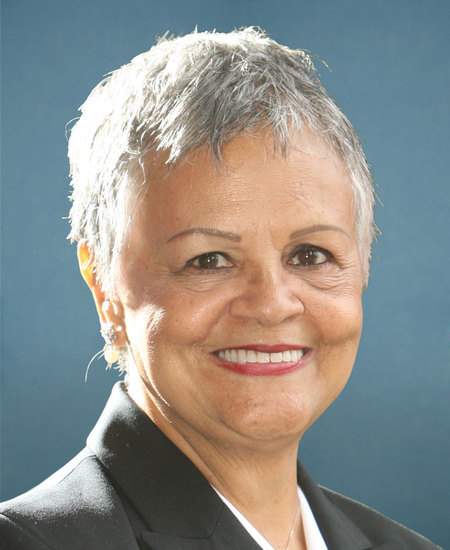
Rep. Bonnie Watson Coleman
Sponsored bills
Maddy summaryHRES 160 is a non-binding House resolution recognizing Black History Month as a time to honor the contributions of LGBTQI+ Black Americans throughout U.S. history. It commemorates specific historical figures and advocates without creating new laws or policies. The resolution highlights the unique intersection of racial, LGBTQI+, and social justice contributions, including figures like Marsha P. Johnson, James Baldwin, and Alvin Ailey. As a symbolic gesture, it has no legislative effect but aims to raise awareness of underrepresented historical narratives.
This resolution condemns Russia for committing acts of genocide against the Ukrainian people. It also calls on the United States, in cooperation with North Atlantic Treaty Organization and European Union allies, to undertake measures to support the Ukrainian government to prevent further acts of Russian genocide against the Ukrainian people.
Dr. Norman C. Francis Congressional Gold Medal Act This bill provides for the award of a Congressional Gold Medal to Dr. Norman Christopher Francis in recognition of his contributions to the United States through his lifelong dedication to education, justice, and public service.
Maddy summaryThis bill makes it a federal crime to defraud veterans of their benefits, including benefits for dependents or survivors. It targets individuals who create schemes to steal or improperly obtain veterans' benefits, with penalties of up to five years in prison or fines. The law directly affects veterans, their families, and anyone seeking to exploit the benefits system. Key provisions define "veterans' benefits" broadly under federal law and establish criminal penalties for fraud attempts.
Health Center Community Transformation Hub Act This bill permits the Health Resources and Services Administration (HRSA) to award supplemental funds to certain health centers that care for medically underserved populations for addressing primary social determinants of health (i.e., nonmedical factors that influence health outcomes, such as transportation, food security, and economic security). To receive the supplemental funding, health centers must be recipients of other HRSA grants that support health center operations and activities. Health centers must use the supplemental funds to implement a community-based network of organizations capable of addressing the social determinants of health. Additionally, HRSA and the Centers for Medicare & Medicaid Services must issue guidance on sustaining these networks after the supplemental funding terminates.
Humane and Existing Alternatives in Research and Testing Sciences Act of 2022 [ sic ] or the HEARTS Act of 2022 [ sic ] This bill establishes a center within the National Institutes of Health (NIH) and requires other activities to promote alternatives to using animals in research and testing. The duties of the center include developing nonanimal research models (e.g., advanced cell cultures and advanced imaging systems) and training scientists about the methods. Additionally, if a federal department or agency or federally funded research entity uses animals for research and testing, it must develop and update plans for reducing such uses and periodically report on the number and types of animals that they use to the center. The center must establish a standard process for entities to submit and update their plans and reports and for making the plans and reports publicly available. The NIH must also provide incentives for the use of nonanimal research and generally ensure that nonanimal alternatives are considered when reviewing and approving research applications and proposals. Further, NIH applications for research grants must include an assurance that nonanimal methods for carrying out the research are unavailable.
Maddy summaryThe COMPOST Act (HR 651) makes composting a recognized conservation practice under federal farm programs, directly affecting farmers, local governments, and community organizations. It creates a new $200 million annual grant and loan program (2024-2033) to fund projects like composting facility construction, food waste collection systems, and onsite composting programs. Priority is given to projects serving low-income communities, supporting minority-owned businesses, and using distributed infrastructure (e.g., home, farm, or community-scale composting). The bill requires projects to demonstrate waste processing capacity, high-quality compost production, and environmental justice considerations.
Maddy summaryHRES 150 is a ceremonial House resolution honoring the late civil rights leader John Robert Lewis (1940-2020). It formally recognizes his lifelong commitment to nonviolent activism, including his leadership in the Civil Rights Movement, the 1965 Selma voting rights march ("Bloody Sunday"), and his 30+ years serving as a U.S. Representative from Georgia. The resolution specifically commends his "towering achievements in the nonviolent struggle for civil rights" and his dedication to building the "Beloved Community" through justice and equality. As a commemorative resolution, it has no policy impact but serves as an official tribute to Lewis's legacy for the public and Congress.
Maddy summaryHR 1134, the People Over Pentagon Act of 2023, would reduce the U.S. Department of Defense's 2024 budget by $100 billion. It directly affects the Pentagon's funding, though it specifically preserves spending for the Defense Health Program, military personnel, and civil service pay and benefits. The bill mandates this cut while directing the Secretary of Defense to consider a 2021 Congressional Budget Office report on managing a smaller defense budget. It does not specify where the savings would be redirected, only requiring reallocation to address non-military national security priorities.