

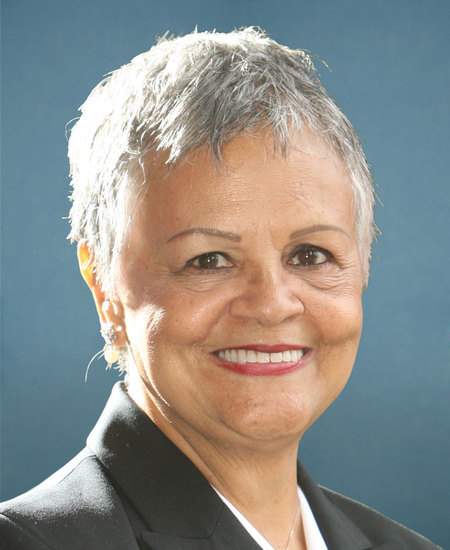
Photo of Bonnie Watson Coleman
D United States House · District 12 · New Jersey

Rep. Bonnie Watson Coleman

Compare
Total votes
2,837
all sessions
Attendance
95%
147 missed
Near the chamber average
With party
97%
of cast votes
Near the chamber average
Bipartisan score
1%
crosses aisle rarely
Near the chamber average
Sponsored
2,464
bills & resolutions
Higher than 96% of chamber peers
Committees
4
assignments
2,464 bills and resolutions

Sponsored bills

Total
2,464
Primary
131
Co-sponsor
2,333
This page
2,464
matching current filters
Co-sponsor HRES 366
In committee · United States House · Co-sponsor
Commemorating the 31st anniversary of the 1992 Los Angeles riots.

This resolution recognizes and offers condolences to all who lost their lives, suffered injuries, and suffered losses during the 1992 Los Angeles riots. It also recognizes the continued need for police oversight, accountability, and reform since the beating of Rodney King.

In committee May 5, 2023 1 co-sponsor
Co-sponsor HRES 338
In committee · United States House · Co-sponsor
Expressing support for the designation of April 30, 2023, as "National Adult Hepatitis B Vaccination Awareness Day".

Maddy summaryThis resolution designates April 30, 2023, as "National Adult Hepatitis B Vaccination Awareness Day" to raise public attention about hepatitis B vaccination for adults. It highlights that only 30% of U.S. adults are vaccinated despite the vaccine's 95% effectiveness and hepatitis B's serious health risks, including liver cancer. The resolution encourages testing, vaccination, and care linkage for adults but does not create new laws or funding. It serves as a symbolic congressional statement to support existing public health efforts, focusing on awareness rather than policy changes.

In committee May 5, 2023 1 co-sponsor
Co-sponsor HR 3113
In committee · United States House · Co-sponsor
Expanding Access to School Meals Act of 2023

Maddy summaryHR 3113, the Expanding Access to School Meals Act of 2023, would eliminate reduced-price breakfast and lunch programs in schools, requiring all meals to be either free or full price. It would expand eligibility for free school meals by raising the income threshold from 130% to 200% of the federal poverty level and creating direct certification for children receiving Medicaid benefits. The bill also allows schools to seek retroactive reimbursement for meals served to eligible students and increases the community eligibility program multiplier to 2.5. These changes would affect school meal programs nationwide, particularly benefiting low-income children who qualify for free meals under the revised standards.

In committee May 5, 2023 1 co-sponsor
Co-sponsor HR 3112
In committee · United States House · Co-sponsor
No Hungry Kids in Schools Act

Maddy summaryThis bill allows states to implement a statewide program under the National School Lunch Act, enabling all schools in the state to receive federal reimbursement for free meals without needing to individually verify student poverty levels. It removes the previous requirement that schools must meet a minimum percentage of low-income students (setting the threshold to zero) and simplifies eligibility by calculating student need across the entire state instead of per school district. Schools in participating states would no longer need to conduct individual student eligibility screenings for free meal programs, streamlining access. The policy directly affects public school districts and students in states that adopt this statewide approach, ensuring all enrolled students receive free meals without administrative barriers.

In committee May 5, 2023 1 co-sponsor
Co-sponsor HR 3111
In committee · United States House · Co-sponsor
Words Matter Act of 2023

Maddy summaryThe Words Matter Act of 2023 replaces the outdated term "mental retardation" with "intellectual disability" across numerous federal laws and regulations. It amends over 20 provisions in the U.S. Code, Social Security Act, and other statutes - including healthcare, disability programs, and legal definitions - to update terminology used in areas like nursing home care, criminal justice, and federal grants. The bill explicitly states this is a purely linguistic change, not a policy shift, and does not alter eligibility, benefits, or program requirements for individuals with intellectual disabilities. It affects all federal programs and legal references that previously used the terms "mental retardation," "mentally retarded," or "developmentally disabled."

In committee May 5, 2023 1 co-sponsor
Co-sponsor HR 3106
In committee · United States House · Co-sponsor
Preventing Deepfakes of Intimate Images Act

Maddy summaryHR 3106, the Preventing Deepfakes of Intimate Images Act, creates a legal right for individuals whose realistic digital manipulations of intimate images (such as uncovered genitals, bodily fluids, or sexually explicit conduct) are disclosed without consent. It allows victims to sue for civil damages, including up to $150,000 in liquidated damages, actual harm, or punitive penalties, and seek court orders to stop further disclosure. The bill specifically protects identifiable individuals (not just public figures) and covers images created or altered using digital manipulation, excluding cases involving law enforcement, public interest, or good-faith disclosures. Criminal penalties up to 10 years may apply for malicious disclosure with intent to harass or cause harm. This directly affects anyone whose intimate images are deepfaked without permission, providing new legal recourse against perpetrators.

In committee May 5, 2023 1 co-sponsor
Co-sponsor HR 3103
In committee · United States House · Co-sponsor
Defending the Human Rights of Palestinian Children and Families Living Under Israeli Military Occupation Act

Defending the Human Rights of Palestinian Children and Families Living Under Israeli Military Occupation Act This bill limits U.S. assistance to Israel and establishes reporting requirements related to Israel's activities in the West Bank and its expenditures for offshore procurement. (Offshore procurement involves spending U.S. security assistance from the Foreign Military Financing program on Israeli-origin rather than U.S.-origin defense articles.) Specifically, the bill prohibits the use of any funds that are made available for assistance to Israel to support (1) military detention, interrogation, abuse, or ill treatment of Palestinian children; (2) seizure, appropriation, or destruction of Palestinian property and forcible transfer of civilians in the Israeli-controlled West Bank; or (3) certain activities to facilitate unilateral annexation by Israel of West Bank territory. The Department of State must report on the nature and extent of such activities carried out by Israel. Further, the Government Accountability Office must submit to Congress a report on related topics, such as (1) identifying specific programs and items to which funds for offshore procurement in Israel have been allocated, (2) identifying all end-use monitoring to which Israel is subject with respect to U.S.-origin defense articles, and (3) assessing the extent to which offshore procurement funds have supported illegal Israeli settlement activity in the occupied West Bank.

In committee May 5, 2023 1 co-sponsor
Co-sponsor HR 3074
In committee · United States House · Co-sponsor
Due Process Continuity of Care Act

Maddy summaryThis bill removes a restriction that previously barred people in jail or prison while awaiting trial from receiving Medicaid health benefits. It directly affects individuals in custody pending legal proceedings by allowing states to provide Medicaid coverage for their medical care during this time. The bill also allocates $50 million in planning grants to help states develop systems to enroll these individuals, recruit healthcare providers who can serve them, and establish electronic billing for services provided in correctional facilities or through outpatient care. Key provisions require states to assess healthcare needs, eliminate policy barriers, and create plans to increase provider participation in Medicaid for this population.

In committee May 5, 2023 1 co-sponsor
Co-sponsor HR 3008
In committee · United States House · Co-sponsor
Drug Shortage Prevention Act of 2023

Maddy summaryHR 3008, the Drug Shortage Prevention Act of 2023, requires manufacturers of critical essential medicines (like life-saving or emergency drugs) to notify the FDA earlier about potential supply disruptions. Specifically, manufacturers must report permanent production stops, interruptions, or unexpected demand spikes (not seasonal) at least six months in advance for production issues, or within 48 hours for sustained demand increases. The notification must include reasons, ingredient sources, alternative suppliers, and expected duration. The FDA will then share this information with healthcare providers and patient groups to help manage shortages. This law applies to drugs critical for life-sustaining care, excluding certain radio pharmaceuticals.

In committee May 5, 2023 1 co-sponsor
Co-sponsor HR 2965
In committee · United States House · Co-sponsor
Autism Family Caregivers Act of 2023

Maddy summaryHR 2965, the Autism Family Caregivers Act of 2023, establishes a federal pilot program to provide free or low-cost evidence-based skills training for family caregivers of children (ages 0-9) with autism spectrum disorder or other developmental delays. It authorizes $10 million annually to fund grants for eligible organizations (like nonprofits, health centers, and community groups) to teach caregivers practical strategies for communication, social engagement, daily living skills, and managing challenging behaviors. The program requires local stakeholder committees - including caregivers, healthcare providers, and community representatives - to ensure cultural relevance, and mandates annual evaluations to assess impacts on children's well-being and caregiver support.

In committee May 5, 2023 1 co-sponsor
Showing 1,401 to 1,410 of 2,464 bills