

Maddy summaryHRES 661 is a symbolic resolution honoring the 60th anniversary of the 1963 March on Washington for Jobs and Freedom. It calls on Congress to address the unmet demands of the marchers, specifically decent housing, voting rights, and a fair wage. As a non-binding resolution, it does not create new laws but serves to commemorate the event and renew focus on these longstanding civil rights goals.
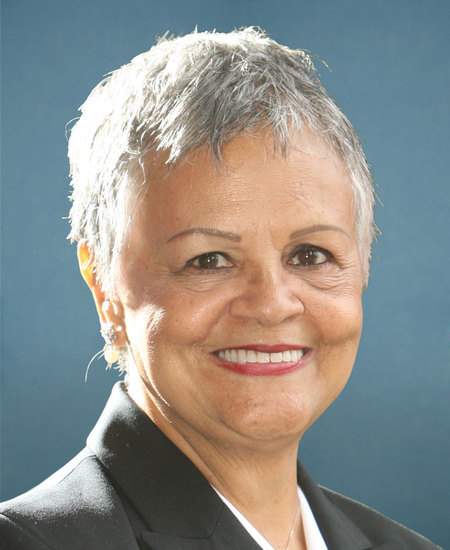
Rep. Bonnie Watson Coleman
Sponsored bills
This resolution calls on the Senate to remove the name of Richard B. Russell from the Russell Senate Office Building and revert to the building's original name—the Old Senate Office Building.
Maddy summaryThe Unhoused Persons Bill of Rights (HRES 634) is a non-binding congressional resolution that outlines 19 specific civil and human rights for unhoused individuals, including the right to housing, healthcare, access to public facilities, and freedom from discrimination based on housing status. It calls for the federal government to commit to ending homelessness by 2027 through specific policy changes, including $20 billion from the defense budget for housing programs, expanded rental assistance, and improved access to healthcare services. The resolution requires federal agencies to implement measures such as 24-hour shelter access, removal of hostile architecture in public spaces, and improved data collection methods to better address homelessness. It also calls for the Department of Health and Human Services to declare the unhoused crisis a public health emergency and establishes legal protections for unhoused people against discrimination and harassment.
Maddy summaryHR 5220, the Bayard Rustin Stamp Act, requires the U.S. Postal Service to issue a "forever stamp" featuring civil rights leader Bayard Rustin. The stamp, designed for first-class mail up to one ounce, will honor Rustin's legacy as a key organizer of the 1963 March on Washington and his advocacy for civil rights, labor rights, and LGBTQ+ equality. The bill directs the Postmaster General to produce this commemorative stamp as soon as practicable after enactment. It does not create new policy or affect any government programs beyond the postal service's stamp issuance.
Maddy summaryHRES 653 is a symbolic resolution expressing the U.S. House of Representatives' support for recognizing August 13-19, 2023, as "Warehouse Worker Recognition Week." It directly honors workers in the logistics industry, who handle critical supply chain tasks like packing, processing, and moving goods. The resolution highlights their contributions to the economy (over 9 million workers), acknowledges challenging conditions like extreme heat in warehouses, and commits to reducing workplace injuries. It does not create new laws but aims to raise awareness of warehouse workers' essential role as frontline employees.
Maddy summaryHRES 639 is a non-binding resolution supporting "Minority Mental Health Awareness Month" and recognizing that minority communities in the U.S. face disproportionate mental health challenges. It calls for increased access to culturally competent care, collaboration with health agencies to address disparities, and expanded resources for mental health services. The resolution specifically highlights barriers like stigma, lack of minority mental health providers, and higher untreated rates among Black, Indigenous, and people of color. It directly affects these communities by urging systemic improvements to reduce existing mental health inequities.
Maddy summaryHRES 640 is a non-binding resolution expressing the U.S. House of Representatives' recognition of the disproportionate suicide crisis among minority adolescents, particularly Black, Indigenous, and AAPI youth. It cites statistics showing Black adolescents' suicide attempts rose 80% over two decades, Black children under 13 die by suicide at nearly twice the rate of White peers, and AAPI youth aged 12-19 face elevated risks due to systemic racism, pandemic impacts, and limited access to culturally competent mental health care. The resolution calls for public officials to promote culturally relevant mental health resources, expand school-based services in communities of color, and fund existing programs to address racial disparities - without creating new laws or allocating direct funding. It directly aims to influence policy priorities for adolescents of color facing these intersecting barriers.
Assault Weapons Excise Act This bill imposes an additional 1000% excise tax on large capacity ammunition feeding devices and semiautomatic assault weapons. It exempts from such additional tax devices and weapons acquired by the United States or by a state or local government.
Maddy summaryThis bill authorizes increased federal funding for early childhood special education programs under the Individuals with Disabilities Education Act (IDEA). It specifically restores funding for Part C (services for infants and toddlers with disabilities) and Section 619 (preschool programs for children with disabilities ages 3-5) by setting annual appropriations from $503 million to $1.22 billion for Section 619 and $932 million to $1.73 billion for Part C through 2028. These funds would directly support states in delivering high-quality early intervention and preschool services to children with disabilities and their families. The bill aims to reverse decades of reduced per-child funding, which had fallen significantly from historical highs.
Maddy summaryHJRES 84 designates August 20 as "Slavery Remembrance Day" to commemorate the arrival of the first enslaved Africans in what is now Virginia on August 20, 1619. The resolution urges the President to issue an annual proclamation encouraging Americans to observe the day with ceremonies and activities reflecting on slavery's history. It specifically honors 21 Black Congress members from the Reconstruction Era as honorary cosponsors and calls for acknowledging the enduring impacts of slavery. As a symbolic resolution, it does not create new laws or directly affect any group beyond establishing an annual observance.