This bill prohibits smoking on the premises of any Veterans Health Administration facility. The bill defines smoking as the use of cigarettes, cigars, and pipes (i.e., the heating or combustion of tobacco), as well as the use of any electronic nicotine delivery system.
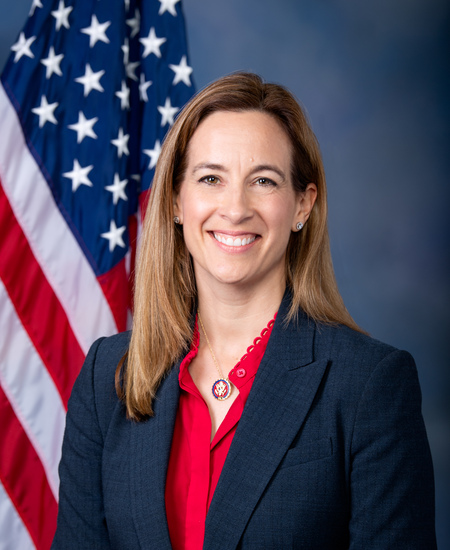
Rep. Mikie Sherrill
Sponsored bills
Afghanistan Transparency Act This bill requires the Department of Defense (DOD) to report to Congress on U.S. military capability, intelligence, and command matters concerning Afghanistan. The bill specifies the matters that must be included in the report, including a current assessment of over-the-horizon capabilities to address terrorist threats. The bill also requires DOD to provide biannual briefings through December 31, 2026, on the matters included in the report.
Prohibition of Medicaid Funding for Conversion Therapy Act This bill prohibits state Medicaid programs from covering conversion therapy. The bill defines conversion therapy as any practice or treatment that seeks to change a person's sexual orientation or gender identity in exchange for monetary compensation.
Harlem Hellfighters Congressional Gold Medal Act This bill provides for the award of a Congressional Gold Medal to the 369th Infantry Regiment, commonly known as the Harlem Hellfighters, in recognition of their bravery and outstanding service during World War I.
Puppies Assisting Wounded Servicemembers for Veterans Therapy Act or the PAWS for Veterans Therapy Act This bill implements a program and a policy related to service dog therapy for veterans. Specifically, the bill requires the Department of Veterans Affairs (VA) to implement a five-year pilot program to provide canine training to eligible veterans diagnosed with post-traumatic stress disorder as an element of a complementary and integrative health program. Eligible veterans are those who are enrolled in the VA health care system and have been recommended for participation by a qualified mental health care provider or clinical team. The VA must seek to enter agreements containing specified elements with accredited nongovernmental entities that have demonstrated ability to provide canine training. Veterans who participate in the program are authorized to adopt the dog they assisted in training if their health provider determines it is in the best interest of the veteran. The VA must establish processes to document and track the progress of participating veterans with respect to health benefits and improvements. The Government Accountability Office must brief Congress and submit a report on the program. The bill also authorizes the VA to provide service dogs to veterans with mental illnesses, regardless of whether they have a mobility impairment.
This bill increases the cap on the number of days reserve component members performing active duty or full-time National Guard duty may serve before counting against active duty end strengths from 1,095 days out of 1,460 days to 1,825 days out of 2,190 days.
Child Suicide Prevention and Lethal Means Safety Act This bill requires the Department of Health and Human Services (HHS) to establish grant programs and set up a website to reduce suicide rates among youth and young adults (those under age 26), including by addressing the use of firearms in suicides and suicide attempts. Specifically, HHS must award grants to states, Indian tribes, health departments, hospitals, or other organizations to train health care providers on lethal means safety (e.g., safe storage of firearms), relevant laws concerning the use and possession of firearms, and other suicide prevention and intervention strategies for youth and young adults. Grantees may use a portion of funds to make secure gun storage or safety devices available to residences with an individual under age 26 who is at risk of suicide. In addition, HHS must award grants to health professional schools to integrate content into their curricula and continuing education programs about suicide prevention strategies and interventions to reduce suicide rates among youth and young adults. The bill also requires HHS to develop and maintain a website that contains information for individuals under age 26, their families, health care providers, and health professional schools concerning suicide prevention and the use of firearms in suicide attempts.

Diversifying Investigations Via Equitable Research Studies for Everyone Trials Act or the DIVERSE Trials Act This bill requires activities to increase diversity in clinical trials. It also expands reporting by laboratories that test for and diagnose COVID-19 and requires a study on data collection and data sharing during public health emergencies. Specifically, the Food and Drug Administration (FDA) must issue guidance on decentralized clinical trials to promote meaningful demographic and geographic diversity in patient engagement, enrollment, and participation. Decentralized clinical trials include those executed through telemedicine or other digital technologies to allow for the remote collection and assessment of clinical trial data. The FDA may also work with foreign regulators to harmonize international regulations governing decentralized clinical trials and the use of digital health technology. In addition, the Department of Health and Human Services (HHS) may support community education, outreach, and recruitment activities for clinical trials of treatments for conditions that disproportionately impact populations underrepresented in clinical trials. The bill also specifies that drug or device manufacturers may provide, subject to some limits, free digital health technologies and other remuneration to patients in approved clinical trials without violating laws that address fraud and abuse in federal programs. Furthermore, laboratories that test for and diagnose COVID-19 must report additional demographic data, including information about social determinants of health. HHS must also contract with the National Academy of Medicine to study and propose a design for an interoperable platform to facilitate data sharing during public health emergencies.
9/11 Responder and Survivor Health Funding Correction Act This bill increases funding for and otherwise modifies a federal program that provides medical monitoring and treatment to responders and survivors who suffer from health conditions related to the September 11, 2001, attacks on the World Trade Center. Among the changes, the bill allows certain health care providers other than physicians to determine whether an individual's health condition is related to the attacks, and it establishes a research program to study the impacts of the attacks on health and educational outcomes of individuals who were 21 years of age or younger when the attacks occurred.
Revamping Appropriate Incentives for Solar Energy for the Roof Act or the RAISE the Roof Act This bill expands the residential energy efficient property and energy tax credits to include expenditures in new and existing solar roofs.