

United States Innovation and Competition Act of 2021 This bill addresses U.S. technology and communications, foreign relations and national security, domestic manufacturing, education, trade, and other matters. Among other provisions, the bill provides funding for FY2022-FY2026 to support U.S. semiconductor manufacturing, research and development, and supply chain security; provides funding for wireless supply chain innovation; establishes a Directorate for Technology and Innovation in the National Science Foundation; extends through 2025 the authority of the National Aeronautics and Space Administration (NASA) to lease its non-excess real property and related personal property; authorizes various programs and policies related to space exploration; authorizes various international affairs programs and activities, including foreign assistance for the Indo-Pacific region; requires federal infrastructure programs to provide for the use of materials produced in the United States; imposes sanctions on China for cybersecurity and human rights abuses; requires the Department of Health and Human Services to consider national security risks associated with sensitive genetic information; includes initiatives related to elementary and secondary education, including those to increase computer science education; contains provisions related to higher education, including those reauthorizing through FY2027 international education programs and addressing China's influence on institutions of higher education; modifies and expands the schedule for graduated merger filing fees; prohibits federal funding for the Wuhan Institute of Virology; requires the U.S. Trade Representative to take certain actions related to digital trade and censorship practices; and extends through 2027 the Generalized System of Preferences.
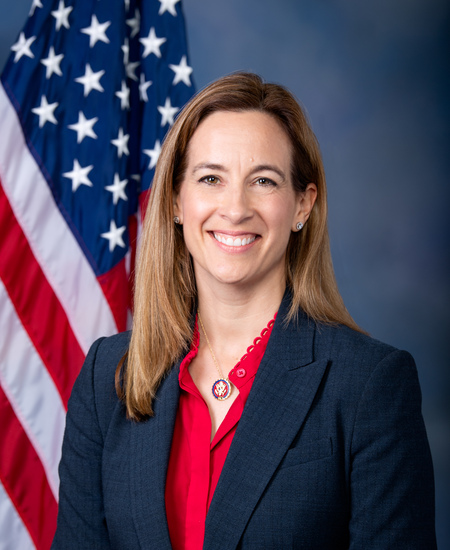
Rep. Mikie Sherrill
Sponsored bills
Childhood Cancer Survivorship, Treatment, Access, and Research Reauthorization Act of 2022 or the Childhood Cancer STAR Reauthorization Act This bill reauthorizes through FY2028 and modifies pediatric cancer research and related programs, including to expand collection of and access to relevant biospecimens and to support the transition of pediatric cancer survivors to primary care.
Prescription Information Modernization Act of 2022 This bill allows health care providers to receive prescribing information for drugs electronically rather than in paper form from manufacturers.
Sexual Harassment Independent Investigations and Prosecution Act This bill provides for the inclusion of sexual harassment as an offense subject to the authority of special trial counsel under the Uniform Code of Military Justice (UCMJ) and sets forth requirements related to independent investigations of sexual harassment under the UCMJ.
Federal Carbon Dioxide Removal Leadership Act of 2022 This bill requires the Department of Energy to remove and permanently store, as is economically feasible, specified amounts of carbon dioxide on a specified schedule, culminating in 10 million net metric tons of carbon dioxide removal for FY2035 and each fiscal year thereafter.
Energy Security and Independence Act of 2022 This bill addresses domestic industrial base and manufacturing capabilities for specified energy-efficiency and renewable energy systems and technologies (e.g., electric transportation systems), including by establishing a program to provide financial assistance for the construction of new facilities that manufacture components of specified energy-efficiency and renewable energy systems and technologies (or to retool, retrofit, or expand such facilities).
Maddy summaryHR 7477, the CERTS Tax Exemption Act, ensures that grants provided under the Coronavirus Economic Relief for Transportation Services Act are tax-free for eligible transportation service providers. The bill directly affects companies and organizations providing transportation services that receive these specific federal grants. Key provisions state that grant amounts cannot be counted as taxable income, deductions related to grant-funded costs cannot be denied, and tax attributes (like basis increases) must be treated as tax-free for partnerships and S corporations. This change simplifies tax treatment for recipients by preventing unintended tax liabilities on relief funds.
This resolution supports and encourages Americans who choose to exercise their free speech rights by boycotting companies that do not provide life-saving or health-related goods and services to the Russian people yet continue to operate in Russia. The resolution also condemns companies that continue to operate in Russia and provide financial benefits to the Putin regime that enable his ability to continue waging war in Ukraine. Finally, the resolution commends companies that have already suspended operations in or withdrawn from markets in Russia in response to the Putin regime's unlawful invasion of Ukraine.
Postal Service Reform Act of 202 2 This bill addresses the finances and operations of the U.S. Postal Service (USPS). The bill requires the Office of Personnel Management (OPM) to establish the Postal Service Health Benefits Program within the Federal Employees Health Benefits Program under which OPM may contract with carriers to offer health benefits plans for USPS employees and retirees. The bill provides for coordinated enrollment of retirees under this program and Medicare. The bill repeals the requirement that the USPS annually prepay future retirement health benefits. Additionally, the USPS may establish a program to enter into agreements with an agency of any state government, local government, or tribal government, and with other government agencies, to provide certain nonpostal products and services that reasonably contribute to the costs of the USPS and meet other specified criteria. The USPS must develop and maintain a publicly available dashboard to track service performance and must report regularly on its operations and financial condition. The Postal Regulatory Commission must annually submit to the USPS a budget of its expenses. It must also conduct a study to identify the causes and effects of postal inefficiencies relating to flats (e.g., large envelopes). The USPS Office of Inspector General shall perform oversight of the Postal Regulatory Commission.
Ensuring Lasting Smiles Act This bill requires private health insurance plans to cover diagnosis and treatment of congenital anomalies and birth defects, such as reconstructive services and items. Coverage must include services and items that functionally improve, repair, or restore any body part that is medically necessary for normal bodily functions or appearance, as determined by the treating physician. Coverage limits and cost-sharing requirements for such services and items may not be more restrictive than those applicable to all medical and surgical benefits under the plan.