

Maddy summaryHR 882, the American Teacher Act, requires states to ensure full-time teachers in public elementary and secondary schools earn at least $60,000 annually (adjusted for inflation), with part-time teachers receiving proportional pay. It provides federal grants to states to fund these salary increases, mandating sustainability plans beyond the 4-year grant period and prioritizing schools in high-poverty areas. The bill also includes cost-of-living adjustments tied to the Consumer Price Index and funds a national campaign to promote teaching as a career. It explicitly states grant funds must supplement existing education budgets without reducing current teacher pay or state loan forgiveness programs.
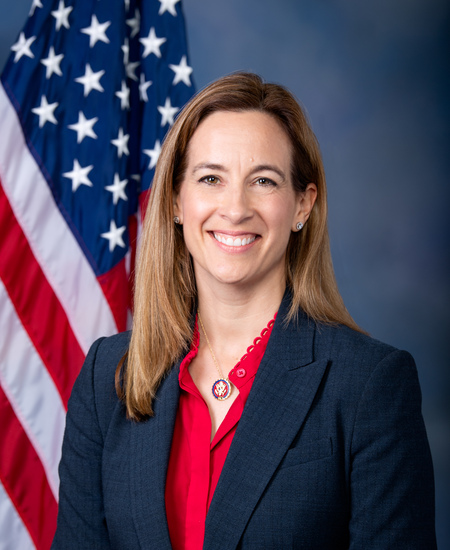
Rep. Mikie Sherrill
Sponsored bills
This resolution condemns Iranian state-sponsored terrorist attacks against U.S. citizens and officials and Iranian dissidents. The resolution also expresses support for the people of Iran who are legitimately defending their rights for freedom against repression and condemns the killing of Iranian protesters by the Iranian regime.
Maddy summaryHCONRES 13 is a concurrent resolution expressing Congress's support for maintaining the current policy that prohibits imposing new fees on local radio stations for playing music. It states that Congress should not impose any performance fee, tax, royalty, or charge on local radio stations for broadcasting sound recordings over the air, or on businesses like bars and restaurants that play music publicly. The resolution argues that such fees would harm local radio stations - critical sources for emergency information and community programming - and jeopardize the economic model that has supported both radio and the music industry for decades. This resolution does not create new law but formally opposes potential legislative changes to the existing fee structure.
Maddy summaryThe Auto Theft Prevention Act establishes a federal grant program to fund state and local law enforcement efforts combating auto theft and stolen vehicle trafficking, authorizing $30 million annually from 2024 to 2028. States receive funds based on prior-year auto theft rates, requiring at least 50% to be distributed to local agencies in high-theft areas and 25% to state agencies. Grants cover specific anti-theft measures like purchasing equipment (e.g., license plate readers), hiring staff, training officers, and funding data collection related to auto theft. The program also expands existing grant uses to include these anti-theft activities, with no more than 5% of funds allowed for administrative costs.
Maddy summaryThe Better Care Better Jobs Act (HR 547) aims to improve access to home and community-based services (HCBS) for Medicaid beneficiaries by providing states with planning grants and enhanced federal funding. States that develop approved HCBS infrastructure improvement plans will receive a 10 percentage point increase in federal Medicaid funding for HCBS services, with additional incentives for self-directed care programs. The bill requires states to address barriers to access, expand workforce development, improve payment rates for direct care workers, and track demographic data on service utilization. It also establishes quality measurement requirements and mandates regular reporting on progress toward improving HCBS access and quality.
This resolution states that the House of Representatives (1) rejects hate, discrimination, and antisemitism; (2) stands united with the Jewish people against rising antisemitism; and (3) condemns antisemitic tropes such as claims of dual loyalty.
Maddy summaryHR 770, the ESP Family Leave Act, amends the Family and Medical Leave Act (FMLA) to create specific eligibility rules for education support professionals and school support staff in public schools and public higher education institutions. It changes the standard FMLA work-hour requirement (1,250 hours) to a new threshold: these workers qualify if they've worked at least 60% of their expected monthly hours for the previous school year. Employers must maintain records of each employee's expected monthly hours, and the bill defines "education support professionals" to include roles like paraeducators, secretaries, custodians, food service workers, security staff, and health support staff. The bill directly affects these support staff members, making it easier for them to qualify for FMLA leave under the revised hours calculation.
Maddy summaryThis bill creates a new federal crime for assaulting law enforcement officers causing serious injury or death, with penalties up to 10 years in prison for serious injury and up to life for aggravated cases involving death, kidnapping, or attempted killing. It applies when offenses involve interstate travel, commerce, or target officers engaged in law enforcement duties. Federal prosecution requires Attorney General certification that state authorities cannot or will not handle the case, or that federal action is necessary for public safety. The law covers all law enforcement officers (state, local, and federal) who enforce criminal laws or detain individuals.
Maddy summaryThe Extreme Risk Protection Order Expansion Act of 2023 creates a federal grant program to help states, tribes, and local governments implement and improve Extreme Risk Protection Orders (ERPOs), which temporarily remove firearms from individuals deemed to pose a danger to themselves or others. To qualify for grants, states and tribes must enact ERPO laws meeting specific due process requirements, including notice, hearing procedures, and standards of proof. The bill amends federal law to include ERPOs in the National Instant Criminal Background Check System and requires states to report on ERPO usage, including demographic data. It also establishes "full faith and credit" for ERPOs across state lines, ensuring consistent enforcement nationwide.
Maddy summaryThis bill increases labor representation requirements on state and local workforce development boards under the Workforce Innovation and Opportunity Act (WIOA). It raises the minimum percentage of labor representatives from 20% to 30% for both state boards (Section 101) and local boards (Section 107). The bill also expands the definition of "labor organization" to include groups representing federal employees, railroad workers, and agricultural laborers - previously excluded under the National Labor Relations Act. These changes directly affect how workforce boards are structured and which worker groups can participate in workforce planning.