

Maddy summaryThis bill amends the Family and Medical Leave Act (FMLA) and federal employee leave rules to clarify that recovery from organ donation surgery qualifies as a "serious health condition." It directly affects private-sector workers covered by the FMLA and federal civil service employees. The key change adds "including recovery from surgery related to organ donation" to the definitions of serious health conditions in both the FMLA and federal leave statutes. This ensures eligible employees can use their existing family and medical leave benefits to recover after donating an organ, without requiring new leave entitlements.
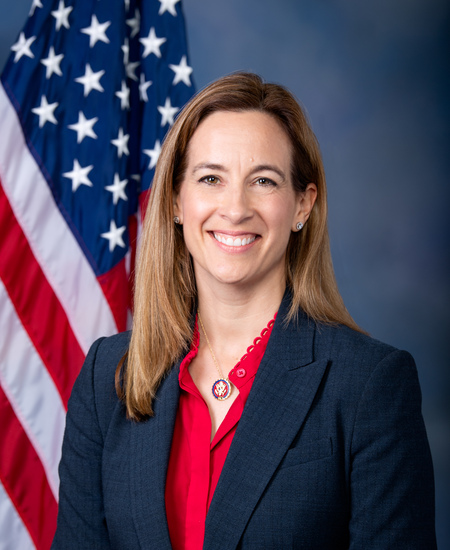
Rep. Mikie Sherrill
Sponsored bills
Maddy summaryHR 3095 requires the U.S. Postal Service to assign a single, unique ZIP Code to 74 specific communities across 16 states (including Canyon Lake, CA; Castle Pines, CO; and Estero, FL) within 270 days of the bill's enactment. This addresses current issues where these communities share ZIP Codes with neighboring areas, causing mail delivery confusion. The bill directly affects residents and businesses in these designated locations by simplifying mail routing. It creates a concrete administrative change without altering broader postal policies or funding.
Maddy summaryHR 1522, the Federal Retirement Fairness Act, changes federal retirement rules to include temporary employees' service after January 1, 1988, in retirement benefit calculations. It directly affects temporary federal employees (including U.S. Postal Service workers) and Members of Congress who served after that date. The bill removes a previous cutoff date in retirement law, allowing their temporary service to count toward retirement eligibility. This means eligible temporary workers can now have their full service period considered when calculating retirement benefits.
Maddy summaryThe No Secret Police Act of 2025 requires U.S. Immigration and Customs Enforcement (ICE) and other Department of Homeland Security officers working on border security or immigration enforcement to visibly display their official badges or uniforms and provide identification during detentions or arrests. It prohibits officers from wearing face coverings that conceal their face during these interactions. The bill also mandates that the Department report to Congress about tactical gear policies and research technology to improve badge visibility in different conditions like weather or lighting. These changes aim to increase transparency in immigration enforcement encounters.
Maddy summaryHR 4132, the Prescription Information Modernization Act of 2025, allows drug manufacturers to provide FDA-approved prescribing information for prescription drugs exclusively through electronic means, while requiring them to offer paper copies at no additional cost upon request by prescribers or dispensers. The bill directly affects drug manufacturers, doctors, pharmacists, and other healthcare professionals who rely on prescribing information. Key provisions include mandating that manufacturers give prescribers/dispensers the choice to continue receiving paper copies or request them as needed, and requiring the HHS Secretary to issue implementing regulations within one year to support this transition. The law takes effect two years after enactment or when final regulations are issued, whichever comes first.
Maddy summaryThe Women's Health Protection Act of 2025 would protect access to abortion services across the United States by prohibiting states from imposing restrictions that are more burdensome than those on comparable medical procedures. The bill directly affects people seeking abortion care and health care providers by banning restrictions such as mandatory in-person visits, requirements for specific tests, limitations on telemedicine, and rules based on a patient's reason for seeking abortion. It prohibits state laws that single out abortion for unnecessary restrictions while allowing post-viability abortions when necessary to protect a patient's life or health. The bill preempts conflicting state laws and provides enforcement mechanisms through private lawsuits and actions by the Attorney General.
Maddy summaryThis bill prohibits state officials from blocking abortion access for patients traveling from other states, including restricting providers who offer legal abortions in their state to out-of-state patients. It protects people traveling across state lines for legal abortions, those assisting such travel, and the interstate transport of FDA-approved abortion medication. Violations can be challenged by the Justice Department or affected individuals through civil lawsuits seeking injunctions and damages. The law applies broadly across all states, territories, and tribal nations, defining "abortion service" to include both medical procedures and related care.
Maddy summaryThe Caring for Survivors Act of 2025 increases monthly dependency and indemnity compensation for surviving spouses of veterans. It changes the calculation method from a fixed $1,154 to 55% of a specific veteran compensation rate, effective six months after enactment. The bill also reduces the required continuous disability rating period for survivors from 10 years to 5 years, and provides a proportional payment for cases where the rating period is shorter than 10 years. Surviving spouses of veterans who died before January 1, 1993, receive the greater of their current benefit or the new calculation. This directly affects surviving spouses eligible for benefits under Title 38, U.S. Code, particularly those with veterans who died prior to 1993.
Maddy summaryHR 4084, the Access to Birth Control Act, requires pharmacies that stock contraception to provide it without delay when requested by a customer. If a requested method is out of stock, pharmacies must immediately offer referrals to nearby pharmacies or expedite an order. The bill prohibits pharmacists from intimidating customers, misrepresenting availability, breaching confidentiality, or refusing to fill valid prescriptions for contraception. It directly affects pharmacies nationwide, addressing reported refusals to provide birth control - particularly after the *Dobbs* decision - and ensures access to FDA-approved contraceptive methods without cost-sharing barriers.
Maddy summaryHR 4083, the Marshall “Major” Taylor Congressional Gold Medal Act, authorizes the posthumous presentation of a Congressional Gold Medal to honor cyclist Marshall Walter "Major" Taylor (1878-1932), recognizing his pioneering achievements as a Black athlete who broke racial barriers in professional cycling during the late 19th and early 20th centuries. The bill directs the Secretary of the Treasury to strike the medal with his name and image, to be presented to Taylor’s great-granddaughter, Karen Donovan. It also permits the sale of bronze duplicates to cover costs, classifying all medals as national commemorative items under U.S. law. This is a ceremonial bill with no policy changes, solely focused on commemorating Taylor’s legacy.