

Maddy summaryThis bill extends funding for family-to-family health information centers through 2029. It amends the Social Security Act to change the expiration date of this program from 2024 to 2029, ensuring continued support. These centers provide families with resources and guidance on navigating healthcare systems, particularly for those managing chronic conditions or disabilities. The change directly affects the centers themselves and the families they serve, without altering program requirements or creating new services.
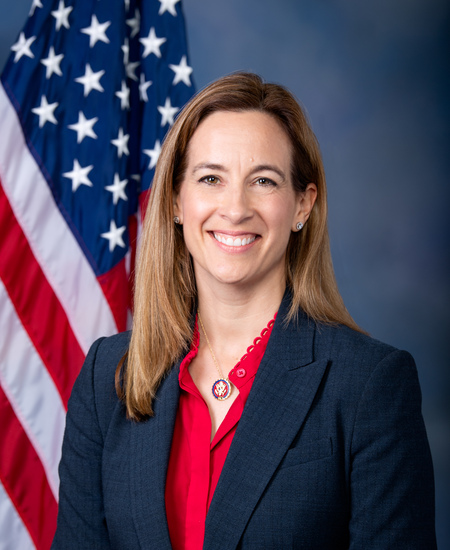
Rep. Mikie Sherrill
Sponsored bills
Maddy summaryHRES 1002 is a symbolic House resolution recognizing the cultural and historical significance of Lunar New Year (celebrated as the Year of the Dragon in 2024). It acknowledges the holiday's 4,000-year history in China, its celebration across Asia (including Seollal and Tết), and its significance to Asian Americans and others in the U.S. The resolution expresses respect for those observing the holiday and wishes them a happy new year, but it does not create new laws, policies, or funding. As a ceremonial resolution, it has no direct effect on legislation or constituents.
Maddy summaryThe Fair Play for Women Act requires schools and colleges receiving federal funding to collect and publicly disclose detailed data about gender equity in sports, including participation numbers, funding disparities, and facilities quality. It mandates annual training for athletic staff and athletes about Title IX rights, and prohibits sex-based discrimination in intercollegiate athletics by athletic associations. The bill would require institutions to report specific metrics like the number of athletes participating in each sport by gender and race, expenditures for facilities and equipment, and coaching staff demographics. This transparency measure aims to make gender inequities in sports more visible and addressable for all schools and colleges receiving federal financial assistance.
Maddy summaryThe JOBS Act of 2023 would expand Federal Pell Grant eligibility to cover certain short-term job training programs that prepare students for high-demand careers. It defines "eligible job training programs" as those offering 150-600 hours of instruction over 8-15 weeks, aligned with in-demand industry sectors, and leading to recognized credentials that help students meet hiring requirements and take licensure exams. The bill would allow students in these programs to receive Pell Grants under standard terms, with the minimum Pell Grant amount reduced from 10% to 5% of the maximum. It also requires accrediting agencies to evaluate these programs and creates data-sharing between Education and Labor departments to track program effectiveness.
Maddy summaryThe Credit for Caring Act of 2024 creates a new federal tax credit for family caregivers. It allows eligible caregivers to claim a credit equal to 30% of qualified caregiving expenses (like home modifications, medical supplies, or respite care) exceeding $2,000 per year, capped at $5,000 annually. To qualify, caregivers must earn over $7,500 in income and provide care for a relative (like a spouse or parent) certified by a healthcare provider as needing long-term care for at least 180 days. The credit phases out for higher earners, with a $75,000 income threshold for single filers and $150,000 for joint returns.
Maddy summaryHR 7127, the FAIR Act, establishes pay adjustments for federal employees in 2025. It increases base pay by 4% for most federal workers under statutory pay systems and for "prevailing rate" employees (like those in specific geographic areas), while raising locality pay rates by 3.4%. The bill directly affects all federal employees receiving pay under these systems, as it modifies their 2025 salary calculations. These changes are based on statutory formulas under Title 5 of the U.S. Code, with no new policy mechanisms beyond the specified percentage increases. The adjustments apply to pay rates in effect as of the end of fiscal year 2024.
Maddy summaryThe ACCESS Act of 2024 creates a federal grant program to help clinics and health care providers expand abortion and reproductive health services in states where abortion is legal (outside of life or health exceptions). It authorizes $200 million annually for fiscal years 2024-2028 to fund specific capacity-building activities, including facility expansions, hiring clinical staff, telehealth services, and culturally appropriate patient resources. Priority is given to providers in states experiencing the highest increases in out-of-state patients seeking abortion care. The bill directly supports health care entities serving patients who travel across state lines for services, aiming to reduce wait times and improve access for vulnerable communities.
Maddy summaryThe Servicemember Apprenticeship Act (HR 7098) directs the Secretary of Defense to study private companies offering registered apprenticeships to military members eligible for the Skillbridge program (Section 1143(e) of Title 10). It requires the Department of Defense to consult with the Department of Labor to create agreements with companies in areas where few apprenticeship opportunities exist for these members. The bill aims to expand access to registered apprenticeship programs by identifying participating entities and facilitating partnerships. This directly affects transitioning service members seeking civilian career training through Skillbridge.
Maddy summaryHR 7097, the College Opportunities for Servicemembers Act, expands educational opportunities for active-duty service members transitioning to civilian careers and veterans. The bill directs the Secretary of Defense to increase agreements with colleges and universities to provide job training and internships through the Skillbridge program, and to support creating dedicated centers at these institutions for military members and veterans seeking job skills. It specifically targets members eligible for Skillbridge under existing law and veterans, using existing higher education institutions defined by the Higher Education Act of 1965. The key mechanism involves federal outreach to colleges to formalize more training partnerships and establish on-campus support centers. This policy directly connects military service members and veterans to civilian career pathways through existing educational infrastructure.
Maddy summary# Summary of the Clean Electricity and Transmission Acceleration Act of 2023 This comprehensive legislation establishes significant reforms across environmental policy, energy infrastructure, and community engagement frameworks. Key provisions include: 1. **Environmental Justice Framework**: - Creates an Office of Environmental Justice and External Civil Rights at EPA - Establishes a White House Environmental Justice Interagency Council - Prohibits disparate impact discrimination under Title VI of the Civil Rights Act - Requires community impact reports for Federal actions affecting environmental justice communities 2. **NEPA Reforms**: - Mandates 90-day public comment periods for environmental justice communities - Requires translation of documents into languages spoken by 5%+ of affected communities - Requires assessment of cumulative impacts, including historical pollution - Requires climate change impact assessments using social cost of carbon - Establishes searchable digital archives of NEPA documents 3. **Community Engagement Requirements**: - Creates "Senior Community Engagement Officers" and "Tribal Community Engagement Officers" at all federal agencies - Requires community benefits agreements for major projects - Establishes grants for capacity building in environmental justice communities - Creates an E-NEPA permitting portal for public access to documents 4. **Energy Policy Provisions**: - Includes reforms for FERC (Federal Energy Regulatory Commission) environmental justice liaison - Establishes requirements for intervenor funding at FERC - Contains provisions for transmission planning and infrastructure 5. **Tribal Consultation**: - Strengthens tribal consultation requirements for projects affecting tribal lands - Requires government-to-government relationships with tribal nations The legislation represents a significant shift toward integrating environmental justice considerations throughout the federal permitting and review process, with specific requirements for meaningful community engagement, transparency, and consideration of cumulative impacts on vulnerable populations. It also establishes new funding mechanisms and administrative structures to support these environmental justice goals.