

Maddy summaryHR 1500 requires federal agencies to prioritize native plants over non-native plants in landscaping projects at federal facilities (like military bases, parks, and government buildings), where feasible considering cost and maintenance. It mandates agencies to update design standards within 270 days, include native plant requirements in contracts, and consider benefits like supporting pollinators and reducing water use. Agencies must also report annually on implementation, including case studies and environmental impacts, starting two years after the law takes effect. This affects all federal projects involving landscape improvements across all states and territories.
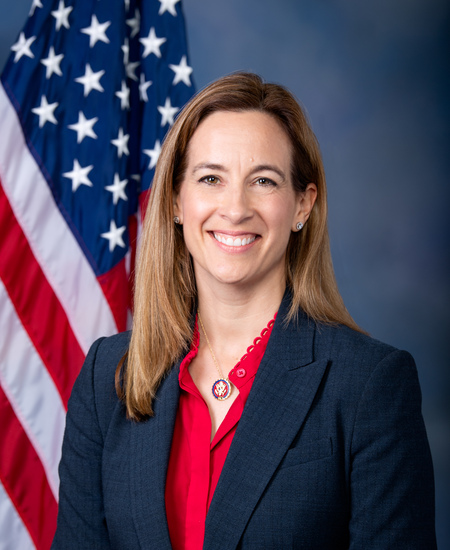
Rep. Mikie Sherrill
Sponsored bills
Maddy summaryHR 1434 authorizes $200 million to $240 million annually (2026-2030) to fund summer youth employment programs for participants under 25, primarily targeting high-unemployment and high-crime communities. It provides competitive grants to states, local governments, or nonprofits to create or expand programs that include subsidized jobs (minimum wage, 4+ weeks), mentoring, career counseling, and post-program support - aimed at improving high school graduation, college enrollment, employment, and reducing crime rates. The bill prioritizes programs serving underserved youth (including rural/suburban areas) and requires grantees to implement specific elements like job training, digital literacy, and employer matching. An Advisory Board oversees grant reviews, evaluates program impact, and maintains a database of outcomes to ensure evidence-based improvements.
Buffalo Soldiers Congressional Gold Medal Act of 2025 This bill provides for a Congressional Gold Medal to be awarded to the Buffalo Soldier regiments (six all-Black cavalry and infantry regiments authorized by Congress in 1866 to serve in the Armed Forces) in recognition of their vital service to the United States.
Maddy summaryThe Family-to-Family Reauthorization Act of 2025 extends federal funding for existing Family-to-Family Health Information Centers, which provide free resources and support to families navigating healthcare systems, especially for children with special healthcare needs. It authorizes $6 million for the period April 1-September 30, 2025, and $9 million annually for fiscal years 2026 through 2029. This funding ensures these centers can continue operating without interruption, directly supporting families seeking health information and assistance. The bill makes no new policy changes but secures ongoing financial support for established community-based health education services.
Maddy summaryHR 1410 expands access to mental health care for 9/11 responders and survivors by allowing licensed mental health providers (not just physicians) to conduct initial health evaluations and certifications under the World Trade Center Health Program. It adjusts the program’s funding formula to account for changing enrollment numbers by linking annual funding to the previous year’s enrollment ratio, and clarifies that deceased individuals are excluded from enrollment counts. The bill also extends the timeframe for adding new health conditions to the program’s list and requires a 2028 report assessing long-term funding needs through 2090. These changes aim to streamline eligibility, improve care access, and ensure sustainable funding for the program.
Maddy summaryThis bill establishes a federal grant program requiring state and local detention centers to implement mental health screenings for all individuals entering or leaving custody. It mandates hiring mental health liaisons and forming outreach teams to refer people with severe mental health conditions to local providers within 48 hours of release. The screenings use a 5-10 question survey based on existing standards to identify conditions like schizophrenia or depression, with outreach teams making multiple contact attempts to connect individuals to care. All programs must be evaluated by independent researchers to measure impacts on recidivism, employment, and healthcare access, with data shared through a public database. The bill directly affects incarcerated individuals, detention facilities, and mental healthcare providers across all 50 states and territories.
Goldie's Act This bill expands enforcement provisions under the Animal Welfare Act (AWA). Specifically, the bill directs the Department of Agriculture (USDA) to document and record detailed descriptions of violations of the act observed during inspections and investigations. USDA must provide a copy of all records documenting violations to state, local, and municipal animal control or law enforcement officials within 24 hours of such inspections or investigations. Inspections must be held at least once a year of each research facility, the premises of each animal dealer, and each exhibitor of animals. If violations are found during inspections, then USDA must conduct any necessary follow-up inspections until all the violations are corrected. Inspectors must confiscate or destroy in a humane manner animals found to be suffering physical or psychological harm as a result of failure to comply with the AWA. Violators are subject to civil penalties as outlined in the bill.
This concurrent resolution declares that Congress should not impose any new performance fee, tax, royalty, or other charge relating to the public performance of sound recordings on a local radio station for broadcasting sound recordings over the air, or on any business for such public performance of sound recordings.
Maddy summaryHR 1300, the PSA Screening for HIM Act, requires health insurance plans and issuers to cover prostate cancer screenings without cost-sharing (like copays or deductibles) for men aged 40+ who are at high risk of prostate cancer. This directly affects African-American men and men with a family history of prostate cancer, as defined by the bill. The law amends existing insurance coverage rules to mandate this specific screening coverage, effective for plan years starting January 1, 2026. It does not change screening guidelines but removes financial barriers to recommended screenings for these high-risk groups.
Maddy summaryHR 1321, the "Ending DOGE Conflicts Act," requires special government employees (like officials overseeing federal contracts) who own, control, or lead companies doing business with the government to file financial disclosure reports with the Office of Government Ethics. These employees must now comply with the same financial disclosure rules as other government officials under Title 5 of the U.S. Code. Until their initial report is certified as compliant by the Office of Government Ethics, these employees are prohibited from performing any official duties related to federal contracting. The bill directly affects high-level government officials with direct financial ties to federal contractors.