

Real Economic Support That Acknowledges Unique Restaurant Assistance Needed To Survive Act of 2021 or the RESTAURANTS Act of 2021 This bill temporarily establishes and provides funding for the Restaurant Revitalization Fund, from which the Department of the Treasury shall make grants to eligible food and beverage purveyors to cover specified costs such as payroll, operational expenses, and paid sick leave. For the grant program's initial period, Treasury must (1) prioritize awarding grants to marginalized and underrepresented communities, and (2) only award grants to eligible food and beverage purveyors with annual revenues of less than $1.5 million in 2019. For tax purposes, grant amounts are excluded from the recipient's gross income. An entity that received a loan under the Paycheck Protection Program established to support small businesses in response to COVID-19 (i.e., coronavirus disease 2019) may not apply for or use a restaurant revitalization grant for the same expenses for which the entity received the paycheck protection loan. Further, a grant applicant may request an additional amount to cover the cost of providing 10 days of paid sick leave to its employees. Treasury must report a list of grant recipients with the amount each recipient received, as well as demographics and other specified information.
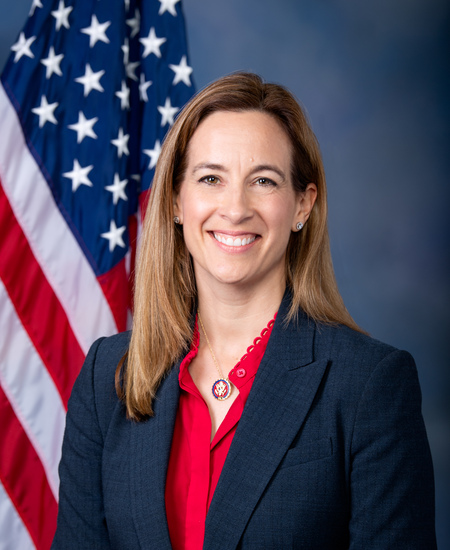
Rep. Mikie Sherrill
Sponsored bills
Family and Medical Insurance Leave Act or the FAMILY Act This bill entitles every employee to a family and medical leave insurance (FMLI) monthly benefit payment of two-thirds of the employee's regular pay, limited to a maximum of $4,000, for not more than 60 days of qualified caregiving. The bill establishes the Office of Paid Family and Medical Leave within the Social Security Administration to administer the FMLI program. An FMLI benefit payment must be coordinated with any periodic benefits received under a state or local temporary disability insurance or family leave program. The bill imposes a tax on employers, employees, and self-employed individuals to fund FMLI benefits. It also establishes the Federal Family and Medical Leave Insurance Trust Fund to hold tax revenues.
Veteran Overmedication and Suicide Prevention Act of 2021 This bill requires the Department of Veterans Affairs (VA) to contract with the National Academies of Sciences, Engineering, and Medicine to report on the deaths of covered veterans who died by suicide during the last five years, regardless of whether information relating to such deaths has been reported by the Centers for Disease Control and Prevention. A covered veteran is any veteran who received VA hospital care or medical services during the five-year period preceding the veteran's death. Among other elements, the report shall include the total number of covered veterans who died by suicide, violent death, or accidental death, as well as certain demographic information.
Spotlight Act This bill renders null and void final Internal Revenue Service (IRS) regulations published on May 28, 2020, relating to the reporting requirements of tax-exempt organizations. The bill requires tax-exempt organizations that fall under sections 501(c)(4), 501(c)(5), and 501(c)(6) of the Internal Revenue Code (e.g., social welfare organizations, labor organizations, business leagues) to disclose the names and addresses of all substantial contributors (persons who contribute more than $5,000 per year to such organizations) on their information returns. The bill also eliminates the authority of the IRS to provide exceptions to the disclosure requirements for tax-exempt organizations. This provision does not apply to determinations made by the IRS before July 16, 2018.
USPS Fairness Act This bill repeals the requirement that the U.S. Postal Service annually prepay future retirement health benefits.
Energy Debt Relief for American Families Act This bill authorizes supplemental funding to states through the Low Income Home Energy Assistance Program to assist eligible households pay 100% of any utility bills they are unable to pay because of economic distress caused by the COVID-19 (i.e., coronavirus disease 2019) pandemic.
Stopping the Mental Health Pandemic Act This bill requires the Substance Abuse and Mental Health Services Administration to award grants to states, tribal nations, local governments, behavioral health and primary care providers, and community organizations to support behavioral health treatment and services during the COVID-19 (i.e., coronavirus disease 2019) pandemic.
Energy Resilient Communities Act This bill requires the Department of Energy to establish a program that awards grants to make critical energy infrastructure more resilient to climate change hazards, such as grants for developing clean energy microgrids that support critical community infrastructure or customers of electric utilities with special energy needs due to medical conditions.
This concurrent resolution recognizes the difficult challenges Black veterans faced when returning home after serving in the Armed Forces, their heroic military sacrifices, and their patriotism in fighting for equal rights and for the dignity of a people and a nation. The concurrent resolution also recognizes the need for the Department of Veterans Affairs to continue to work to eliminate any health and benefit disparities for minority veterans.
This concurrent resolution calls for the Citizens' Stamp Advisory Committee to recommend that the Postmaster General issue a commemorative postage stamp honoring the Buffalo Soldiers.