

This resolution reaffirms and recognizes the importance of partnerships between the United States and African countries, encourages greater and more strategic collaboration to achieve and sustain socioeconomic transformation in Africa, and encourages the United States to advance interests in Africa to reach specified goals.
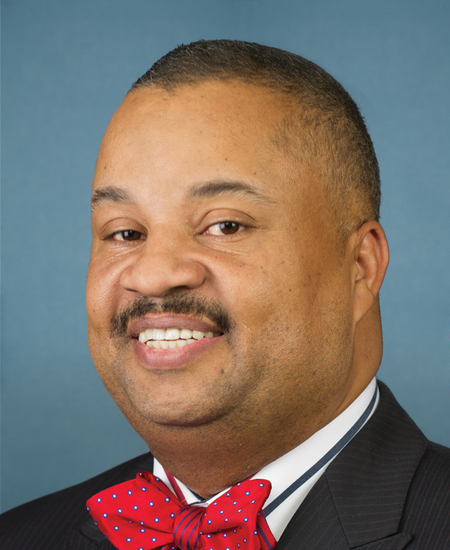
Rep. Donald M. Payne, Jr.
Sponsored bills
Huntington's Disease Disability Insurance Access Act of 2021 This bill expedites payment of Social Security Disability Insurance (SSDI) benefits and eligibility for Medicare coverage for those with Huntington's disease. This is an inherited disorder that causes brain cells to die, including in areas of the brain that help to control voluntary movement. Specifically, the bill eliminates the 5-month waiting period for SSDI benefits and the subsequent 24-month waiting period for Medicare coverage for individuals with Huntington's disease. Under current law, individuals generally must wait five months after the onset of disability to begin receiving SSDI benefits and an additional 24 months to become eligible for Medicare.
Medicare Multi-Cancer Early Detection Screening Coverage Act of 2021 This bill provides for Medicare coverage and payment for multi-cancer early detection screening tests that are approved by the Food and Drug Administration and that are used to screen for cancer across many cancer types.
This bill directs the Speaker of the House and the President pro tempore of the Senate to arrange for the award of three Congressional Gold Medals to the U.S. Capitol Police (USCP) and other law enforcement agencies that protected the U.S. Capitol on January 6, 2021. Following the award of these medals, one medal shall be given to the USCP, one medal shall be given to the Metropolitan Police Department of the District of Columbia, and one medal shall be given to the Smithsonian Institution and displayed with a plaque listing all law enforcement agencies that participated in protecting the Capitol on January 6, 2021.
Equality Act This bill prohibits discrimination based on sex, sexual orientation, and gender identity in areas including public accommodations and facilities, education, federal funding, employment, housing, credit, and the jury system. Specifically, the bill defines and includes sex, sexual orientation, and gender identity among the prohibited categories of discrimination or segregation. The bill expands the definition of public accommodations to include places or establishments that provide (1) exhibitions, recreation, exercise, amusement, gatherings, or displays; (2) goods, services, or programs; and (3) transportation services. The bill allows the Department of Justice to intervene in equal protection actions in federal court on account of sexual orientation or gender identity. The bill prohibits an individual from being denied access to a shared facility, including a restroom, a locker room, and a dressing room, that is in accordance with the individual's gender identity.
This resolution expresses the sense of Congress that school districts should use certain COVID-19 (i.e., coronavirus disease 2019) relief funds to reopen elementary and secondary schools for in-person instruction as soon as possible.
This resolution acknowledges the impact of redlining (i.e., geographic discrimination) and states that the federal government has a responsibility to ameliorate its effects, including through the creation, preservation, and maintenance of equitable economic opportunities and recovery efforts in response to the COVID-19 (i.e., coronavirus disease 2019) pandemic.
This resolution acknowledges racial disparities in the impact of colorectal cancer, particularly in the Black community, and encourages actions to address those disparities.
Educational Notification and Disclosure of Actions risking Loss of Life by Hazing Act or the END ALL Hazing Act This bill requires institutions of higher education (IHEs) that participate in federal student-aid programs to collect information and publicly report on hazing-related misconduct. Specifically, IHEs must prepare biannual reports and post the reports on their websites. The reports must include information on hazing-related misconduct committed by a student organization, including the name of the student organization that committed the violation, a description of the violation, and sanctions placed on the organization. Further, IHEs must report to campus police and law enforcement authorities within 72 hours of becoming aware of any allegation of hazing that involved serious bodily injury or a significant risk of serious bodily injury. The bill does not apply to foreign IHEs.
Funding for Aviation Screeners and Threat Elimination Restoration Act or the FASTER Act This bill repeals the requirement that a portion of aviation security service fees collected from passengers be credited as offsetting receipts and deposited in the general fund of the Treasury. It requires such fees to be deposited into a separate account in the Treasury for expenditure to pay only the costs of activities and services for which the fee is imposed (i.e., aviation security screening).