

Creating Opportunities Now for Necessary and Effective Care Technologies (CONNECT) for Health Act of 2021 or the CONNECT for Health Act of 2021 This bill expands coverage of telehealth services under Medicare. Among other provisions, the bill allows the Centers for Medicare & Medicaid Services (CMS) to waive certain restrictions, such as restrictions on the types of technology that may be used; permanently removes geographic restrictions on originating sites (i.e., the location of the beneficiary) and allows the home of the beneficiary to serve as the originating site for all services; permanently allows federally qualified health centers and rural health clinics to serve as the distant site (i.e., the location of the health care practitioner); and allows the CMS to generally waive coverage restrictions during any public health emergency. Additionally, the CMS must report on the effects of expanded telehealth services during the COVID-19 public health emergency, including with respect to the utilization, quality, and outcomes of services. The Center for Medicare and Medicaid Innovation may also test alternative payment models relating to expanded telehealth services.
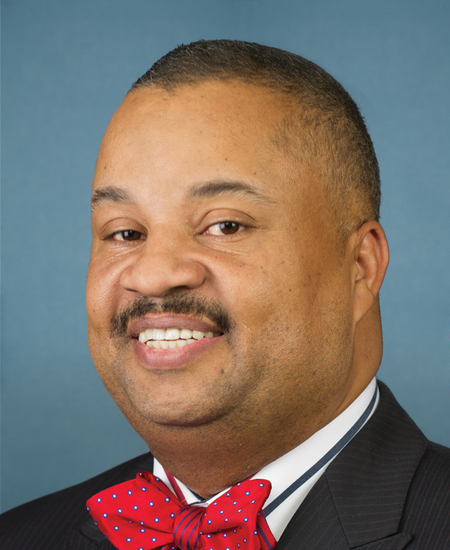
Rep. Donald M. Payne, Jr.
Sponsored bills
Ban Conflicted Trading Act This bill prohibits a Member of Congress or certain congressional officers or employees from (1) purchasing or selling specified investments, (2) entering into a transaction that creates a net short position in a security, or (3) serving as an officer or member of any board of any for-profit entity.
This concurrent resolution (1) affirms, on the 400th anniversary of the arrival of the first slave ship, that the nation owes a debt of remembrance not only to those who lived through the injustices of slavery but also to their descendants; and (2) urges the establishment of a U.S. Commission on Truth, Racial Healing, and Transformation to properly acknowledge, memorialize, and be a catalyst for progress, including toward permanently eliminating persistent racial inequities.
This joint resolution proposes a constitutional amendment declaring that women shall have equal rights in the United States and every place subject to its jurisdiction. The amendment prohibits the United States or any state from denying or abridging equal rights under the law on account of sex.
This resolution expresses the sense of the House of Representatives that Marcus Garvey should be recognized as a leader in the struggle for human rights and that the President should take measures to exonerate him of charges brought against him.
Railroad Employee Equity and Fairness Act or the REEF Act This bill permanently exempts payments made from the Railroad Unemployment Insurance Account from sequestration. Sequestration is a process of automatic, usually across-the-board spending reductions under which budgetary resources are permanently cancelled to enforce specific budget policy goals. Currently, this exemption ends 30 days after the termination of the COVID-19 national emergency period.
Ghost Guns Are Guns Act This bill broadens the definition of firearm for purposes of federal firearms laws. Specifically, it includes as a firearm any combination of parts designed or intended to be used to convert a device into a firearm and from which a firearm may be readily assembled.
Ensuring Quality Access to Legal Defense Act of 2021 or the EQUAL Defense Act of 2021 This bill establishes and modifies certain programs that support the delivery of public defense services (i.e., legal services for criminal defendants who cannot afford counsel). Specifically, the bill directs the Department of Justice (DOJ) to award grants to state and local governments, tribal organizations, and public defender offices for public defense. A grant recipient must use the grant to establish a data collection process, develop workload limits, and satisfy specified compensation requirements (e.g., pay parity between public defenders and prosecutors). The bill also directs DOJ to award grants to nonprofits and government organizations to train public defenders, court-appointed attorneys, and contract attorneys. Additionally, a state that receives Edward Byrne Memorial Justice Assistance Grant program funds must annually submit to DOJ information related to the legal representation of defendants in criminal cases. Finally, it reauthorizes through FY2025 the student loan repayment program for prosecutors and public defenders and otherwise revises the program, including by increasing the maximum benefit amount.
Justice for Black Farmers Act of 2021 This bill directs the Department of Agriculture (USDA) to provide a variety of assistance to address historical discrimination and disparities in the agricultural sector. For example, the bill establishes an equity commission in USDA to examine discrimination by the agency against Black farmers and ranchers and recommend actions to end the systematic disparities in the treatment of Black farmers and ranchers. USDA must also establish a Farm Conservation Corps to provide young adults who are from socially disadvantaged groups with the skills necessary to pursue careers in farming and ranching. The bill provides funding for historically Black colleges and universities to commence and expand courses of study that are focused on careers in agriculture or related disciplines. The bill also increases the authorization of appropriations for a program to resolve issues relating to ownership and succession on farmland. Additionally, it expands credit assistance for socially disadvantaged farmers and ranchers. Further, the bill (1) establishes that a minimum of 50% of a covered packer's (not including a packer that owns only one livestock processing plant) daily volume of livestock slaughter must be purchased through spot market sales from nonaffiliated producers; (2) increases funding for the Local Agriculture Market Program; and (3) gives priority to socially disadvantaged farmers and ranchers for conservation technical assistance, the Conservation Stewardship Program, and the Rural Energy for America Program.
Pandemic Heroes Compensation Act of 2021 This bill allows essential workers and their family members to file claims and receive compensation for harm or death suffered as a result of COVID-19 (i.e., coronavirus disease 2019). A Special Master appointed by the Department of Justice must review claims submitted and determine if a claimant is eligible for compensation, the extent of the harm to the claimant, and the amount of compensation to be awarded.