

National Center for the Advancement of Aviation Act of 202 2 This bill establishes the National Center for the Advancement of Aviation to (1) develop a skilled and robust U.S. aviation and aerospace workforce; (2) serve as a national independent forum to support collaboration and cooperation between aviation and aerospace stakeholders regarding the advancement of the U.S. aviation and aerospace workforce; and (3) serve as a repository for research conducted by institutions of higher education, research institutions, or other stakeholders regarding the aviation and aerospace workforce, or related technical and skill development. The center must perform the following duties improve access to aviation and aerospace education and related skills training to help grow the U.S. aviation and aerospace workforce; support Armed Forces personnel and veterans seeking to transition to a career in civil aviation or an aerospace-related field through outreach, training, apprenticeships, or other means; and amplify and support the research and development efforts conducted as part of the National Aviation Research Plan and work done at the Federal Aviation Administration Technical Centers regarding the aviation and aerospace workforce. Additionally, the center may issue grants to certain entities to create, develop, deliver, or update middle and high school aviation curricula and aviation curricula used at institutions of higher education, secondary educations institutions, or by technical training and vocational schools; support the professional development of educators using the curricula; establish new education programs that teach technical skills used in aviation maintenance; establish scholarships, internships or apprenticeships for individuals pursuing employment in the aviation maintenance industry; support outreach about educational opportunities and careers in the aviation maintenance industry; and support the transition to career in aviation maintenance, including for members of the Armed Forces.
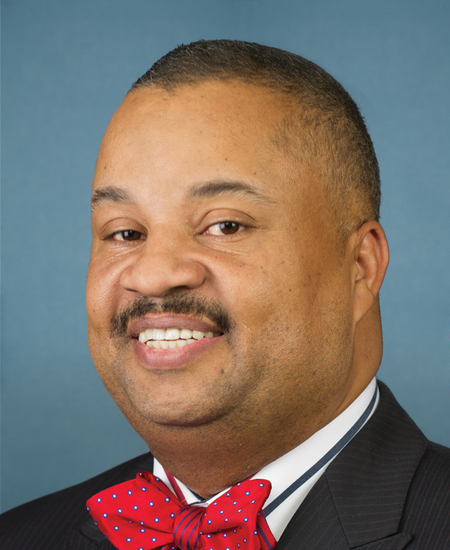
Rep. Donald M. Payne, Jr.
Sponsored bills
Maximizing Outcomes through Better Investments in Lifesaving Equipment for (MOBILE) Health Care Act This bill allows a health center that currently receives funding through a Health Resources & Services Administration Health Center Program grant to use a New Access Point grant to set up a mobile unit regardless of whether the health center also establishes a permanent health care delivery site. New Access Point grants help health centers establish new delivery sites to provide comprehensive primary care to medically underserved populations. Under current law, health centers may only use the grants to set up a mobile unit if they also establish a permanent site.
Nonprofit Security Grant Program Improvement Act of 2022 This bill modifies the Nonprofit Security Grant Program of the Department of Homeland Security and reauthorizes appropriations for such program through FY2028. The Federal Emergency Management Agency (FEMA) must establish an office, headed by a senior FEMA official, to administer the program. Office responsibilities include those related to outreach, engagement, education, and technical assistance. FEMA must also publish grant guidelines and may prohibit states from closing application processes before the publication of the guidelines. FEMA must seek to enter into a contract or other agreement with an independent research organization for the conduct of a study that analyzes and reports on (1) the effectiveness of the program for preparedness against terrorism and other threats; (2) the risk-based formula and allocations under the program; and (3) the risk profile of and any identifiable factors leading to the low participation of traditionally underrepresented groups and states under the program.
National Liberty Memorial Preservation Act This bill extends through FY2027 the authority of the National Mall Liberty Fund D.C. to establish a memorial on eligible federal land to honor the slaves and free Black persons who served as soldiers and sailors or provided civilian assistance during the American Revolution.
Violent Incident Clearance and Technological Investigative Methods Act of 2022 or VICTIM Act of 2022 This bill directs the Department of Justice to establish a grant program for state, tribal, or local law enforcement agencies or prosecuting offices (or groups of tribal agencies or offices) to establish, implement, and administer violent incident clearance and technological investigative methods.
Break the Cycle of Violence Act This bill establishes federal grant programs and related entities to support violence intervention initiatives. Specifically, the bill directs the Department of Health and Human Services (HHS) to award grants for coordinated community violence intervention initiatives in communities disproportionately impacted by homicides and community violence. HHS must also establish several related entities, including an Office of Community Violence Intervention to administer programs and activities related to violence intervention; the Community Violence Intervention Advisory Committee to advise and assist the office and HHS; and the National Community Violence Response Center to provide training and technical assistance, coordinate research, and develop data collection policies. Additionally, the bill directs the Department of Labor to award grants for job training and workforce programs in communities disproportionately affected by gun violence to connect youth ages 16 to 24 to in-demand occupations.
This resolution supports Peripheral Artery Disease Awareness Month and encourages the public to observe the month with appropriate awareness and educational activities.
National Council on African American History and Culture Act of 2022 This bill establishes a National Council on African American History and Culture in the National Endowment for the Humanities (NEH). The duties of the council shall include gathering timely and authoritative information concerning historical developments and cultural trends in African-American history and culture; evaluating the various programs and activities of the NEH to determine the extent to which such programs and activities are contributing, or not contributing, to the successful preservation and celebration of African-American history and culture; and developing and recommending to the NEH national policies to foster and promote the understanding of African-American history, the preservation of African-American culture, and the celebration of African Americans as contributors to the country's economic, cultural, and political success.
Social Security Fairness Act of 2021 This bill repeals provisions that reduce Social Security benefits for individuals who receive other benefits, such as a pension from a state or local government. The bill eliminates the government pension offset , which in various instances reduces Social Security benefits for spouses, widows, and widowers who also receive government pensions of their own. The bill also eliminates the windfall elimination provision , which in some instances reduces Social Security benefits for individuals who also receive a pension or disability benefit from an employer that did not withhold Social Security taxes. These changes are effective for benefits payable after December 2021.
Maddy summaryHRES 1371 designates the week of September 19-25, 2022, as "Rail Safety Week" in the U.S. to support efforts reducing rail-related incidents. The resolution expresses congressional backing for existing safety initiatives, like Operation Lifesaver’s public education programs, which focus on preventing highway-rail crossing accidents and trespassing. It encourages the public to participate in safety activities and learn about staying safe near train tracks. This symbolic resolution does not create new laws or funding but aims to raise awareness around a recurring safety issue.