Sarah Keys Evans Congressional Gold Medal Act This bill provides for the award of a Congressional Gold Medal to Sarah Keys Evans in recognition of her achievements relating to the desegregation of passengers on interstate buses in the 1950s.
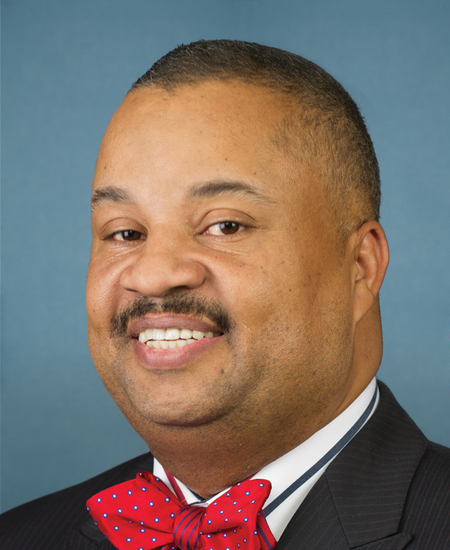
Rep. Donald M. Payne, Jr.
Sponsored bills
Don't BLock Our Communities Act or the D-BLOC Act This bill prohibits railroad carriers from obstructing travel at public highway-rail crossings for more than 10 minutes, except under limited circumstances (e.g., safety issues). The Department of Transportation (DOT) must investigate and send notices to carriers of repeated incidents; carriers are subject to civil penalties for violations that occur after having received notice. Additionally, each Class I railroad carrier must publish on its home page an active link to the blocked highway-rail crossing portal that is maintained by the Federal Railroad Administration. The portal is used to (1) collect information from the public, including first responders, regarding blocked highway-rail grade crossing events; (2) solicit the apparent cause of the blocked crossing and provide examples of common causes of blocked crossings; (3) provide each complainant with the contact information for reporting a blocked crossing to the relevant railroad; and (4) encourage each complainant to report the blocked crossing to the relevant railroad.
Maddy summaryThis bill establishes requirements for large industrial agricultural operations (defined as those owning or controlling significant numbers of livestock) to create disaster mitigation plans, register with a new Office of High-Risk AFO Disaster Mitigation and Enforcement, and report depopulation activities. It prohibits certain inhumane depopulation methods like ventilation shutdown and sodium nitrite poisoning, and requires covered operators to cover costs of depopulation, disposal, and compensation for workers and neighboring communities affected by disasters. The bill also sets new labor standards including health insurance coverage and severance pay for workers involved in disaster mitigation events, improves transport standards for livestock, and requires humane treatment of nonambulatory animals. It includes funding for additional OSHA and FSIS inspectors to enforce these requirements, directly affecting large industrial agricultural operators, their workers, and neighboring communities.

This resolution calls for the federal government to establish a national biodiversity strategy, which must include a goal of conserving at least 30% of U.S. lands and waters to protect biodiversity and address climate change by 2030 and other goals necessary to reduce the threats to biodiversity.
Maddy summaryThe Protecting America's Meatpacking Workers Act of 2023 establishes new safety standards for meat and poultry processing facilities to protect workers from injuries and unsafe conditions. The bill prohibits "no fault attendance policies" that penalize workers for taking legally protected leave and requires employers to provide adequate toilet facilities without punishment. It mandates new ergonomic standards to prevent musculoskeletal injuries, increases OSHA inspection resources through $60 million in annual funding, and requires facilities to report infections and deaths during pandemics. The bill directly affects meat and poultry processing workers, their employers, and federal agencies overseeing workplace safety through concrete policy changes to improve working conditions.
Maddy summaryHR 1322 expands federal retirement benefits to include specific non-traditional law enforcement roles. It adds IRS employees focused on tax collection, U.S. Postal Inspection Service staff, Department of Veterans Affairs police officers, and U.S. Customs and Border Protection seized property specialists to the definition of "law enforcement officer" under federal retirement systems. Current employees in these newly covered positions must elect to pay deposits for past service to receive full retirement credit, while their agencies must contribute additional funds for that past service. The bill also temporarily prevents mandatory separation for current law enforcement officers for three years after enactment.
Maddy summaryThe Peace Corps Reauthorization Act of 2023 makes several key updates to support Peace Corps volunteers. It increases readjustment allowances from $125 to $375, establishes protocols for safely returning volunteers whose service was interrupted by catastrophic events, and improves health care provisions including mental health services. The bill extends noncompetitive hiring eligibility for returning volunteers for up to three years and implements a zero-tolerance policy for illegal drug use. It also adds protections against retaliation for volunteers who report issues related to waste, fraud, or safety concerns. These changes aim to better support volunteers before, during, and after their service.
Maddy summaryThis bill authorizes the posthumous award of a Congressional Gold Medal to honor the Jewish participants of the 1943 Warsaw Ghetto Uprising who resisted Nazi forces. The medal, designed by the Treasury Secretary, will be presented by congressional leaders and permanently displayed at the U.S. Holocaust Memorial Museum, with potential future loans to institutions like Warsaw's POLIN Museum. It directly commemorates the historical resistance of approximately 3,000 Jewish fighters who defended their community against Nazi deportation and extermination efforts. The bill also permits the sale of bronze duplicates to cover production costs. This is a commemorative measure focused on preserving historical memory, not on creating new policy.
Maddy summaryThe Air Carrier Access Amendments Act of 2023 updates the 1986 Air Carrier Access Act to improve accessibility for travelers with disabilities. It creates a private right of action (allowing individuals to sue for violations), sets new standards for accessible aircraft (including boarding equipment, seating, lavatories, and communication systems), and requires airports to provide accessible facilities and digital services. The bill establishes clearer complaint procedures with the Department of Transportation, including a 120-day investigation timeline and specific civil penalties for violations like delayed assistance or damage to assistive devices. These changes directly affect air carriers, foreign air carriers, and travelers with disabilities who face barriers such as inaccessible aircraft and inadequate assistance. The legislation aims to address ongoing issues including damaged assistive devices, inaccessible aircraft features, and inappropriate treatment of service animals.
Maddy summaryThis resolution expresses the House's support for Black workers and calls for legislative action to address workforce inequalities. It specifically identifies key policy areas needing reform, including closing wage gaps, improving workplace safety, and expanding access to job training programs. The resolution affirms support for four specific bills: the PRO Act (to strengthen union rights), the National Apprenticeship Act, the Raise the Wage Act, and the Workforce Innovation and Opportunity Act. It directly addresses systemic disparities affecting Black workers, such as lower earnings (82.6% of median white worker pay) and higher unemployment rates. The resolution does not create new law but urges Congress to advance these measures.