

Maddy summaryHR 1826 (PSA Screening for HIM Act) requires health insurance plans and issuers to cover prostate cancer screenings without out-of-pocket costs for men aged 40 and over who are at high risk of prostate cancer. This directly affects African-American men and men with a family history of prostate cancer (defined as having a first-degree relative diagnosed with or who died from prostate cancer). The bill mandates coverage for evidence-based screenings under the same requirements as other preventive services, effective for plan years starting January 1, 2024. It aims to address disparities in prostate cancer outcomes by removing financial barriers to early detection for high-risk groups.
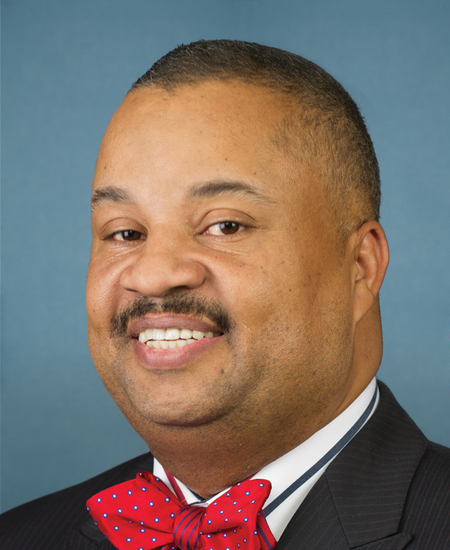
Rep. Donald M. Payne, Jr.
Sponsored bills
Maddy summaryThe Women's Health Protection Act of 2023 would protect access to abortion services by prohibiting states from imposing restrictions that are more burdensome than those for comparable medical procedures. The bill would ensure people can obtain abortion services before fetal viability without unnecessary limitations like mandatory waiting periods or biased counseling, and after viability when necessary to protect the patient's life or health. It would preempt state laws that conflict with these protections and allow for civil enforcement actions to challenge restrictive state laws. This bill directly affects people seeking abortion services (including transgender and nonbinary individuals who can become pregnant), health care providers, and states that have implemented abortion restrictions.
Maddy summaryHR 2539 permanently extends the New Markets Tax Credit (NMTC) program, which incentivizes private investment in low-income communities. The bill directly affects community development financial institutions (CDFIs) and investors who fund projects in designated low-income areas by ensuring the credit remains available beyond 2025. Key provisions include automatically adjusting the credit amount annually for inflation starting in 2024 and clarifying that the credit can be used to offset alternative minimum tax liability. This maintains the program’s effectiveness in channeling capital to underserved neighborhoods without changing eligibility or funding levels.
Maddy summaryHR 1509 reauthorizes annual federal funding for the Healthy Food Financing Initiative (HFFI), which helps establish grocery stores and healthy food access in underserved communities. The bill mandates increasing annual funding from $25 million in fiscal year 2024 up to $50 million per year starting in 2028. This funding supports projects like new supermarkets in "food desert" areas, directly benefiting residents in low-income neighborhoods with limited grocery options. The initiative provides grants and loans to developers, aiming to improve nutrition access without changing existing program rules.
Emergency Preparedness in Higher Education Act This bill directs the Federal Emergency Management Agency (FEMA) to establish a grant program to support activities at institutions of higher education related to emergency management.
Maddy summaryHR 1465, "Violet’s Law," requires federal research facilities to establish standards for placing eligible animals (dogs, cats, primates, guinea pigs, hamsters, rabbits) no longer needed for research with animal rescue organizations, sanctuaries, shelters, or individuals. Federal departments and agencies operating such facilities must create these placement standards within one year of the law's enactment. The law mandates that animals must be vet-certified as healthy (free of infectious disease or physical issues) before placement and prohibits facilities from using animals for commercial trade, breeding, or public exhibitions. This policy directly affects federal research facilities and aims to provide permanent homes for research animals through defined, safe pathways.
This bill requires the National Science Foundation to award grants to certain institutions of higher education for infrastructure, materials, and equipment for research facilities in science, technology, engineering, mathematics, and related fields. Institutions that are eligible for the grants include historically Black colleges and universities and other minority-serving institutions; public, private, and religious institutions with endowments below specified thresholds; two-year, community, vocational-technical, and career colleges; and single-sex colleges.
Minorities in Aviation Education Act of 2023 This bill establishes grants for increasing the exposure and access of students to the aviation industry, with a particular focus on women and minorities. Specifically, the Department of Transportation (DOT) must establish the Bessie Coleman Aviation Education Program to award the grants to state and local governments or educational agencies for activities that increase exposure and access to aviation-related education and jobs, such as programs to increase the recruitment and retention of underrepresented minorities in aviation degree programs. DOT must prioritize grant applicants that propose to use the funds to encourage the participation of women, minorities, and individuals in rural and urban areas in the aviation industry.
Maddy summaryHR 1740 amends the Water Infrastructure Finance and Innovation Act (WIFIA) to require payment and performance security for projects receiving WIFIA assistance. It directly affects water infrastructure projects funded through WIFIA loans or grants by mandating that construction must have security covering at least 50% of the contract value, or accept equivalent state/local requirements. The bill specifies that if state or local law already requires such security, it may be used instead, but the amount must still meet the 50% minimum. This adds a new financial safeguard to ensure project completion without requiring new funding or changing WIFIA’s core structure.
Supporting Our First Responders Act This bill establishes a competitive grant program to support medical transport and emergency medical services (EMS). The Department of Health and Human Services (HHS) must award the grants to EMS organizations (including for-profit organizations) or state, tribal, territorial, or local governments. Grant-funded activities include (1) providing salaries and stipends for EMS workers; (2) purchasing vehicles, personal protective equipment, and other resources; and (3) establishing community paramedicine or mobile integrated health care initiatives. HHS must also report to Congress about health insurance reimbursement for medical transport and EMS and the feasibility of establishing a federal EMS office.